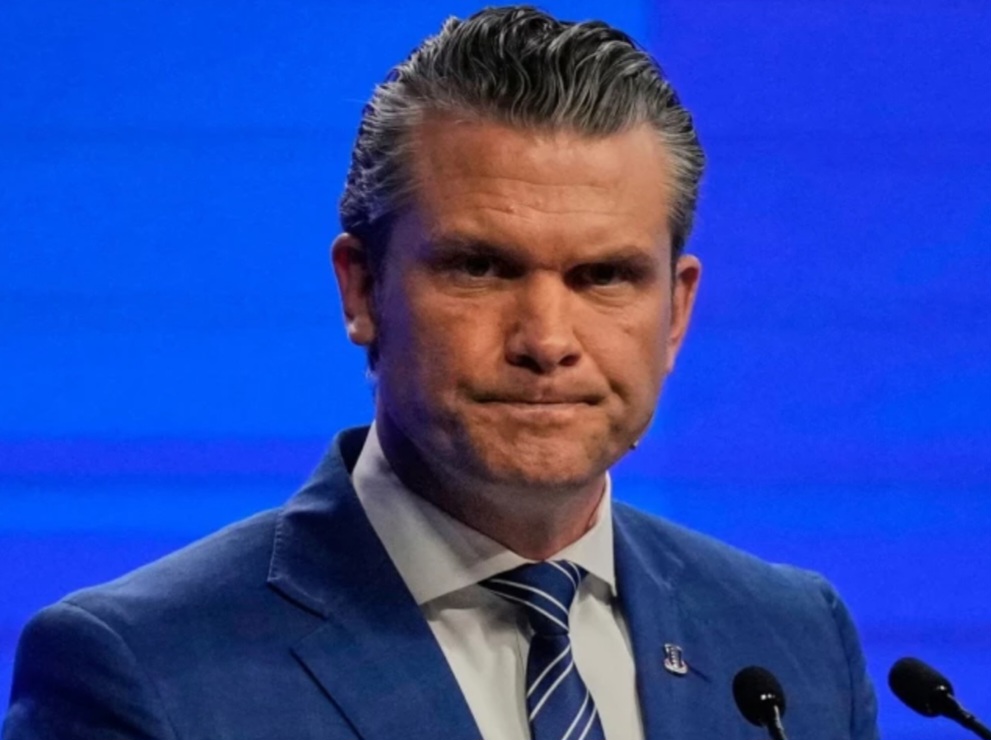
China has lodged a formal protest against U.S. Defense Secretary Pete Hegseth’s recent comments, accusing him of demonizing China and ignoring regional calls for peace. According to a statement from the Chinese foreign ministry on Sunday, Hegseth’s speech at the Shangri-La Dialogue in Singapore the previous day was “deplorable” and steeped in Cold War rhetoric.“Hegseth chose to disregard the regional desire for peace and development, instead promoting a confrontational mindset reminiscent of the Cold War. He defamed China with baseless accusations and falsely labeled China a ‘threat’,” the ministry said.The foreign ministry also claimed the U.S. had escalated tensions in the Asia-Pacific by deploying offensive weapons in the South China Sea, turning the area into a “powder keg.”Echoing this sentiment, China’s defense ministry criticized Washington for using the security forum to “stir up disputes, sow discord, and pursue its own interests.” Ministry spokesperson Zhang Xiaogang said China’s military would work with other regional countries to counter hegemonic behavior that threatens Asia-Pacific stability.During his address, Hegseth urged Indo-Pacific allies, including Australia, to increase defense spending, warning of a “real and potentially imminent” threat posed by China. In response, Australian Prime Minister Anthony Albanese noted his government’s pledge of an extra A$10 billion ($6 billion) for defense but emphasized that Australia would determine its own defense policy.The United States, as part of its long-standing defense cooperation with the Philippines, has deployed Typhon missile launchers capable of striking both China and Russia from Luzon island this year.The broader context of rising tensions includes China’s maritime disputes with the Philippines in the South China Sea, where their coast guards frequently clash. China’s delegation at the forum reiterated that “external intervention” poses the greatest threat to regional stability and insisted that China has acted with “goodwill and restraint” during discussions over disputed waters.Senior Colonel Zhang Chi from China’s PLA National Defence University argued that foreign military operations in the South China Sea, under the guise of “freedom of navigation,” violated China’s sovereignty.The United States, Australia, Japan, and the Philippines have all conducted joint naval patrols in the contested region. China continues to assert claims over nearly the entire South China Sea, encroaching on areas also claimed by Brunei, Indonesia, Malaysia, the Philippines, and Vietnam. However, a 2016 international tribunal ruled that China’s sweeping claims have no basis in international law.Meanwhile, China also warned the United States against “playing with fire” on Taiwan. Hegseth, in his remarks at the forum, said any attempt by China to forcibly take Taiwan would have “devastating consequences.” China has vowed to reunify with Taiwan, by force if necessary, but Taiwan’s government maintains that only its people have the right to decide the island’s future.