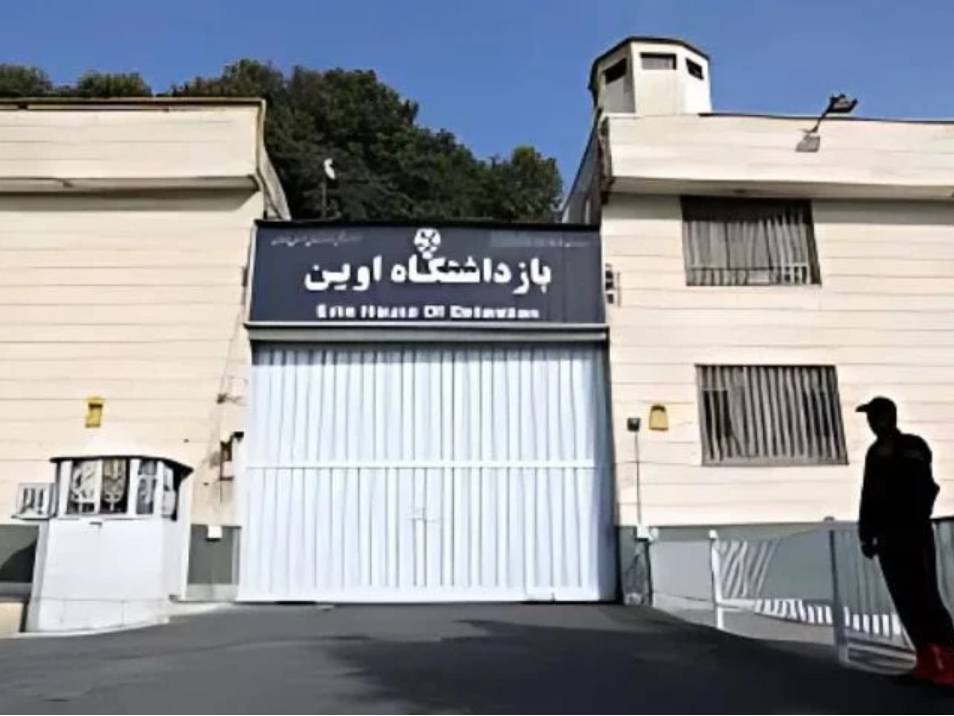

An Israeli airstrike on Iran’s Evin Prison in Tehran has left 71 people dead, according to Iranian judiciary spokesperson Asghar Jahangir. The June 23 attack targeted the capital’s most notorious detention facility—best known for holding political prisoners and foreign nationals—marking a significant expansion of Israel’s offensive beyond military and nuclear infrastructure.
Among the dead were administrative staff, conscripts, detainees, visiting family members, and civilians living near the prison, Jahangir said via the judiciary’s official outlet, Mizan. He added that part of the prison’s administrative block was damaged, and surviving detainees have since been relocated to other facilities across Tehran province.
The strike sparked international concern. France condemned the attack for endangering two of its nationals, Cecile Kohler and Jacques Paris, who have been imprisoned in Evin for three years. “The strike targeting Evin prison in Tehran put our citizens in danger. It is unacceptable,” French Foreign Minister Jean-Noel Barrot posted on X.
Funeral for Military Leaders Draws Thousands
A day earlier, Iran held a large funeral procession in Tehran to mourn dozens of senior military officers killed during the 12-day war with Israel. The ceremony began in Enghelab Square and moved toward Azadi Square, a historic route often used for major national events. Iranian state media showed thousands of mourners clad in black, waving national flags and paying tribute to figures such as IRGC commander Hossein Salami.
A 12-Day Conflict of Escalation
The war began on June 13, when Israel launched a massive air campaign against Iran, targeting nuclear sites and military installations using more than 200 fighter jets. According to Iran’s Ministry of Health and Medical Education, 610 Iranians were killed and 4,746 injured. The casualties included 185 women, 13 children, and a two-month-old infant. Civilian infrastructure, including hospitals and emergency services, was heavily damaged.
Prominent casualties included top military officials and nuclear scientists, such as the Chief of Staff of the Armed Forces and the IRGC commander.
Iran retaliated with hundreds of missile and drone strikes, heavily damaging Israeli cities such as Tel Aviv and Haifa. The Israeli military claimed it intercepted 90% of the roughly 1,000 incoming projectiles. However, the attacks still left 28 people dead and over 3,200 injured.
According to the Armed Conflict Location & Event Data Project (ACLED), Israel carried out at least 508 airstrikes during the conflict. A separate count by Al Jazeera’s Sanad agency put the combined number of Israeli and US strikes at 145.
In its counteroffensive, Iran targeted key Israeli sites, including the Soroka Medical Center, the Israeli Military Intelligence School, and energy infrastructure. Some attacks reached the Israeli Ministry of Interior in Haifa.
US Enters the Fray
The United States entered the conflict on June 22, launching bunker-buster strikes on Iranian nuclear facilities in Natanz, Fordow, and Isfahan. The escalation prompted Iran to fire missiles at the largest US airbase in the Middle East, located in Qatar.
A US-mediated ceasefire was brokered on June 24, halting active hostilities for now. Still, both Tehran and Tel Aviv have warned they are prepared to act again if provoked.
The conflict also triggered large-scale internal displacement in Iran, with nearly nine million citizens fleeing major cities like Tehran for the relative safety of the northern provinces near the Caspian Sea.
Though the ceasefire holds for now, tensions remain high, and the aftermath continues to raise fears of further instability in an already volatile region.