

Palestinian Writer Captures Stories of Loss and Strength in New Book
After losing 21 members of his family to Israeli airstrikes in 2023, Gaza-born and London-based journalist Ahmed Alnaouq was left grappling with survivor’s guilt, haunted by a single, painful question: “Why am I still alive?” Now, in an interview with The Guardian, Alnaouq believes he finally understands his purpose—to amplify the personal, human stories behind the headlines and statistics, and to share the emotional depth of Palestinian suffering and resilience with the world.
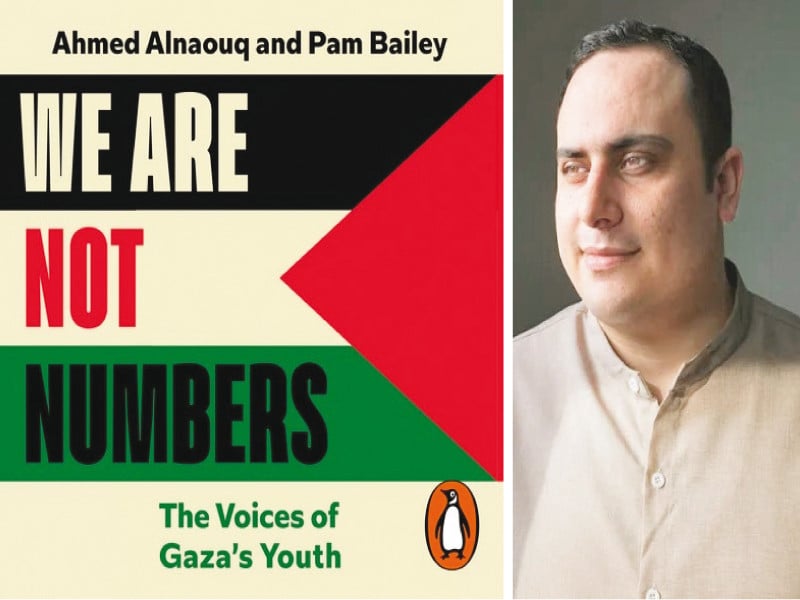
Determined to shine a light on the people behind the casualty figures, Alnaouq partnered with American activist Pam Bailey in 2015 to launch We Are Not Numbers (WANN), a digital platform that gave young Palestinians an outlet to process grief through storytelling. After nearly a decade of work, the project has culminated in a powerful collection of 74 firsthand narratives, written by emerging Palestinian writers. The book, titled We Are Not Numbers: The Voices of Gaza’s Youth, will be published on April 24. Each chapter corresponds to a year in Gaza’s turbulent recent history, offering deeply personal accounts of events often only seen through a political or statistical lens.
“We’re documenting Gaza’s history not through data or news reports, but through the lived realities of its people,” Alnaouq said. “This isn’t about politics—it’s about humanity.”
Finding Purpose in Pain
Alnaouq’s mission is rooted in his own experience of loss. His grief didn’t begin in 2023—in 2014, he lost his brother and four friends in an Israeli airstrike during the war on Gaza. The emotional toll nearly consumed him.
“I didn’t want to live anymore,” Alnaouq admitted. “I was just waiting to die so I could be with my brother again and escape the pain.”
His turning point came when he reconnected online with Bailey, whom he had met years earlier in Gaza. She encouraged him to write about his brother in English, a daunting task for him at the time.
“I initially refused—I didn’t think my English was good enough,” he said. But after three months of drafts and edits, his story was published. It marked a major shift in his healing process.
“For the first time, I received support from people outside Gaza,” he recalled. “I had always believed Westerners didn’t care about Palestinians or want to hear our stories. But I was wrong. That feedback gave me hope and confidence.”
Writing as a Lifeline
That experience sparked the birth of WANN, a platform where others like Alnaouq could share their grief, their memories, and their strength. In 2015, 20 young Palestinian writers—many of them students of English literature—began contributing stories not just of suffering, but of Gaza’s culture, beauty, and humanity, challenging stereotypical portrayals of the region as merely a war zone.
“We were blown away by how gifted these young writers were,” said Alnaouq. “Every six months, we brought in 20 to 30 new writers, trained them in writing and English, and over 10 years, we’ve published more than 1,500 pieces—stories and poems alike.”
Among the contributors are acclaimed poet Mosab Abu Toha and Al Jazeera journalist Hind Khoudary. Together, their work emphasizes the urgent need for those living through trauma to be heard.
“Now we publish three times as many stories as when we started,” Alnaouq said, reflecting on the growth of WANN.
Writing Against All Odds
The writers involved in the project face immense barriers—beyond language. Many have lost homes, laptops, even access to power and the internet. Yet they continue writing, often drafting stories on phones, waiting days for internet access to submit their work.
“Most of our writers are displaced,” said Alnaouq. “They’ve lost everything. But still, they write. They find a way to get their stories to us. Every month, we publish between 35 and 40 new pieces.”
Through We Are Not Numbers: The Voices of Gaza’s Youth, Alnaouq and his fellow writers show that even in the face of unimaginable destruction, the human spirit endures. Their words stand as a testament to the power of storytelling to heal, connect, and resist the erasure of their experiences.
Where everything else has been taken, their voices remain—and they refuse to be silenced.