The federal government announced on Thursday that it will suspend work on new canal projects until a mutual agreement is reached in the Council of Common Interests (CCI), in light of growing domestic opposition and India’s unilateral move to suspend the Indus Waters Treaty (IWT).
The decision comes after public backlash and political resistance, particularly from Sindh, against the Cholistan canal project launched in February by Army Chief Gen Asim Munir and Punjab Chief Minister Maryam Nawaz. In March, the Sindh Assembly passed a unanimous resolution opposing the initiative.
The situation escalated further after India, following a deadly attack in Pahalgam, closed its borders, downgraded diplomatic ties, and abruptly declared its suspension of the IWT — despite offering no concrete evidence linking Pakistan to the attack.
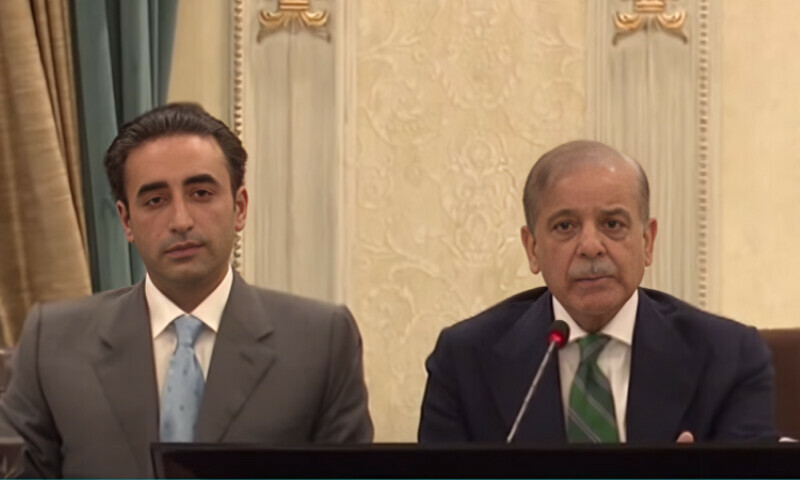
At a joint press conference with PPP Chairman Bilawal Bhutto-Zardari, Prime Minister Shehbaz Sharif stated that both PPP and PML-N had agreed that no new canals would be built without consensus among all provinces.
“The federal government has decided to pause all canal development until there is provincial agreement in the CCI,” PM Shehbaz said, adding that a CCI meeting would be held on May 2 to formalize this approach.
Bilawal thanked the prime minister for considering the PPP’s and the public’s concerns, expressing hope that the upcoming CCI meeting would affirm the commitment to provincial consensus.
“This is not a final decision, but an assurance that no new canals will move forward without unanimous agreement,” Bilawal noted. He also condemned India’s suspension of the IWT, calling it illegal and inhumane, and pledged to defend Pakistan’s position globally.
The government revealed it was working with all provinces to create a long-term roadmap for agricultural policy and water resource management. A federal-provincial committee will be formed to address these issues based on the 1991 Water Apportionment Accord and the 2018 Water Policy.
A press release emphasized that water disputes must be resolved through dialogue and mutual understanding, as envisioned in the Constitution.
Federal ministers reiterated that the IWT, brokered by the World Bank, cannot be suspended unilaterally. Article XII(4) of the treaty clearly states it remains in effect until both countries agree through a ratified treaty.
Mixed Reactions from Political Stakeholders
Sindh Chief Minister Murad Ali Shah welcomed the decision, describing it as a win for democracy and federalism. He praised the upcoming CCI session and called for an end to protests.
PPP senior leader Faryal Talpur also hailed the move as a triumph for national unity and Sindh’s democratic efforts.
However, the Sindh Bachao Tehreek (SBT), a coalition of opposition groups including the Grand Democratic Alliance (GDA), PTI, PML-Functional, and nationalist parties, dismissed the government’s announcement as deceptive.
During an emergency meeting chaired by SBT convener Syed Zain Shah, the alliance argued that the PPP had already compromised Sindh’s interests and was unlikely to cancel the project.
“Why hasn’t the land allocated under the Green Pakistan Initiative in Sindh been returned?” the SBT leaders asked, suggesting the government’s actions were merely symbolic.