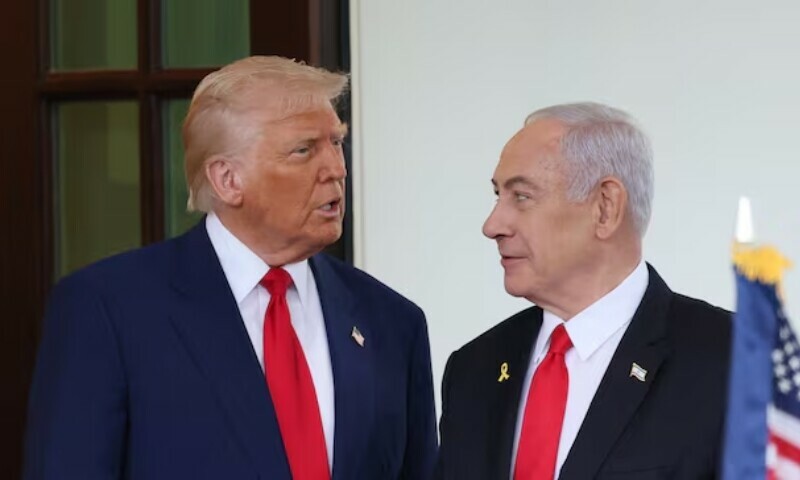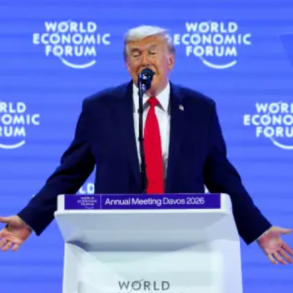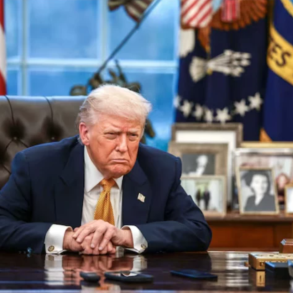
Israeli officials are putting on a confident front as President Donald Trump skips a visit to Israel during his current Middle East tour, but his decision is raising fresh concerns in Jerusalem about the United States’ commitment to its long-time ally.
Just days after Israel announced plans to intensify military operations in Gaza, Prime Minister Benjamin Netanyahu’s office confirmed that the U.S. had brokered the release of American-Israeli hostage Edan Alexander through talks with Hamas—negotiations that excluded Israel entirely.
Trump is set to visit Saudi Arabia, Qatar, and the UAE. His recent announcement to halt U.S. airstrikes against Yemen’s Houthi rebels—shortly after a Houthi missile landed near Israel’s main airport—further unsettled Israeli officials.
“The message to the region was clear: Israel is no longer a top U.S. priority,” wrote Ynet diplomatic correspondent Itamar Eichner, echoing widespread concern in Israeli media.
An Israeli official described Trump’s Houthi announcement as “embarrassing,” adding that the president often acts impulsively, for better or worse. While formal U.S.-Israel relations remain steady, some Israeli officials admit to being caught off guard by Trump’s unpredictable decisions.
A senior aide to Netanyahu, speaking anonymously, described the Trump administration as chaotic, with policy driven largely by the president’s shifting whims—sometimes aligning with Israel’s interests, sometimes not.
The decision on the Houthis, made without consulting Israel, has compounded anxieties already stirred by U.S. talks with Iran on its nuclear program. Israeli officials fear such negotiations could undermine Israel’s deterrence.
Tensions were further heightened by a Reuters report that Washington had dropped its insistence that Saudi Arabia normalize relations with Israel as a condition for advancing civil nuclear cooperation—a setback for a key goal of Netanyahu’s regional policy.
“We coordinate, but we don’t have to agree on every issue,” Israeli Foreign Minister Gideon Saar said Sunday. “Both countries are sovereign, but we share a significant amount of common ground with this administration—perhaps more than in the past.”
In March, Trump’s hostage envoy Adam Boehler held direct talks with Hamas, which the group called “very helpful,” again sidelining Israel.
Despite growing concern, U.S. Ambassador Mike Huckabee denied any drift in the relationship. “The word ‘ironclad’ still applies,” he said, describing Trump’s support for Israel as consistent.
Nonetheless, the Israeli public is uneasy. While Alexander’s imminent release was welcomed, many viewed it as a sign that U.S. and Israeli priorities are no longer aligned.
“There’s just no leadership now,” said Tel Aviv resident Jack Gottlieb, who criticized Netanyahu for being out of the loop. “Right now, it’s every man for himself.”
Faced with another Houthi missile attack shortly after the U.S. policy change, Netanyahu had little choice but to accept Washington’s move.
Israel, which has depended on American military and diplomatic support since its founding in 1948, could face serious repercussions if U.S. interest wanes—especially amid global criticism over the war in Gaza.
The shift away from pressing Saudi Arabia to normalize ties with Israel—due to Riyadh’s demand for Israeli concessions toward a Palestinian solution—has further dented Israel’s international position.
Adding Saudi Arabia to the Abraham Accords, which already include the UAE and Bahrain, was a key foreign policy aim for Netanyahu, but now appears postponed indefinitely.
Under Trump’s earlier presidency, Israel enjoyed strong backing, with moves like relocating the U.S. embassy to Jerusalem and recognizing Israeli sovereignty over the Golan Heights. But Israeli officials have always recognized the risk in relying on a leader as unpredictable as Trump—who has never hesitated to pivot away from traditional allies.