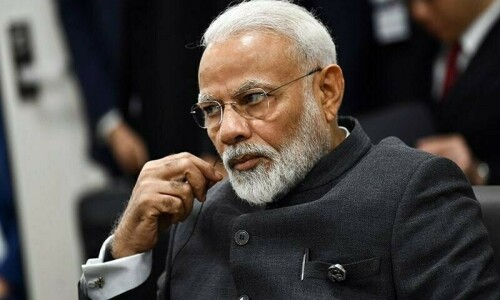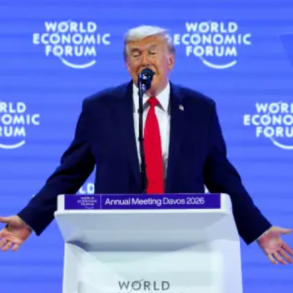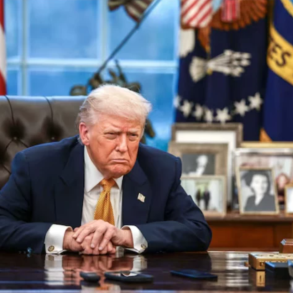
NEW DELHI: Indian Prime Minister Narendra Modi is under mounting pressure from opposition parties for his silence on U.S. President Donald Trump’s recent assertions regarding American mediation in the ceasefire between India and Pakistan.
Although Modi’s recent national address emphasized India’s “victory” over Pakistan, it conspicuously avoided any reference to Trump’s claim that the United States played a key role in brokering the ceasefire. This omission has stirred significant political backlash, particularly given India’s long-standing policy against third-party mediation in its bilateral disputes.
According to The Wire, multiple opposition leaders have questioned whether the ceasefire marks a shift in India’s diplomatic stance. They have demanded clarity on whether the Modi government has indeed accepted U.S. mediation, and whether trade considerations, as mentioned by Trump, played a role in ending hostilities.
Congress MP Jairam Ramesh criticized Modi’s address as being overshadowed by Trump’s remarks, stating, “The prime minister was completely silent on them. Has India agreed to US mediation? Has India agreed to a ‘neutral site’ for dialogue with Pakistan?” He further urged Modi to convene a meeting with all political parties—something the prime minister has not done during the recent crisis.
Ramesh warned that the months ahead would require careful diplomacy and unity, not rhetorical bravado. “One-liners and dialogue-baazi are poor substitutes,” he added.
Echoing similar concerns, Congress MP Randeep Singh Surjewala questioned the government’s silence on Trump’s mediation claims and whether New Delhi is prepared to abandon its consistent position on Kashmir being a bilateral matter. “If not,” he asked, “why hasn’t PM Modi publicly refuted the U.S. president’s statements?”
The Communist Party of India (Marxist) also joined the criticism. General Secretary M.A. Baby reiterated the call for a special session of Parliament, arguing that Trump’s announcement of the ceasefire before any official Indian statement raises troubling questions. “Our country has always resolved disputes bilaterally. This situation demands clear and authoritative clarification from the highest levels,” he asserted.
Rashtriya Janata Dal MP Manoj Kumar Jha urged the Modi government to formally respond to the U.S., particularly rejecting Trump’s mention of halted trade talks as leverage. “The kind of language he [Trump] used is an insult to Indians,” Jha said. “The prime minister must send a firm message to Washington.”
All India Majlis-e-Ittehadul Muslimeen MP Asaduddin Owaisi also weighed in, questioning why India appeared to be conceding to international involvement in the Kashmir issue. “We have always opposed third-party intervention since the Simla Agreement of 1972. Why are we agreeing now? Why are we discussing talks on neutral ground? What’s the agenda?” he asked.
Owaisi concluded with a direct challenge: “Is the Indian government now looking to secure a Trump-brokered ceasefire?”
As opposition voices grow louder, the Modi government faces mounting pressure to break its silence and reaffirm India’s policy stance—especially on a matter as sensitive as Kashmir.