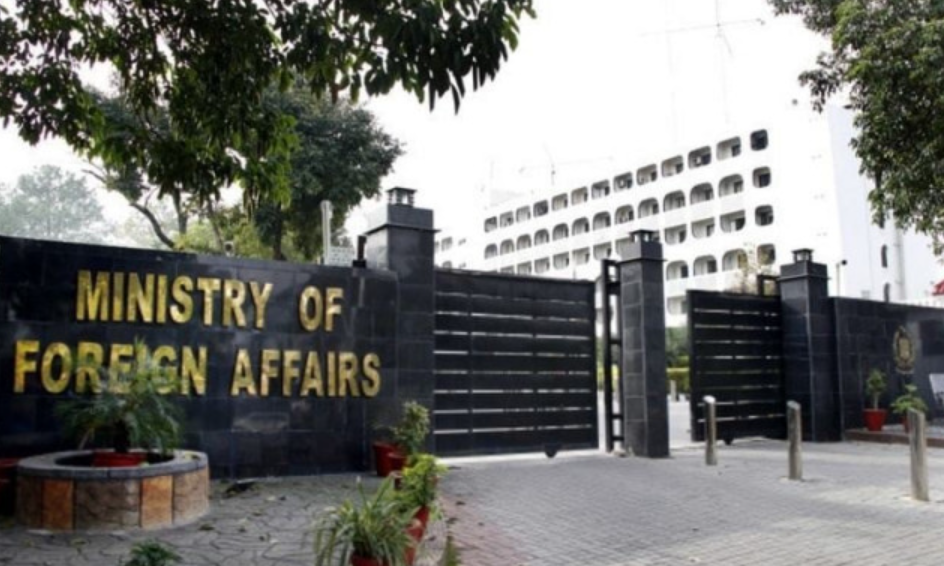
Pakistan’s Ministry of Foreign Affairs has strongly denied India’s claim that it used a Shaheen missile during Operation Bunyanum Marsoos, labeling the allegation as “baseless and irresponsible.”
The claim originated from a video posted on the official X (formerly Twitter) account of the Indian Army, which purported to show Pakistan launching a Shaheen missile amid the recent cross-border conflict. However, the post was quickly deleted after being published.
In response to India’s May 10 airstrikes targeting Pakistani airbases, Pakistan launched Operation Bunyanum Marsoos, deploying Al-Fatah missiles and striking multiple Indian military targets, including airbases believed to be used for launching attacks.
In a statement released Monday, the Foreign Office said the Indian video was “completely unverified” and criticized Indian media outlets for amplifying the false narrative before any confirmation.
The Foreign Office also condemned the Indian Army for failing to clarify or retract the claim after removing the post.
Analysts in Islamabad suggest the disinformation campaign is intended to divert attention from India’s setbacks during Operation Sindoor, where Pakistan reportedly demonstrated superior conventional military capabilities.
“These fabricated narratives are part of India’s broader strategy to distort the facts about the ceasefire and falsely accuse Pakistan of ‘nuclear blackmail’,” said the Foreign Office spokesperson.
The Foreign Office cited a May 12 press release by the Inter-Services Public Relations (ISPR), which listed the weapons used in Operation Bunyanum Marsoos—including Fatah-series precision-guided missiles (F1 and F2), long-range loitering munitions, smart bombs, and guided artillery—but made no mention of the Shaheen missile.
“Spreading unverified and provocative content undermines regional peace and reflects poorly on the professionalism of the Indian military,” the statement concluded.
Recent Escalation Between India and Pakistan
Tensions between the two countries reignited after an April 22 attack in Pahalgam killed 26 people. India immediately blamed Pakistan, a charge that Islamabad firmly denied.
In retaliation, India launched a series of aggressive measures on April 23, including suspending the Indus Waters Treaty, cancelling Pakistani visas, closing the Wagah-Attari border, shutting down Pakistan’s High Commission in New Delhi, and reducing diplomatic staff at both embassies.
The situation escalated further on May 7 when Indian missile strikes hit six cities in Punjab and Azad Jammu and Kashmir, killing dozens of civilians and destroying a mosque.
Pakistan responded by downing Indian warplanes, including three Rafale jets. On May 10, following renewed Indian missile attacks on Pakistani airbases, Islamabad launched Operation Bunyanum Marsoos, which targeted Indian military installations, including airbases and missile depots.
Later that day, U.S. President Donald Trump announced a ceasefire agreement brokered through urgent diplomatic channels. The truce was later confirmed by Pakistan’s Foreign Minister Ishaq Dar and India’s foreign secretary.