Pakistan Accuses India of Backing Attack via Proxies; Global Condemnation Follows
QUETTA:
A suicide bombing targeting a school bus in Khuzdar early Wednesday morning killed Six people, including three schoolchildren, and injured several others, according to civil and military officials.
The attack occurred near Zero Point, close to Rakhshan Hotel, as the bus, carrying students to the Army Public School (APS) located inside the Khuzdar cantonment, was rammed by an explosive-laden vehicle, Deputy Commissioner Yasir Iqbal Dashti confirmed. The Bomb Disposal Squad reported that over 30 kilograms of explosives were used in the blast.
In a statement, the Inter-Services Public Relations (ISPR) condemned the attack, describing it as a “cowardly and despicable act” orchestrated by India and carried out through its proxies operating in Balochistan. The military added that India, after military setbacks, has resorted to deploying terror proxies to target civilians and sow unrest in Pakistan’s border regions, particularly Balochistan and Khyber-Pakhtunkhwa.
Security forces quickly cordoned off the area and launched an investigation. Checkpoints were set up and patrols intensified across Khuzdar to prevent further incidents.
Officials Point to Foreign Involvement
Balochistan Chief Minister Sarfraz Bugti stated that intelligence agencies had prior warnings of a planned attack. “We never imagined such cruelty, where schoolchildren would be targeted,” he said at a press conference. He emphasized that the attackers were backed by hostile foreign actors and claimed Afghan territory was being used as a launchpad for such cross-border strikes.
Balochistan has been plagued by a separatist insurgency since the 2006 death of Nawab Akbar Bugti, and authorities allege Indian intelligence agency RAW has long supported, trained, and funded insurgent elements in the region.
The ISPR further stated that “India is using terrorism as a state policy,” labeling it a “reflection of moral bankruptcy.” The military vowed to track down all those involved, including planners and supporters of the attack, and to expose India’s role to the international community.
“Pakistan’s armed forces, with the support of the nation, are determined to eliminate all forms of Indian-sponsored terrorism,” the statement concluded.
National and International Reaction
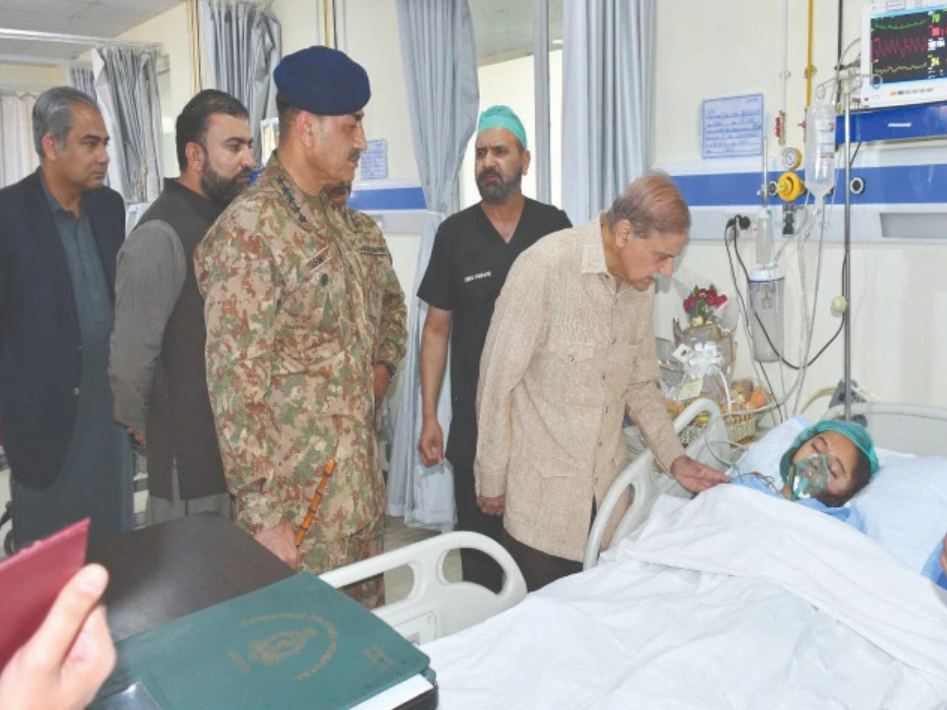
Prime Minister Shehbaz Sharif and Army Chief General Asim Munir urgently traveled to Quetta, where they were briefed on the incident. The premier strongly condemned the attack and extended condolences to the victims’ families. He directed authorities to ensure justice is served swiftly.
President Asif Ali Zardari also denounced the bombing, calling it a grave violation of human rights.
The Human Rights Commission of Pakistan (HRCP) labeled the targeting of children as an intolerable breach of international humanitarian norms. “Such attacks cross a moral red line and are an affront to humanity,” the HRCP stated, while urging the state to strengthen civilian institutions and the rule of law, rather than resorting solely to military responses.
They also called for a political solution to address long-standing issues of representation, governance, and resource allocation in Balochistan.
Global Condemnation
The United States condemned the attack in strong terms. In a post on X (formerly Twitter), the US Embassy in Islamabad described the killing of schoolchildren as “beyond comprehension,” adding, “No child should ever fear going to school.”
US Chargé d’Affaires Natalie Baker expressed solidarity with the victims and praised efforts to end violence in Pakistan.
China’s Ambassador Jiang Zaidong also expressed “deep sorrow” and offered condolences during a ceremony marking the 74th anniversary of diplomatic ties with Pakistan. “China opposes terrorism in all forms and fully supports Pakistan’s efforts to maintain stability and protect its citizens,” he said.
Rising Regional Tensions
Officials claim the bombing reflects India’s frustration following recent diplomatic and military setbacks in its standoff with Pakistan. India, aiming to assert regional dominance, has allegedly activated proxy networks to destabilize Pakistan internally.
Earlier this week, DG ISPR Lt Gen Ahmed Sharif Chaudhry warned in a television interview: “Pakistan will never submit to Indian hegemony. The sooner India accepts this reality, the better it will be for peace in the region and the world.”