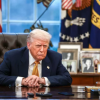
U.S. President Donald Trump has postponed his threat to impose steep 50% tariffs on European Union imports, shifting the deadline to July 9 to allow time for renewed trade negotiations with the 27-member bloc. The delay sparked a rally in European financial markets, with the euro reaching its highest level against the U.S. dollar since April 30 and major stock indices posting gains.
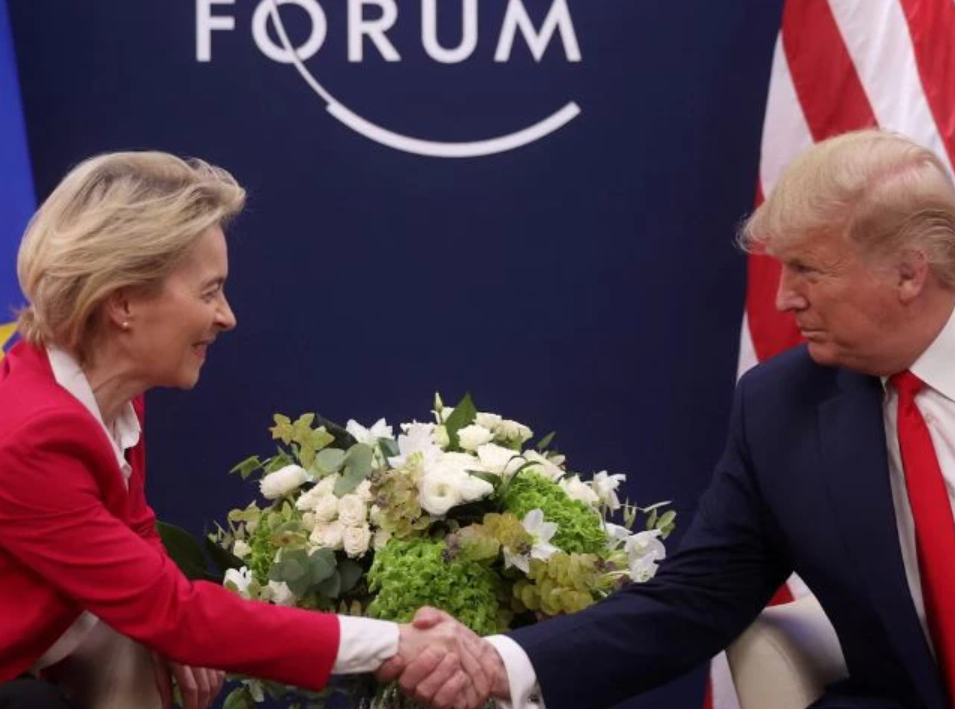
The move comes after Trump had said on Friday that the new tariffs would take effect on June 1, citing slow progress in trade talks. The announcement had rattled global markets, exacerbating uncertainty in an already volatile trade landscape. However, in a reversal two days later, Trump agreed to the EU’s request for more time, following a call with European Commission President Ursula von der Leyen.
“We had a very nice call, and I agreed to move it,” Trump told reporters, noting that von der Leyen had requested the extension to pursue a deal. “She said we will rapidly get together and see if we can work something out.”
Von der Leyen confirmed the conversation in a post on X, stating, “Europe is ready to advance talks swiftly and decisively. To reach a good deal, we would need the time until July 9.”
The July 9 deadline reflects the original 90-day window for negotiations that Trump announced in April. However, the U.S. president abruptly dismissed that timeline last week, expressing frustration with what he viewed as EU intransigence.
Washington has been pressing Brussels for significant concessions to boost U.S. market access, while the EU has sought a more balanced agreement. Negotiations have made limited headway, and trade tensions have persisted, with existing U.S. tariffs of 25% on European steel, aluminum, and automobiles, as well as a 10% levy on most other goods. These could rise to 20% or even 50% in the absence of a deal.
Such increases would raise prices on a wide range of European exports to the U.S.—from German cars and French handbags to Italian olive oil—potentially denting demand and sparking retaliation from the EU.
Markets reacted positively to the reprieve. The pan-European STOXX 600 index climbed 1% in early trading Monday, recovering from a 0.9% drop on Friday. The autos and parts sector rose 1.4%, while luxury brands and bank stocks also saw gains. Oil prices edged higher alongside the broader market optimism.
Trump’s trade strategy has frequently jolted global markets, with sudden policy shifts and escalating rhetoric. After imposing new tariffs in April, the administration has signed a deal with the U.K. and reopened discussions with China. Yet progress with the EU has lagged, fueling transatlantic strains and highlighting broader disagreements over trade, defense, and diplomacy under Trump’s “America First” approach.
As the new July deadline approaches, both sides now face pressure to find common ground and avoid another round of trade escalation.