ISLAMABAD:
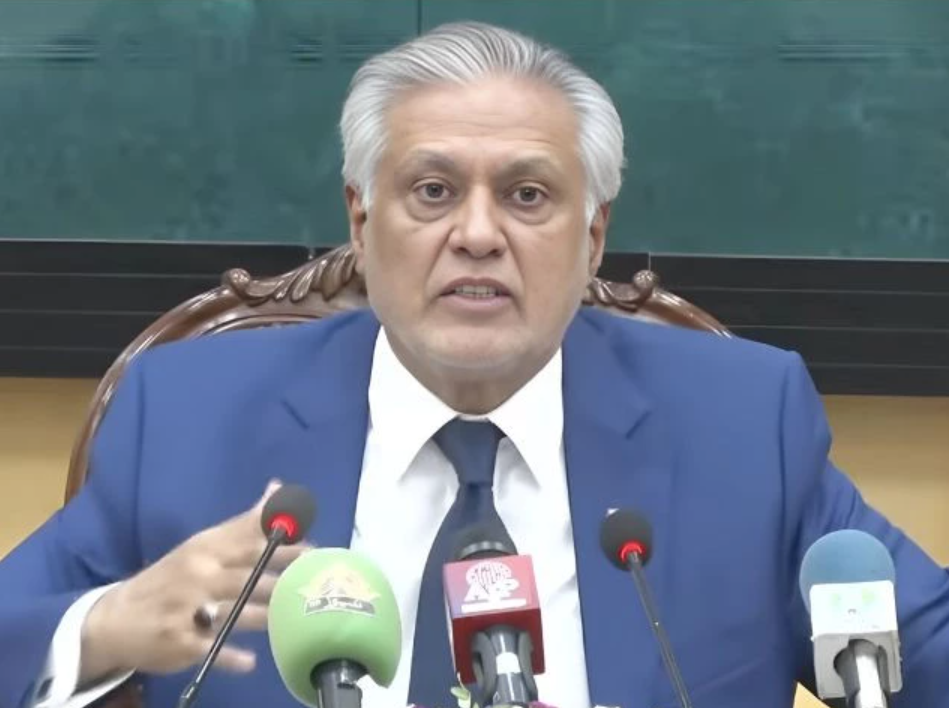
Deputy Prime Minister and Foreign Minister Ishaq Dar on Wednesday declared that India’s assertions of regional supremacy have crumbled, claiming New Delhi is now in “mourning” over its failed attempts to isolate Pakistan on the diplomatic front.
His remarks came after a series of high-level meetings in China, where Dar engaged in bilateral discussions with Chinese officials and attended a trilateral session involving Afghan representatives. The visit also served as a gesture of gratitude toward China for backing Pakistan on the Pahalgam issue, showcasing growing international support for Islamabad’s position.
“India lied to damage Pakistan’s reputation,” Dar asserted. “Now, those claims of regional superiority lie in ruins.” He praised Pakistan’s response to Indian hostilities as both strategic and restrained.
Rising Tensions Since Pahalgam Attack
The already-tense relationship between the two nuclear-armed neighbors deteriorated further after a deadly attack in the Pahalgam region of Indian Illegally Occupied Jammu and Kashmir (IIOJK) on April 22, which left 26 dead. India swiftly pointed fingers at Pakistan without offering proof, while Islamabad denied involvement and called for an independent investigation.
India responded with a string of aggressive diplomatic moves:
- Suspension of the decades-old Indus Waters Treaty
- Cancellation of visas for Pakistani nationals
- Closure of the Wagah-Attari border crossing
- Shutdown of Pakistan’s High Commission in New Delhi
- Downsizing of diplomatic staff on both sides
Pakistan countered with reciprocal measures, including halting trade, closing its airspace, and engaging in military responses.
Military Escalation and U.S.-Brokered Ceasefire
Tensions peaked on May 7, when missile strikes on Pakistani cities caused civilian casualties. Pakistan retaliated by downing Indian aircraft and disabling surveillance drones.
A ceasefire was brokered by U.S. President Donald Trump on May 10, following days of military exchanges and escalating rhetoric. Trump stressed the grave risk of conflict between two nuclear-armed nations and urged both sides to de-escalate.
Diplomatic Gains and Regional Partnerships
Dar highlighted Pakistan’s growing global engagement, crediting the diplomatic efforts of Pakistan Peoples Party Chairman Bilawal Bhutto Zardari and others for boosting Pakistan’s international standing. He pointed to enhanced relations with nations such as Russia, Turkiye, and Iran as proof of Islamabad’s strengthened diplomatic position.
He also noted the success of Prime Minister Shehbaz Sharif’s recent visit to Turkiye, which deepened bilateral cooperation.
Economic Strategy and Innovation
Beyond geopolitics, Dar spotlighted Pakistan’s forward-looking economic initiatives. These include the formation of a Strategic Bitcoin Reserve (SBR) and plans to harness surplus energy for Bitcoin mining and powering AI-driven data zones.
Commitment to Sovereignty and Peace
Wrapping up his address, Dar reaffirmed Pakistan’s dedication to preserving national sovereignty and promoting regional stability. He emphasized that while Pakistan seeks peace, it will continue to act decisively to protect its interests against any external provocations.