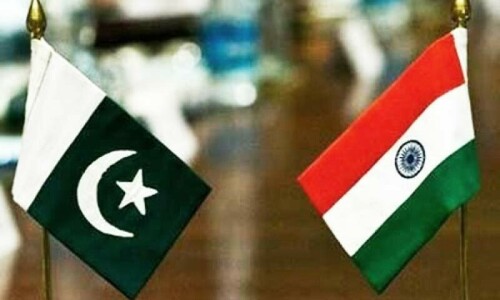

In recent weeks, Pakistan’s political leadership has made it clear that the door to dialogue with India remains open — a signal of maturity and prudence in the wake of last month’s alarming escalation between the two nuclear-armed neighbours. With tensions still simmering, Islamabad’s call for talks is both timely and necessary. Regional peace demands more than posturing; it requires political courage and a commitment to diplomacy.
At various platforms, Pakistani leaders have expressed a willingness to engage in meaningful negotiations. Prime Minister Shehbaz Sharif, speaking at the US Embassy in Islamabad, praised former US President Donald Trump’s role in de-escalating the recent standoff, describing him as a “man for peace.” Meanwhile, PPP Chairman Bilawal Bhutto-Zardari, leading a multi-party delegation to the United States, suggested that Washington could reasonably play a facilitating role in launching a comprehensive dialogue between Pakistan and India. Foreign Minister Ishaq Dar also struck a balanced tone, reaffirming Pakistan’s readiness for talks while making it clear that Islamabad is not “desperate.”
While the idea of third-party mediation — especially by the US — remains speculative, the central objective should be to bring both nations back to the negotiating table. Whether talks are brokered by Washington, another neutral party, or pursued bilaterally, what matters is that they happen at all. Continued hostility serves no one.
Regrettably, India’s response has not matched Pakistan’s overtures in tone or substance. Rhetoric from across the eastern border remains steeped in jingoism and political posturing, even from senior officials. This attitude obstructs efforts to create the kind of atmosphere needed for constructive engagement. New Delhi insists that any dialogue must focus exclusively on terrorism — a narrow framing that undermines the very essence of diplomacy. If India insists on this one-dimensional approach, it must also be prepared to face difficult questions about its own alleged involvement in destabilising activities within Pakistan.
Genuine dialogue cannot thrive in a vacuum. It requires trust-building and goodwill gestures on both sides. A key confidence-building measure at this juncture would be for India to honour its obligations under the Indus Waters Treaty. This treaty has historically endured wars and prolonged periods of hostility — its collapse would mark a dangerous departure from precedent and push both countries further toward confrontation. Water rights are a non-negotiable matter for Pakistan, and India must understand the seriousness of continuing to hold the IWT in abeyance.
Admittedly, emotions still run high in the aftermath of recent hostilities. But responsible states are not governed by emotion; they are led by foresight and strategy. If both capitals continue to allow mistrust to fester and dialogue to remain frozen, the risk of another, more dangerous conflict only grows.
Now is the time for both nations to rise above political theatrics and focus on the greater good. The path forward is not through escalation, but engagement. The region — and indeed, the world — cannot afford otherwise.