ISLAMABAD:
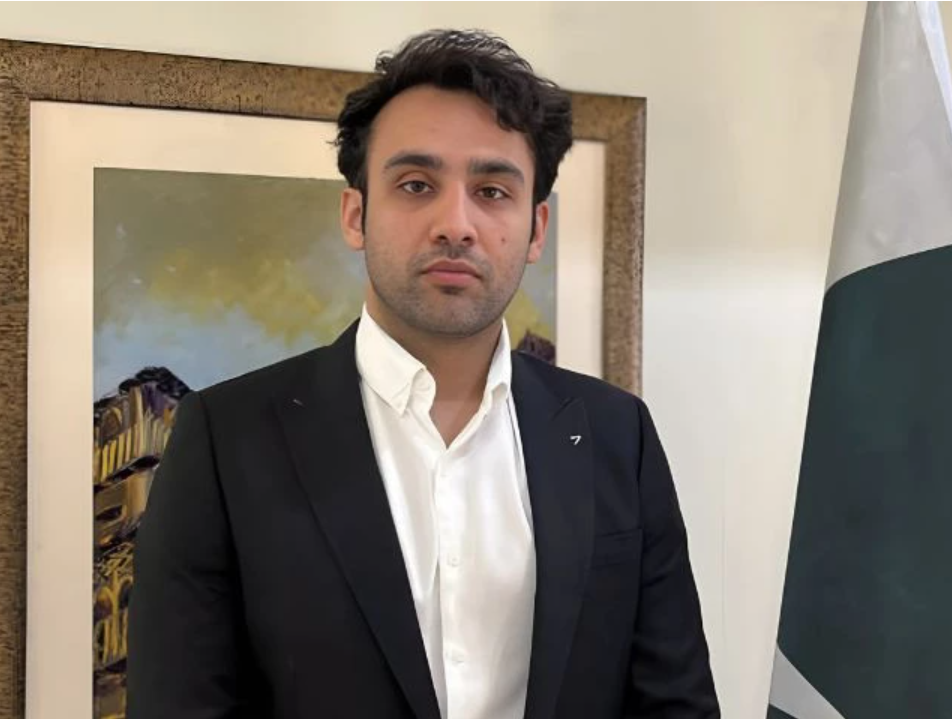
Bilal Bin Saqib, Special Assistant to the Prime Minister (SAPM) on Crypto and Blockchain, held a series of high-profile meetings in Washington, D.C., this week with over a dozen US lawmakers and government officials to promote Pakistan’s role in the global digital economy and explore collaborative opportunities in blockchain regulation, financial innovation, and digital assets.
During his visit, Saqib met with US Senator Cynthia Lummis — a leading voice in US crypto legislation and co-author of the Lummis-Gillibrand Responsible Financial Innovation Act, as well as a co-sponsor of the Bitcoin Act, which aims to designate Bitcoin as a strategic reserve asset. He also engaged with Senator Bill Hagerty of the Senate Banking Committee, Senator Rick Scott, Senator Jim Justice (another co-sponsor of the Bitcoin Act), and Senator Tim Sheehy.
Other key meetings included discussions with Senator Ted Cruz, Congressmen Troy Downing, Ryan Zinke, Rick McCormick, and Derrick Van Orden — all of whom are involved in shaping US policy on emerging digital technologies. Saqib also met White House legal officials, including Associate Counsels Kevin Cline and Ugonna Eze, and collaborated with tech entrepreneur Jill Kelley, founder of blockchain identity firm EdentifID.
“We came to learn, to listen, and to contribute,” said Saqib, emphasizing that Pakistan is exploring international best practices in crypto regulation not to replicate them, but to tailor suitable frameworks for its own unique challenges and opportunities.
The SAPM highlighted Pakistan’s recent initiatives such as the announcement of a Strategic Bitcoin Reserve, efforts to build a regulatory framework for virtual assets, and the use of stablecoins to streamline remittance flows and broaden financial inclusion.
Saqib said the meetings illustrated the importance of global cooperation and the potential for countries like Pakistan to influence the future of digital finance. “To be at the table with those shaping global finance sends a message: Pakistan is not here to catch up — we’re here to lead,” he stated.
With a large youth population, an expanding freelance economy, and over $36 billion in annual remittances, Saqib argued Pakistan is well-positioned to become a hub for responsible digital innovation.
IMF Questions Bitcoin Mining Initiative
However, even as the SAPM pitched a forward-looking vision abroad, Pakistan faces scrutiny at home. The International Monetary Fund (IMF) has asked the government to explain its decision to allocate 2,000 megawatts of electricity for Bitcoin mining and AI data centers — a move made without prior consultation with the Fund.
The IMF has requested clarification on the legal standing of cryptocurrencies in Pakistan and is expected to address the matter during upcoming virtual budget discussions. The energy allocation, announced last week by the Ministry of Finance, is part of a national plan to harness surplus electricity, generate tech jobs, and attract foreign investment. This initiative, led by the Pakistan Crypto Council (PCC), is reportedly the first phase of a broader digital infrastructure rollout.
Planned expansions include renewable-powered data centers, partnerships with global blockchain and AI firms, and the development of fintech hubs.
Conflicting Domestic Messaging on Crypto
Despite these ambitions, the federal government and central bank reaffirmed this week that cryptocurrencies remain illegal in Pakistan. In a meeting of the National Assembly Standing Committee on Finance, Federal Finance Secretary Imdad Ullah Bosal and State Bank of Pakistan Executive Director Sohail Jawad said trading or holding cryptocurrencies is prohibited and subject to investigation by the Financial Monitoring Unit (FMU) and the Federal Investigation Agency (FIA).
Bosal clarified that work on cryptocurrencies was still in its infancy and that no legal or regulatory framework currently exists. He recommended the PCC, which is headed by Bilal Bin Saqib, be invited to brief the committee.
Pakistan Peoples Party (PPP) MNA Sharmila Faruqi pointed to the government’s contradictory stance — promoting cryptocurrencies abroad while declaring them illegal domestically — especially in the wake of Pakistan’s recent removal from the FATF grey list.
In response, SBP’s Jawad expressed hope that the PCC would help bring stakeholders together to create a comprehensive regulatory structure.
Jawad further noted that the SBP had, in 2018, issued guidelines prohibiting crypto dealings by regulated entities — instructions that remain in force. Entities must report such activities to the FMU for investigation.
Summary:
While Pakistan’s crypto envoy seeks international alliances to position the country as a digital economy leader, internal contradictions and regulatory confusion threaten to undermine the message. As global interest grows, the challenge for Pakistan lies in aligning its domestic laws with its international ambitions.