Criticises moon-sighting body, lack of Muharram code, and foreign-influenced legislation
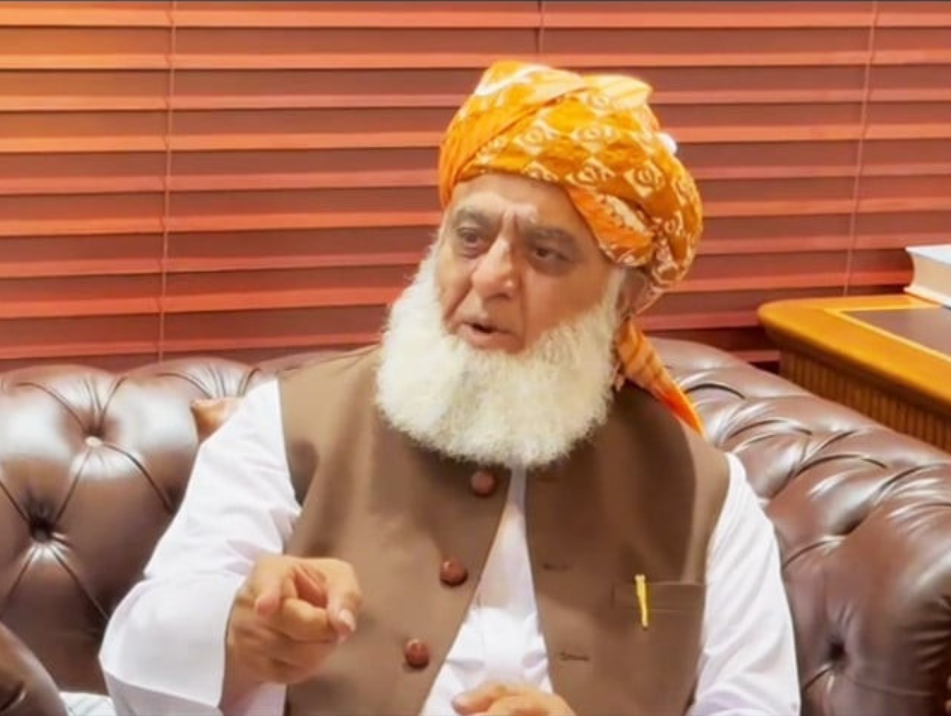
KARACHI — Jamiat Ulema-e-Islam-Fazl (JUI-F) chief Maulana Fazlur Rehman has claimed that sectarianism in Pakistan is deliberately provoked by certain elements to prevent the establishment of an Islamic system. Addressing a digital media convention in Karachi on Saturday, he argued that religious scholars are often pitted against each other whenever voices rise in favour of Islamic governance.
“There are sectarian organisations, but their confrontations occur only at the behest of hidden forces. Whenever demands are raised for an Islamic order, sectarianism is deliberately inflamed to derail the cause,” he said.
Fazl also criticised the Ruet-e-Hilal Committee, calling it an unregulated body lacking legal structure. He said that despite repeated efforts, no official founding documents or records have been made accessible. “Without a proper legal framework, accountability is impossible. That’s why disagreements over moon sighting continue to spiral into broader conflicts,” he noted.
The JUI-F leader further lamented that no formal code of conduct for Muharram processions has been introduced in the last 77 years. He alleged this was a calculated omission by the state to keep religious groups divided. “These are not oversights — such gaps are intentionally left to maintain friction between sects,” he asserted.
Rejecting the idea of separating religion from state affairs, Fazl criticised those who blame religion for national disarray. “Religion is not the only cause of instability — ethnicity, regionalism, and provincial divisions have also caused serious unrest. Conflicts among Baloch, Pashtuns, Sindhis, and Mohajirs have at times turned violent,” he added.
He pointed out that there is broad consensus among all Islamic schools of thought on the Objectives Resolution and Islamic clauses in the Constitution. Yet, he criticised the government for enacting laws under external pressure from the IMF, FATF, and UN, which he believes contradict Islamic teachings.
Citing the recent passage of a bill banning underage marriage in Islamabad, Fazl remarked, “Our religion imposes no such age limit. These laws are being crafted under foreign diktats, not in accordance with Islamic principles.”
Fazl also condemned the culture of sensationalism in media, particularly the focus on politicians’ flaws. “It has become common to treat the exposure of vices as newsworthy. Islam forbids seeking out others’ faults — it is a major sin,” he said.
He accused certain taxpayer-funded institutions of fabricating stories against politicians, stating that while journalism must uncover truth, it should also respect moral boundaries. “There’s a difference between what’s permissible and what’s not — and the media must recognise that,” he concluded.