

By: S.M.A. Kazmi
By any measure, the mere mention of nuclear weapons sends a chill down the spine of history. And yet, in 2024, the world finds itself yet again on the precipice of a nuclear standoff — this time centered in the Middle East, where suspicions, ambitions, and preemptive strikes now collide in dangerous fashion.
On June 13, Israel launched a dramatic and controversial attack on Iran, claiming it was a desperate effort to stop Tehran from developing a nuclear weapon. Iran, for its part, continues to deny such intentions, insisting that its uranium enrichment is for peaceful purposes. But as the enrichment levels rise and international inspections grow more complex, the line between capability and intent becomes increasingly blurred.
The truth is: making a nuclear bomb is not a simple flick of a switch. It’s a deeply technical, multi-stage process that begins with one of Earth’s most geopolitically sensitive resources — uranium.
From Ore to Armageddon
Uranium, while found across the globe, is heavily mined in just six countries, including Kazakhstan, Canada, and Russia. Once extracted, it must go through a meticulous and expensive series of transformations: crushing the ore, leaching it with acid, converting it to gas, and then spinning it through thousands of centrifuges to separate the useful uranium-235 from the more common uranium-238.
Iran currently operates an estimated 22,000 centrifuges — more than three times what was allowed under the 2015 nuclear agreement. That alone has raised alarms among nuclear watchdogs. But enrichment is not inherently ominous. At low concentrations (3.5% to 5%), enriched uranium powers nuclear reactors. At 20%, it serves medical purposes. The danger lies in the leap to 90% enrichment — the threshold at which uranium becomes weapons-grade.
And here lies the red flag. The International Atomic Energy Agency (IAEA) estimates that 42 kilograms of highly enriched uranium is enough for a single nuclear bomb. Iran, experts say, has accumulated enough near-weapons-grade material that, if further refined, could produce material for nine such devices. That’s no longer theory — that’s latent capability.
Science Meets Strategy
Let’s be clear: enriching uranium to weapons-grade is just one part of the equation. Building a nuclear weapon requires engineering a successful nuclear fission reaction — splitting atoms in a controlled chain reaction to unleash devastating energy. Then, you must be able to miniaturize that charge, fit it onto a missile, and ensure it can be accurately delivered over long distances. Ballistic mastery and nuclear warhead miniaturization are not trivial pursuits.
Only a handful of nations have conquered all these steps. Is Iran there yet? Probably not. But the road is getting shorter — and bumpier.
History’s Echo
The world has only seen the horror of nuclear warfare twice — Hiroshima and Nagasaki, where over 214,000 lives were lost in the blink of an eye. Since then, the global community has tiptoed around the nuclear abyss, using diplomacy, deterrence, and doctrine to keep Pandora’s box firmly shut.
But what happens when old rivalries, new technologies, and geopolitical mistrust meet in a region already roiling with conflict? What if a preemptive strike miscalculates? Or worse, triggers retaliation?
The Need for Nuance
This isn’t a call for panic, but a plea for precision — both in language and policy. Iran may not yet have a bomb, but it clearly has the knowledge and infrastructure to build one. Israel’s fears are grounded in regional survival. But unilateral military action might only accelerate the very outcome it hopes to prevent.
We’re at a crossroads — not just in Iran’s nuclear journey, but in how the world chooses to address it. Through diplomacy or deterrence? Preemption or patience?
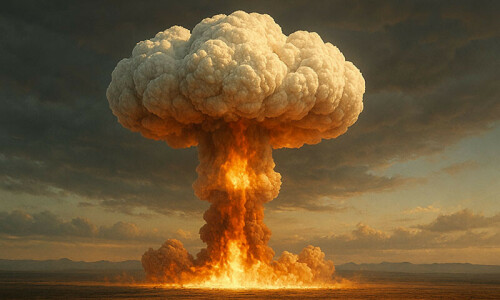
History remembers the mushroom cloud. But it also remembers the missed opportunities for peace.
Let’s hope we choose wisely.