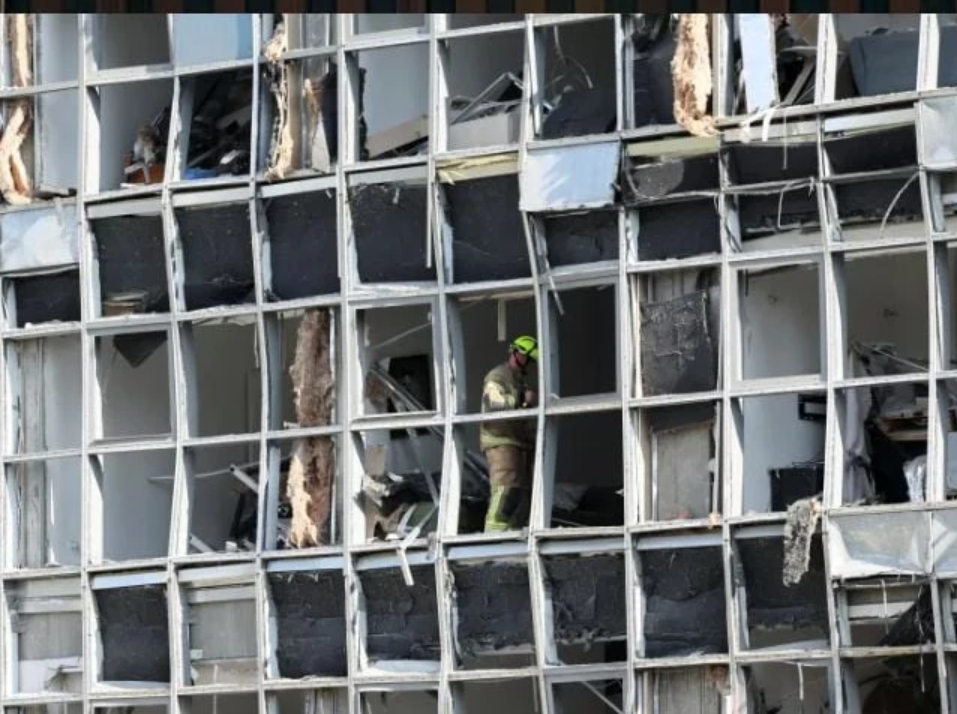
Israeli Defence Minister Israel Katz on Thursday declared that Iran’s Supreme Leader Ayatollah Ali Khamenei “cannot continue to exist” following a wave of Iranian missile strikes, one of which hit near the Soroka Medical Centre in Beersheba.
Visiting Holon, one of the strike sites, Katz stated, “A dictator like Khamenei, who has made Israel’s destruction his mission, has no future.” Drawing parallels to World War II, he added, “Had Israel and the IDF existed during the Holocaust, we would have gone into Hitler’s bunker and eliminated him. Khamenei is the modern-day Hitler.”
He confirmed that the Israel Defense Forces (IDF) had been ordered to intensify strikes against Iranian strategic and governmental targets, particularly in Tehran, to dismantle perceived threats and destabilise the Iranian regime.
Prime Minister Benjamin Netanyahu echoed the sentiment, vowing that Iran would “pay the price” for its missile campaign, which included precision strikes on Israeli military sites. According to Israeli media, 20–30 missiles hit Tel Aviv, Ramat Gan, Holon, and Beersheba, including areas near Soroka Hospital. Authorities confirmed at least 65 injuries.
Iran’s state media said the strikes targeted Israeli military and intelligence headquarters, with collateral blast damage impacting Soroka Hospital.
Iran Condemns Israeli Attacks on Nuclear Facilities, Blames IAEA Inaction
Iran’s Atomic Energy Organisation reported on Thursday that Israeli airstrikes targeted the Khondab research reactor and the adjacent heavy water facility—key components of Iran’s nuclear infrastructure. Tehran accused the International Atomic Energy Agency (IAEA) of ignoring repeated warnings about potential Israeli attacks.
Foreign Ministry spokesperson Esmaeil Baqaei sharply criticised IAEA Director General Rafael Grossi, accusing him on social media of issuing a biased report that was manipulated by the U.S. and European powers to justify aggression against Iran.
“You obscured the truth… enabling a genocidal regime to attack Iran’s peaceful nuclear programme,” Baqaei wrote, referring to the resolution that allegedly provided the legal pretext for the strikes.
EU-Iran Talks Planned, But No Meeting with Trump’s Envoy
A potential high-level meeting between EU foreign ministers and Iran’s representatives is under discussion, pending final confirmation from Tehran. If held, it would mark the first direct contact since Israel began its offensive on Iran.
Deputy Foreign Minister Abbas Araghchi has reportedly refused to meet with Donald Trump’s special envoy for the Middle East, Steve Witkoff, citing ongoing Israeli strikes—allegedly supported by Washington—as the main reason. “Engagement is impossible under fire,” he said.
The EU-led talks are expected to focus on Iran’s nuclear programme and potential de-escalation measures. Tehran has expressed conditional willingness to scale down its nuclear activities but ruled out any talks involving Israel.
Posting on social media, Araghchi reiterated Iran’s commitment to non-proliferation: “Iran has always acted in line with its promise — we have never sought, and will never pursue, nuclear weapons.” He added that Iran remains open to diplomacy—excluding dialogue with Israel.
Drone Warfare and U.S. Involvement in Question
Israeli media reported that Iran has launched nearly 1,000 drones toward Israel since hostilities began on June 13. However, Channel 12 stated that fewer than 200 made it into Israeli airspace, and none struck their intended targets.
Iran’s Supreme Leader Khamenei warned the U.S. that any direct military involvement in Iranian territory would trigger “grave and irreversible consequences.”
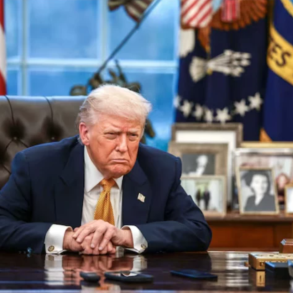
Asked outside the White House whether the U.S. would join Israel’s campaign, President Donald Trump remained ambiguous. “I may do it, I may not. Nobody knows yet,” he said, confirming that consultations with Israeli leadership were ongoing.
Heightened U.S. Security, Global Condemnation of Israeli Strikes
Amid the intensifying crisis, the U.S. Embassy in Qatar restricted American personnel from accessing Al Udeid Air Base—Washington’s largest military installation in the Middle East—citing security concerns and urging caution.
In Japan, survivors of the Hiroshima and Nagasaki bombings condemned the Israeli strikes. Nihon Hidankyo, a Nobel Peace Prize-winning advocacy group, issued a statement through Jiji Press expressing “strong indignation and concern.”
“Attacks on nuclear facilities must never be accepted,” they said. “The world must learn from Hiroshima and Nagasaki and reject the use of weapons of mass destruction entirely.”