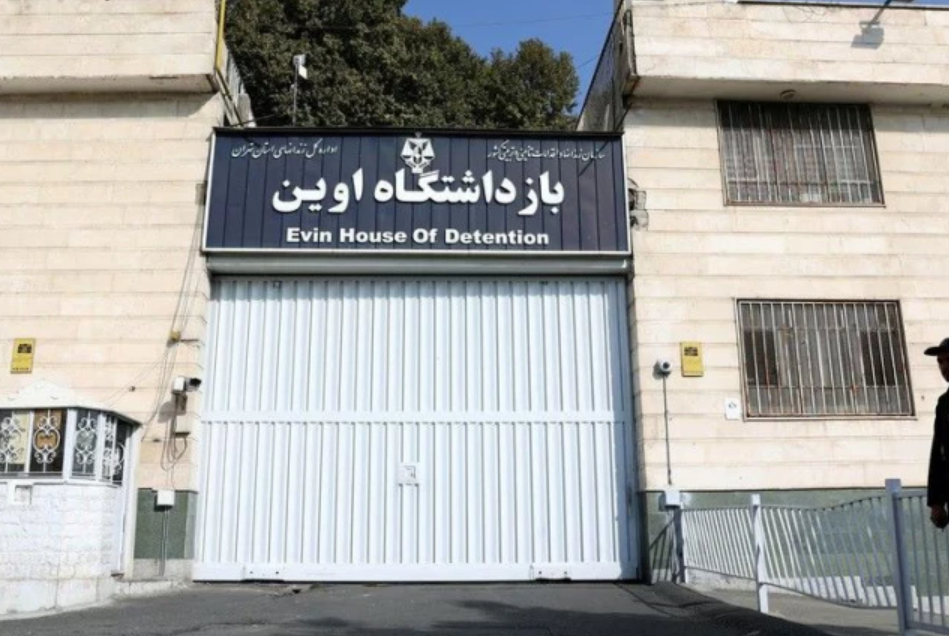
Israeli forces intensified their offensive against Iran on Monday, launching a strike on Tehran’s notorious Evin prison, long seen as a symbol of the Islamic Republic’s security state. The strike came a day after the United States formally entered the conflict, dramatically escalating tensions in the region.
Evin prison, known for housing political prisoners, dissidents, and foreign detainees since the 1979 revolution, was among multiple targets hit in what Israel described as its heaviest bombing of Tehran to date. Israeli Defence Minister Israel Katz said the attacks targeted regime infrastructure and internal security sites in the capital.
Local reports from Tasnim news agency said a nearby power station was also struck, leading to outages in parts of Tehran. The full extent of the damage remains unclear, as conflicting accounts emerge amid mass displacement from the city following ten days of bombardment.
Iran’s resolve to continue fighting was underscored by Deputy Foreign Minister Saeed Khatibzadeh, who in an Al Jazeera interview compared the current conflict to the Iran-Iraq war and declared, “We are prepared to go to the end.”
Expanding Fronts: Nuclear Sites, Airports, and Missile Exchanges
Israel confirmed further strikes aimed at disrupting access to Iran’s Fordow nuclear site, a day after US forces bombed the facility along with Natanz and Isfahan in “Operation Midnight.” Israel said its operation focused on routes leading to Fordow rather than the facility itself.
Al Jazeera reported Israeli airstrikes on at least six Iranian airports, destroying aircraft and damaging runways and shelters. The Israeli military claimed the strikes were designed to hinder Iran’s air operations.
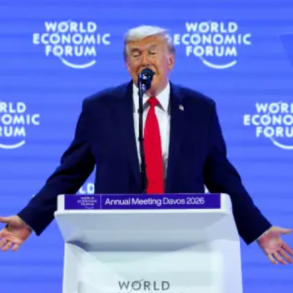
Missile sirens blared across Israel as Iran launched new barrages, triggering alerts in Jerusalem and forcing lawmakers into shelters. The exchanges followed US President Donald Trump’s remarks suggesting Iran’s government could face regime change, a statement that contrasted with reassurances from other US officials denying such intent.
Regional and Global Reactions
South Korean President Lee Jae-myung voiced fears of global economic fallout, warning of oil price spikes fueling inflation. Meanwhile, Yemen formally declared its participation in the conflict, cautioning foreign ships to stay clear of its waters.
Protests erupted across the US, with demonstrators condemning Washington’s entry into the war. In Iran, large gatherings in cities like Qom condemned Israeli and American actions.
Pope Leo XIV called for an urgent ceasefire, describing the violence as pushing the region toward “an irreparable abyss.” The International Campaign to Abolish Nuclear Weapons (ICAN) denounced the US strikes as illegal and urged a return to diplomacy, noting US intelligence does not assess Iran to be pursuing nuclear arms.
As the crisis deepens, analysts warn of the increasing risk of a wider war drawing in regional and global powers.