Opposition’s Push to Delay Finance Bill Rejected as Rs17.57tr Plan Approved
The National Assembly on Thursday passed the Rs17.57 trillion federal budget for 2025-26, endorsing key amendments and sweeping tax reforms while dismissing opposition demands for a delay and broader public consultation.
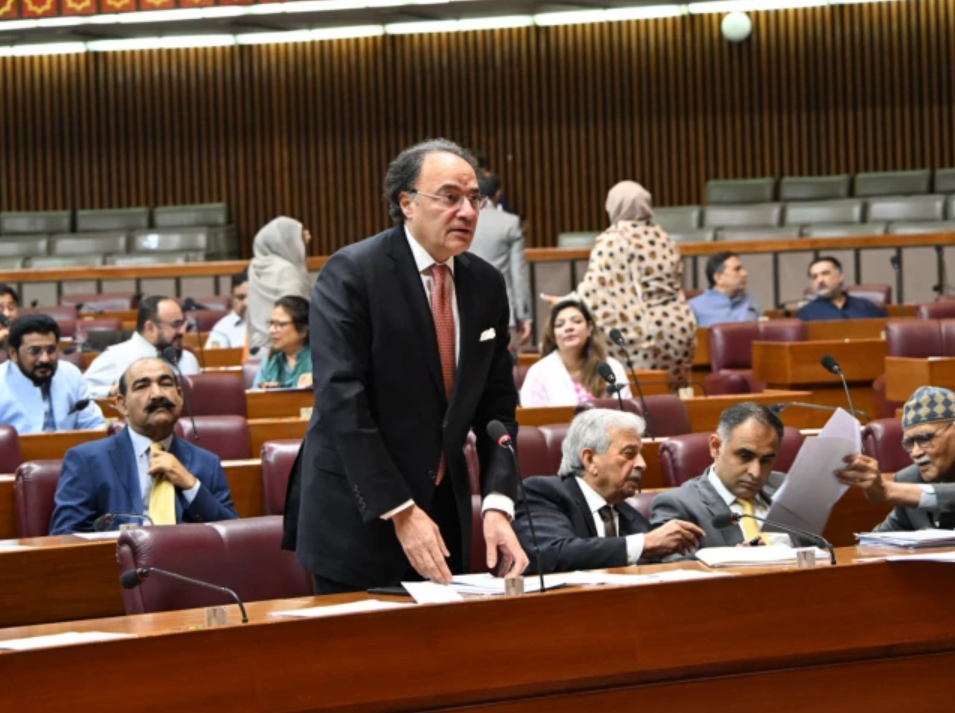
The Finance Bill 2025, which gives effect to the government’s fiscal proposals for the year beginning July 1, 2025, and updates several existing laws, was taken up for detailed clause-by-clause consideration during a session chaired by Speaker Ayaz Sadiq. Finance Minister Mohammad Aurangzeb formally presented the bill in its final form, as recommended by the Standing Committee.
Opposition members sought to postpone its approval pending public input, but their proposal was decisively voted down.
Among the key provisions approved was stricter action against sales tax fraud, including penalties for fake invoicing, tampering with tax records, or destroying evidence. Individuals submitting false tax returns will also face arrest under the new measures.
The budget also introduced a Rs2.50 per litre carbon levy on petroleum products and a 10% sales tax on solar panels, aimed at both promoting renewable energy and boosting revenue — despite opposition efforts to amend these clauses, which were rejected.
Further amendments granted income tax exemptions to 107 organisations. These include the Pakistan Bar Council, provincial bar councils, Fauji Foundation, Army Welfare Trust, Foundation University, Shaukat Khanum Memorial Cancer Hospital, Edhi Foundation, Al-Shifa Trust, Forman Christian College, LUMS, Ghulam Ishaq Khan Institute, and the National Rural Support Programme, among others. Tax relief was also approved for pensions of former presidents and their widows, as well as for the Diamer-Bhasha and Mohmand Dam Fund.
Revisions to the Customs Act 1969 were passed to step up anti-smuggling efforts. These require cargo tracking systems for imports, exports, and transit goods, with harsh penalties for avoiding the e-bill system or tampering with tracking devices.
The income tax structure for salaried individuals saw notable adjustments: those earning up to Rs600,000 annually will remain exempt, while new tax slabs were introduced for higher incomes.
The assembly also approved changes regarding lawmakers’ compensation. The House Committee, rather than the Secretariat, will now set salaries and allowances. Federal ministers and ministers of state will earn the same as MPs.
Following the budget’s passage, PPP Chairman Bilawal Bhutto Zardari reaffirmed his party’s support, citing the government’s adoption of several PPP recommendations — including a 20% increase in Benazir Income Support Programme funding and tax reductions on solar panels.
Speaker Ayaz Sadiq adjourned the session, with proceedings set to resume at 11 AM the next day.