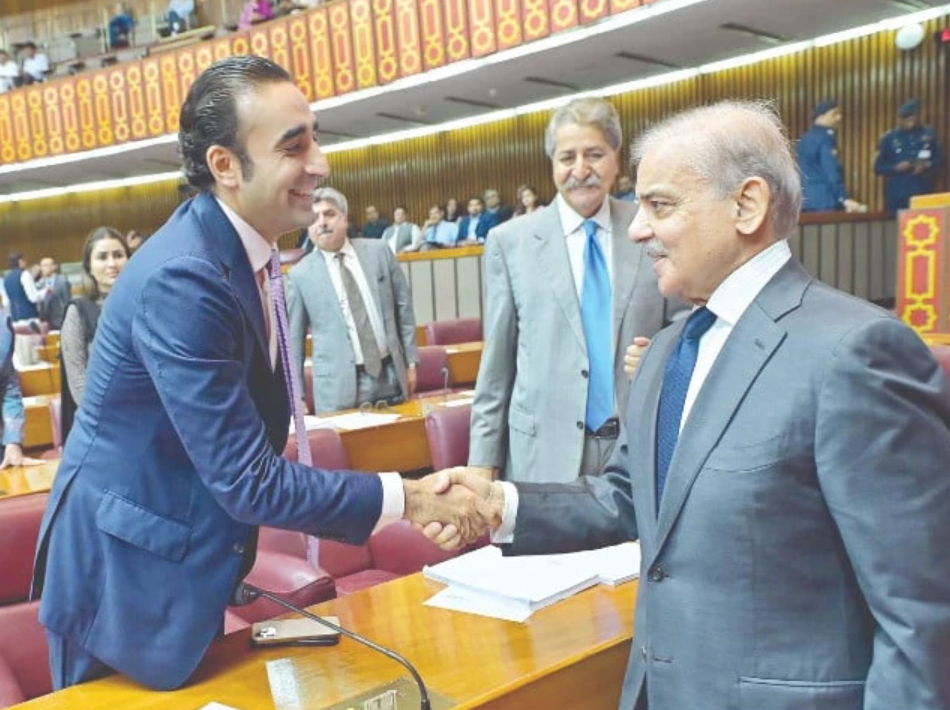
ISLAMABAD – June 27:
The National Assembly on Thursday passed the Rs17.6 trillion federal budget for fiscal year 2025–26, introducing Rs463 billion in new taxes and securing backing from the Pakistan Peoples Party Parliamentarians (PPPP). All proposed amendments from the opposition were rejected.
With the support of 201 MNAs versus 57 opposition votes, Prime Minister Shehbaz Sharif’s coalition successfully cleared its second budget, presented by Finance Minister Muhammad Aurangzeb. The Finance Act 2025 will come into effect from Tuesday following the President’s assent.
Key Budget Allocations:
- Interest payments: Rs8.2 trillion (largest allocation)
- Defence spending: Rs2.55 trillion (excluding pensions and development)
- Subsidies: Rs1.1 trillion
- Pensions: Over Rs1 trillion
- Development spending: Rs1 trillion
- Civil government operations: Rs917 billion
Major Tax Measures:
The budget introduces a series of significant tax changes:
- Digital economy taxation: Income and sales taxes imposed on online platforms, e-commerce, cash-on-delivery services, and streaming platforms
- New climate levy: Rs2.5/litre on petrol and diesel
- Green vehicle subsidy tax: 1% to 3% tax on conventional fuel-based cars
- Pension tax: 5% tax on annual pensions above Rs10 million
- Excise duty: Rs10 on each day-old chick, expected to generate Rs15 billion annually
- 10% sales tax on solar panel imports
- Increased income tax:
- From 25% to 29% on debt income from mutual funds (companies)
- From 15% to 20% on interest from government loans
Ineligibility Restrictions Revised:
The government scaled back its most stringent enforcement measure — banning high-value economic transactions by individuals outside the tax net. Initially projected to yield Rs389 billion, this clause was diluted on PM’s instructions:
- Residential properties: Ban applies only if property value exceeds Rs50 million
- Commercial properties: Ban applies above Rs100 million
- Cars: Ineligible individuals can still purchase vehicles worth up to Rs7 million
- Cash withdrawal cap: Rule applies if cash withdrawals exceed Rs100 million/year
- Stock investments: Restrictions kick in for investments above Rs50 million annually
- Savings accounts: Still prohibited for ineligible individuals
FBR Chairman Rashid Langrial said this step establishes the principle of ineligibility, with thresholds subject to future revision.
FBR Arrest Powers Remain — With Safeguards:
Despite criticism, the National Assembly retained the FBR’s power to arrest individuals in sales tax fraud cases, after the PPP and PML-N reached a compromise:
- No arrest at the inquiry stage
- All arrests bailable by court
- Scope limited strictly to sales tax fraud
PPP Chairman Bilawal Bhutto Zardari endorsed the budget after the government agreed to key party demands, including:
- Lowering income tax on salaried individuals earning up to Rs100,000/month
- Reducing sales tax on solar panels
- Adding safeguards to FBR’s arrest powers
- A 20% increase in BISP allocation, now at Rs716 billion
However, despite Bilawal’s claim, the government did not fully exempt salaries up to Rs1.2 million. Instead, the income tax rate has been reduced to 1% (down from 5%).
Langrial added that the budget introduces policies to:
- Discourage high-value cash transactions (e.g., no expense allowance for payments over Rs200,000)
- Disallow input tax adjustment for such transactions
- Bring foreign vendors and digital marketplaces into the tax net
This budget reflects the government’s effort to widen the tax base, curb undocumented transactions, and align fiscal policy with economic challenges, though it faces criticism over rising costs and inflationary impact.