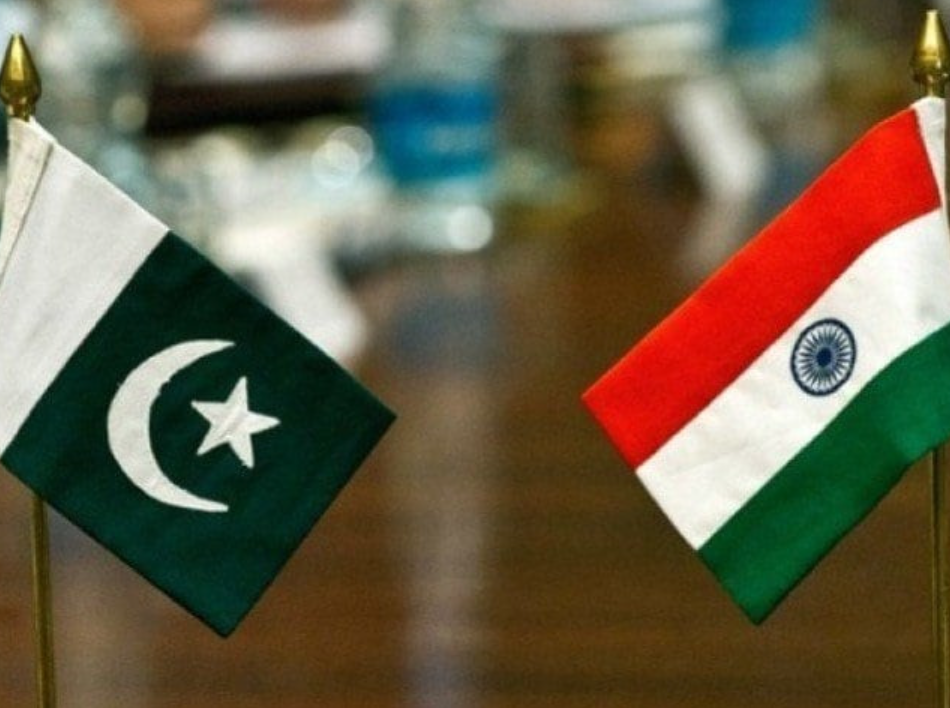
Islamabad urges global scrutiny as it challenges New Delhi’s actions under the Indus Waters Treaty
Pakistan has formally presented its grievances to the Permanent Court of Arbitration (PCA), alleging that India is “weaponising” the waters of the Western Rivers in violation of the 1960 Indus Waters Treaty (IWT). The complaint, currently under review by the international tribunal, accuses New Delhi of manipulating river flows to exert pressure on Pakistan—an act Islamabad describes as “hydro-terrorism.”
According to the PCA’s 32nd Supplemental Award on Competence, Islamabad claims India’s policy shift since April 23, 2025, signals a deliberate attempt to use dam infrastructure to alter water distribution patterns downstream.
“India’s stance of putting the Treaty in ‘abeyance’—backed by political rhetoric—has raised serious alarm, suggesting a new strategic posture aimed at manipulating or withholding water,” the court quoted Pakistan as saying.
Pakistan’s Allegations: A Three-Pronged ‘Weaponisation’ Strategy
Pakistan outlined three primary ways India could exploit dam infrastructure to violate the treaty:
- Disruption of irrigation supply via the filling of large pondage pools and reservoirs.
- Sudden release of stored water, causing flash floods in downstream areas.
- High-volume sediment discharge, which could damage land, infrastructure, and displace communities.
The submission claims that India’s recent conduct amounts to a systematic effort to exert hydrological pressure on Pakistan.
Tribunal Confirms Jurisdiction Despite India’s ‘Abeyance’ Claim
In a unanimous ruling on June 27, the PCA declared it has full authority to hear the case.
“India’s unilateral declaration of ‘abeyance’ does not strip the court of its competence under international law,” the ruling affirmed.
The court also recognised Pakistan’s contention that India’s policy isn’t just symbolic—it is being operationalised in ways that actively undermine treaty obligations.
Flow Data Points to Manipulation, Says Pakistan
Islamabad presented hydrological data showing irregularities in water flow, particularly in the Chenab River, starting from early May and persisting through June. These fluctuations, according to Pakistan, are consistent with the Baglihar Hydropower Project (HEP) undergoing drawdown flushing events—a process that involves rapidly emptying reservoirs, releasing sediment and disrupting flow.
“The hydrographs show two distinct incidents of flow variation—at the start and end of May—which Pakistan attributes to deliberate manipulation by India,” the award noted.
Pakistan argued that such actions violate Paragraph 15 of Annexure D of the treaty, which governs operational protocols for hydroelectric plants.
Silence from Indian Officials
Efforts to obtain clarification from Indian authorities have reportedly gone unanswered. Pakistan’s Indus Waters Commissioner sent a formal query on May 27, requesting an explanation for the unusual flow patterns, but no response had been received by the time of filing.
“This silence, coupled with the observed anomalies, reinforces Pakistan’s claim that India’s abeyance policy is being used to conceal treaty violations,” the award remarked.
Legal and Diplomatic Stakes Rise
The tribunal, chaired by Professor Sean D. Murphy (United States), includes members from Belgium, Jordan, Australia, and the United States. Legal analysts say the case may set a precedent for handling future water-related disputes under bilateral treaties, especially where political hostilities complicate transboundary resource management.
The final ruling—focused in part on design and operational issues with India’s Kishenganga and Ratle Hydro-Electric Projects (KHEP and RHEP)—is expected later this summer.
Pakistan’s closing argument paints a stark picture:
“India’s ‘abeyance’ is no longer a legal posture but a smokescreen for treaty violations.”
As tensions mount, the international community is watching closely to see whether the arbitration panel will uphold treaty norms—or allow India’s evolving water strategy to reshape one of South Asia’s most vital agreements.