Government cites Middle East conflict and global oil shocks; CNG, petrol price gap narrows further
ISLAMABAD: In a move likely to burden households already grappling with inflation, the federal government on Monday night announced a steep hike in petroleum prices for the first half of July—blaming the increase on global market volatility sparked by the recent Iran-Israel conflict.
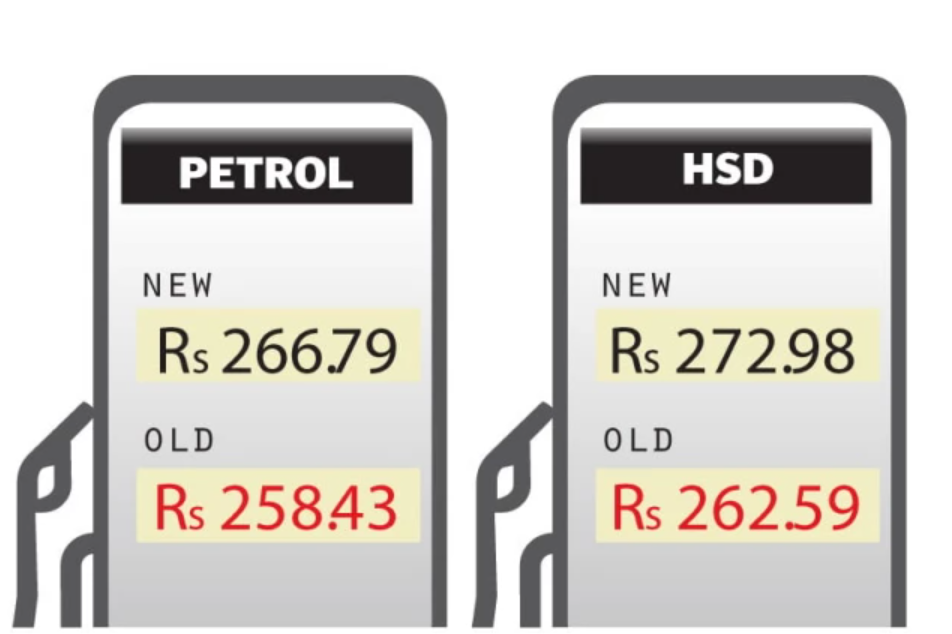
According to a notification from the Finance Division, petrol prices were raised by Rs8.36 per litre, bringing the new rate to Rs266.79, while high-speed diesel (HSD) saw an even sharper increase of Rs10.39, pushing the new price to Rs272.98 per litre. The changes, effective from July 1 to 15, were made following recommendations by the Oil and Gas Regulatory Authority (OGRA).
“The government has decided to revise the prices of petroleum products for the fortnight starting today, based on OGRA’s proposal and input from relevant ministries,” the notification read.
Middle East Conflict Triggers Global Oil Volatility
The spike follows recent geopolitical turmoil: Israeli airstrikes on Iranian nuclear and military sites caused crude oil prices to surge by 7–11%, reaching $82–87 per barrel—a six-month high. This was accompanied by Iran’s threat to close the Strait of Hormuz, a critical global energy chokepoint.
Although a ceasefire agreement between Iran and Israel helped bring crude prices back down to around $67 per barrel by late June, the earlier surge had already impacted international fuel markets, hitting Pakistan—a net oil importer—particularly hard.
Inflationary Pressure Expected to Intensify
The HSD price hike is particularly concerning for consumers, as diesel is widely used in transportation and agriculture, sectors that directly influence the cost of goods and food. The increase is expected to drive up transport costs, further inflating prices for everyday commodities.
Petrol, used primarily in motorcycles and private vehicles, now draws closer in price to compressed natural gas (CNG), reducing the incentive for CNG consumption. Since indigenous gas supplies to CNG stations in Punjab were halted years ago, these outlets have relied on costlier imported gas, reducing the price gap between the two fuels.
Government Chooses Hike Over Relief Despite Fiscal Space
Although the government has room to absorb international price shocks through adjustments in the petroleum levy, it has opted instead to pass the burden onto consumers. Currently, Rs77 per litre is collected in petroleum levy on both diesel and petrol.
Despite this, the government is pushing forward with its aggressive fiscal target of Rs1.4 trillion in petroleum levy revenues for the new fiscal year—the highest in Pakistan’s history. Last year’s revised target stood at Rs1.161 trillion.
In addition, the imposition of a carbon levy on petroleum products is expected to contribute to further price increases in the months ahead.
Broader Economic Impact
The new fuel rates take effect from July 1, marking the start of fiscal year 2025–26. With remittances under strain, rising debt servicing costs, and a still-fragile economy, the added inflationary pressure from fuel hikes could further erode purchasing power and fuel public discontent.
As economic challenges mount, experts warn that the combined impact of tax-driven fuel pricing and global energy instability could aggravate Pakistan’s inflation trajectory well into the new fiscal year.