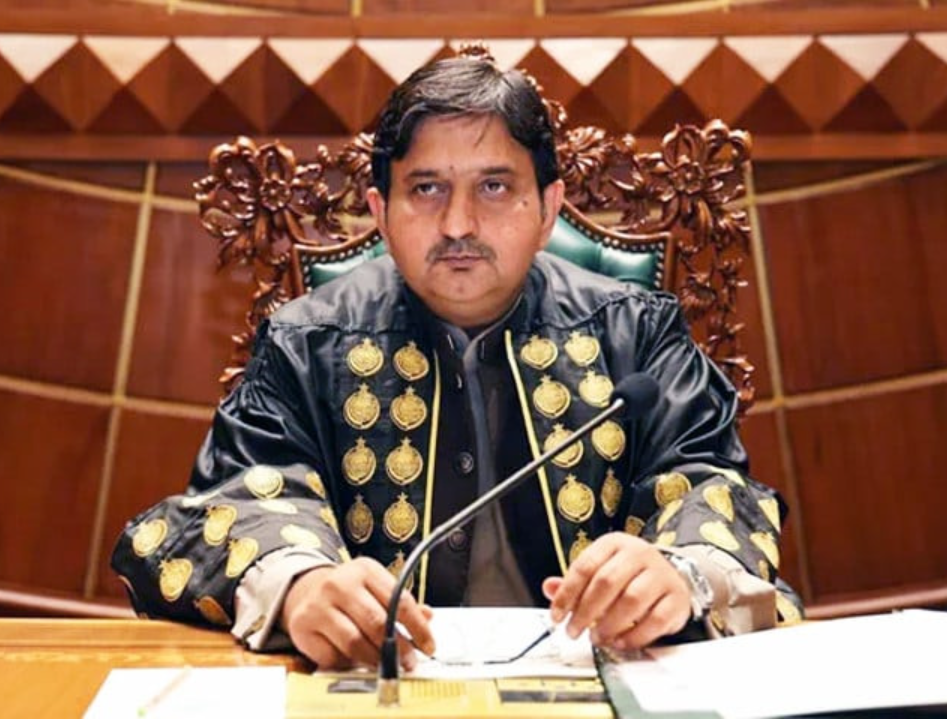
Punjab Assembly Speaker Malik Muhammad Ahmad Khan on Monday firmly defended his decision to file disqualification references against 26 opposition MPAs, stating that the primary role of parliament is to legislate—not serve as a protest stage.
Speaking at a press conference, Khan criticised what he described as the opposition’s repeated disruptions, turning the provincial assembly into a venue for agitation rather than constructive dialogue. He argued that such behaviour violates the decorum of the house and undermines democratic norms.
Khan said he holds no personal desire to expel any member, but insisted that under Articles 62 and 63 of the Constitution, which define the qualifications and disqualifications for lawmakers, the petitioners had every right to expect their applications be resolved within 30 days.
Earlier, Khan had submitted references to the Election Commission of Pakistan (ECP) against 26 MPAs from the Sunni Ittehad Council (SIC), citing “unparliamentary conduct” and “disparagement of the Assembly’s sanctity.” He confirmed this move was necessary to uphold order, after persistent use of abusive language and physical altercations within the assembly.
“This conduct is not just irresponsible—it is anti-democratic,” he stated, reiterating that all members have taken an oath to uphold the Constitution.
While asserting that he had exercised patience for over a year, the Speaker said he could no longer stand by as parliamentary norms were repeatedly flouted. He noted that if the references are not resolved within the prescribed timeframe, they would be automatically forwarded to the ECP for adjudication.
In response to opposition claims that the Speaker lacks authority to initiate disqualification proceedings, Khan cited the Supreme Court’s Panama Papers verdict, authored by Justice Asif Saeed Khosa, which affirms that the Speaker is obligated to act if a member violates their oath.
“If a reference is filed under Article 63(2), it must be processed accordingly,” he asserted.
While standing firm on the need for accountability, Khan expressed hope that future dialogue between the treasury and opposition benches could foster a more cooperative environment in the Assembly. He concluded by reaffirming his duty to uphold the dignity of the house and ensure that its legislative functions are not derailed by political theatrics.