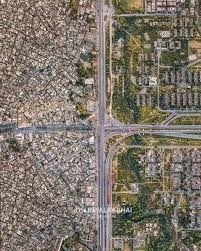


Islamabad was meant to be different. A capital designed with order, green space, and dignity—an anomaly in a country where cities usually grow by accident rather than design. Today, that promise feels increasingly fragile.
Ask residents, planners, or environmental experts, and a quiet anxiety surfaces: Islamabad, as we know it, may not exist a decade from now. Rapid outward expansion, shrinking green spaces, and a governance structure more focused on land sales than livability are reshaping the city faster than its laws can keep up.
The tragedy is not just growth—it’s unmanaged growth.
A Master Plan Frozen in Time
Islamabad’s master plan was meant to evolve. According to urban governance specialist Danyal Adam Khan, the city’s original planners recommended revising it every 20 years. That revision never happened.
On paper, Islamabad has no informal settlements. In reality, it has at least 63 katchi abadis. This disconnect between planning fiction and lived reality has created a city of extremes. As Khan puts it, Islamabad has the widest gap between the haves and have-nots of any Pakistani city.
Those informal settlements are growing at an alarming rate—between 6 to 8 percent annually, says energy and environment expert Vaqar Zakaria. Yet the state’s default response remains demolition, not reform. Afghan Basti was not an exception; it was a warning.
The question we refuse to ask is why these settlements exist in the first place.
The City Runs on the People It Refuses to House
The residents of Islamabad’s informal settlements are not outsiders. They are the people who built the city and keep it running—builders, gardeners, drivers, cleaners, service workers.
Yet, as Khan bluntly explains, they are trapped in a cruel contradiction: Don’t drill bores, but we won’t provide water. Don’t pollute, but we won’t give you sewerage. Don’t encroach, but we won’t give you shelter.
This is not a failure of citizens. It is a failure of the social contract.
When the City Becomes a Business
At the centre of Islamabad’s transformation sits the Capital Development Authority. In practice, CDA is the city’s government. In law, it is merely a land developer.
This distinction matters. As Zakaria notes, the CDA operates on a profit model, funding itself by selling land instead of collecting taxes. The chairman’s power rivals that of federal ministers, yet there is little democratic accountability.
In most functioning cities, infrastructure is paid for through taxation—property tax, water tax, service charges. In Islamabad, land is sold to finance roads, which then encourages more sprawl, which then demands more land sales. It is a self-defeating cycle.
As Zakaria puts it: Selling land to build roads is never a good idea. That money should come from taxes.
Horizontal Sprawl, Vertical Blindness
Global cities learned this lesson long ago. When populations grow, cities go vertical, not outward. Density is managed through smart zoning, transit-oriented development, and vertical housing.
Islamabad, however, continues to expand horizontally—often at the expense of green belts and even the Margalla Hills, one of the largest protected urban parks in the world.
Yes, Islamabad remains cleaner and greener than any other Pakistani city. But that is a dangerously low benchmark. Karachi, too, was once pristine.
Promises, Commissions, and Delays
The CDA insists reform is coming. A new federal commission, a revised master plan, higher density along transit corridors, vertical growth—all have been promised.
But Islamabad suffers from a structural problem: no local democratic pressure. Without elected city governments and routine municipal elections, there is little urgency to deliver. Planning can be delayed indefinitely when no one has to face voters.
The Real Fix: Democracy and Dignity
The solution is neither demolition nor denial.
Islamabad needs iterative local governance—a system that evolves through regular elections, competition, and accountability. Cities improve the same way markets do: through pressure, feedback, and consequences.
At the same time, informal settlements must be formalised, not erased. Regulation creates obligation. Obligation forces the state to provide water, sewerage, housing, and dignity.
Finally, Islamabad must abandon its land-sale addiction. Property and water taxes—among the lowest in the world—must replace speculative development as the city’s revenue backbone.
Development Without Destruction
Islamabad earned its reputation not because of its bureaucrats, but because of its forests, streams, biodiversity, and climate.
And there is hope. As Zakaria reminds us, even Islamabad’s green cover was once sparse. What exists today was built through deliberate policy. That proves a crucial point: development and environmental protection are not enemies.
What’s missing is a value shift—one that sees cities not as real estate portfolios, but as ecosystems meant to be lived in.
If that shift doesn’t happen soon, Islamabad won’t collapse overnight. It will simply become another city we once loved and now barely recognize.