PESHAWAR:
As Eid-ul-Adha nears, cattle markets across Khyber-Pakhtunkhwa (K-P) are buzzing with activity. However, the soaring prices of sacrificial animals and the absence of proper health inspections have raised alarm among buyers and animal health experts alike.
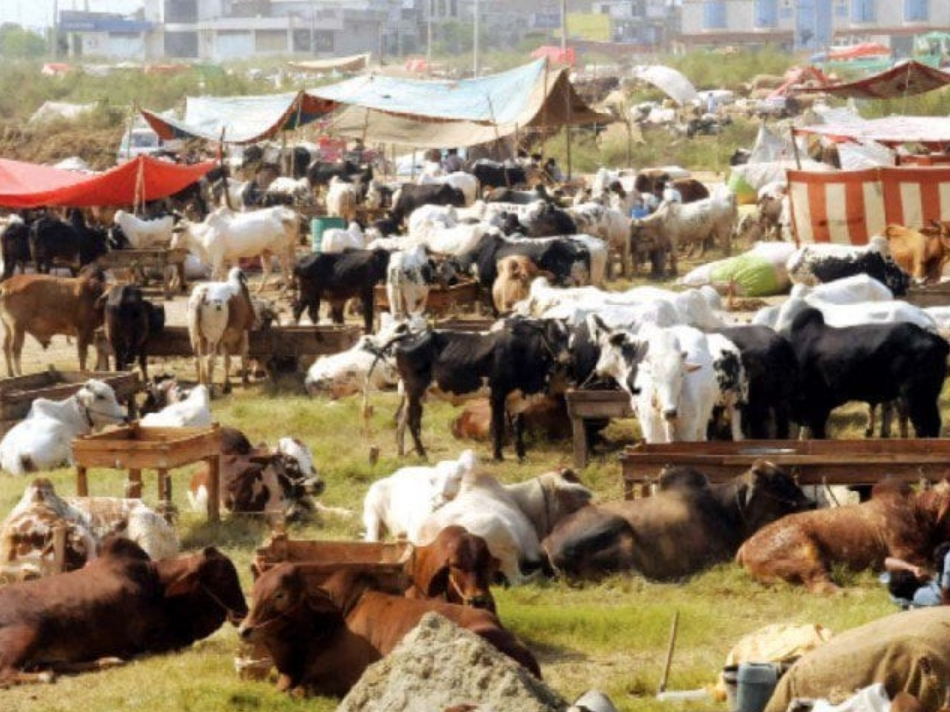
The district administration of Peshawar has officially designated two primary cattle markets for the occasion—one located on Ring Road and the other in Lala Kalay. These markets attract livestock from various parts of the country, including Multan, Dera Ghazi Khan, and other regions of Punjab.
Despite this, traders are selling animals at steep, unregulated prices, with little oversight.
Muhammad Haroon Khan, a Peshawar resident who visited the Ring Road market to buy an animal, told The Express Tribune that prices have skyrocketed over the past year. “Last year, a medium-sized animal would cost between Rs 200,000 to 300,000, but now the prices range from Rs 300,000 to 500,000. Even smaller livestock like sheep and goats are selling for Rs 100,000 to 500,000 each,” he said.
Khan added that although the administration charges traders Rs 1,500 per animal, no veterinary services or public relief measures are being offered. “There are no veterinarians present to check the health of the animals,” he complained.
Naeemullah Khan, another shopper, voiced similar frustrations. “There is no price control. Sellers ask for whatever amount they please; some demand as much as Rs 1 million for a small animal. The government needs to establish proper monitoring. The Livestock Department has resources but isn’t delivering results. If they invested in local livestock and dairy farming, it would create jobs, ensure affordable animals for Eid, and boost the provincial economy,” he suggested.
On the other hand, livestock traders defend the high prices. Ramzan Ali, a trader who brought animals from Multan to Peshawar, said, “There’s a narrative in the media accusing traders of exploiting buyers, but we also buy animals at high prices. We aren’t here to make losses, just fair profits. Rising costs—fuel, transportation, labor—have pushed prices up. If the government lowers fuel costs or regulates transport charges, animal prices will come down naturally,” he argued.
A senior official from the Livestock Department, speaking anonymously, informed The Express Tribune that measures are being taken to safeguard animal welfare. “Each market has a veterinary doctor and a disinfection team. Sick animals receive free medication. We’ve placed banners promoting hygiene and are conducting awareness campaigns to prevent diseases like the deadly Congo virus. So far, no cases have been reported in K-P this season, but we’re actively educating the public,” the official said. They acknowledged resource limitations but emphasized the department’s ongoing efforts.
With Eid-ul-Adha just days away, citizens hope for stronger regulation and government oversight to ensure that the festive sacrifice remains both affordable and safe for all.