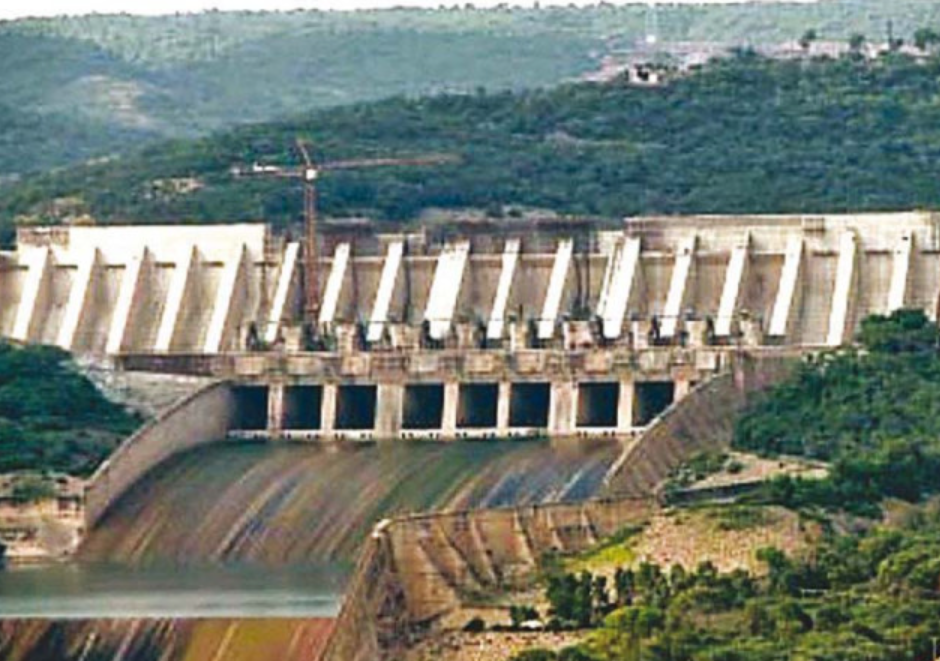
The Executive Committee of the National Economic Council (ECNEC) has conditionally approved the revised cost of the Dasu hydropower project at an unprecedented Rs1.74 trillion—an increase of 240% over the original estimate. The approval, granted during a meeting chaired by Deputy Prime Minister Ishaq Dar, is intended to facilitate loan negotiations with foreign lenders.
The project, originally estimated at Rs479 billion, has seen its cost balloon by Rs1.3 trillion. The per-unit cost of this water-based power generation scheme now stands at Rs8.79, calling into question its long-touted affordability. A final decision will depend on a cost review by the Planning Commission.
To support the safety of Chinese contractors working on the project, ECNEC also approved the procurement of a helicopter. The project aims to generate 2,160MW of electricity and will require additional foreign and domestic loans. Negotiations are underway with the World Bank for a $1 billion loan (a mix of concessional and commercial terms), in addition to a $517 million loan already provided. The government is also pursuing a $400 million foreign commercial loan and Rs350 billion in local commercial financing.
An earlier inquiry into the project’s soaring costs failed to assign clear responsibility, though it cited Chinese contractors, WAPDA, the Planning Commission, and local administration in Kohistan for delays. Enhanced security following attacks on Chinese staff also contributed to a Rs48 billion cost increase—roughly 3.8% of the total escalation.
Border and Security Infrastructure Projects
ECNEC also approved the construction of a new border crossing at the Wagah border with India. The decision follows a broader border infrastructure initiative already underway at Torkham and Chaman, funded by the Asian Development Bank. The Wagah post, estimated to cost Rs95.5 billion, will be awarded through competitive bidding based on ADB regulations and procurement best practices.
To combat smuggling, ECNEC sanctioned the development of 30 anti-smuggling checkpoints along the River Indus and in Balochistan at a cost of nearly Rs15 billion. The Federal Board of Revenue acknowledged the failure of traditional anti-smuggling methods, which are estimated to cost the economy Rs750 billion annually in lost revenue. The new initiative includes Digital and Mobile Enforcement Stations (DES), with sites categorized by size and strategic location.
Other Major Approvals
- Sindh Flood Emergency Rehabilitation Project (Phase-II): Rs12.2 billion for restoring 146 km of flood-damaged roads across four districts.
- Locomotive Repair Project: Revised approval of Rs16 billion for overhauling 100 railway locomotives.
- Khyber Pakhtunkhwa Rural Road Network: Rs113 billion approved for rehabilitation of 878 km of roads to improve access to markets, healthcare, and education.
- Mangi Dam Project (Balochistan): Rs19 billion sanctioned to address Quetta’s acute water shortage. The dam is expected to supply 8.1 MGD (15.1 cusecs) to the city.
- Sindh Early Learning Project: Rs46.6 billion project funded by the World Bank and the Sindh government to improve school infrastructure, teacher deployment, and learning outcomes through a mix of results-based and traditional financing.
- Islamabad Transmission Network Upgrade: Rs11.3 billion approved to reinforce the 220kV transmission system in the Islamabad and Burhan areas, ensuring efficient power dispersal from the Tarbela 5th extension project.