
Calls for Islamic unity as OIC foreign ministers meet in Istanbul
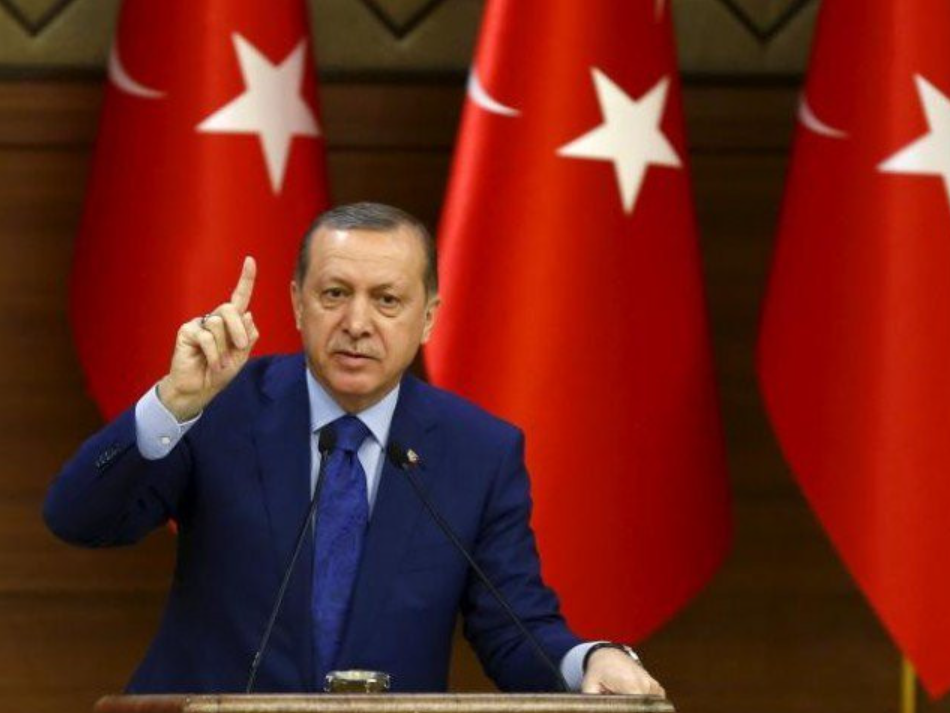
Turkish President Recep Tayyip Erdogan on Saturday cautioned Muslim nations against the risk of a “new Sykes-Picot order” being imposed on the Middle East and urged greater unity to resist Israeli aggression and regional destabilisation.
“We will not permit the drawing of new borders in our region with blood, as was done under the Sykes-Picot arrangement,” Erdogan said while addressing the 51st Session of the Council of Foreign Ministers of the Organization of Islamic Cooperation (OIC) in Istanbul.
Condemning the humanitarian crisis in Gaza, Erdogan described conditions there as “worse than Nazi concentration camps,” noting that “2 million of our brothers and sisters have struggled to survive in Gaza for 21 months.”
Expressing support for Iran amid the ongoing conflict, he said: “We believe the Iranian people, with their resilience and rich state tradition, will overcome these difficult times.”
Erdogan urged Islamic nations to unite against Israeli aggression beyond Gaza. “We must show stronger solidarity to halt Israel’s banditry not only in Palestine, but also in Syria, Lebanon, and Iran,” he said.
He welcomed Syria’s return to the OIC, stressing that the war-torn country “needs the backing of the entire Islamic world to safeguard its territorial integrity, national unity, and achieve lasting peace.”
The meeting comes as tensions soar in the region, with Israel’s latest strikes on Iran, including Thursday’s attack on the Khondab nuclear site, dominating the agenda. The Israeli military claimed it targeted a partially built heavy-water reactor that could potentially produce weapons-grade plutonium.
The OIC, representing 57 Muslim-majority countries, continues to serve as a key platform for political and diplomatic coordination among Islamic nations.
Meanwhile, violence between Israel and Iran has escalated further, with missile and drone strikes exchanged in recent days. Iran reported 430 deaths and 3,500 injuries since June 13, while Israel confirmed 24 fatalities and over 800 wounded.
Iran said its attacks hit Ben Gurion Airport and key military sites in Israel, while Israel claimed to have killed a senior IRGC Quds Force commander in Qom.
At the diplomatic level, efforts to broker a ceasefire in Geneva have faltered. Iran’s envoy to the UN filed a formal complaint against IAEA head Rafael Grossi, accusing him of bias and failing to condemn Israeli strikes on nuclear sites under international safeguards.
Amid growing global alarm, including Russian President Vladimir Putin’s warnings of a potential World War III scenario, hopes for de-escalation appear slim.
Analysts have drawn parallels between the current nuclear pretext and the flawed intelligence that led to the 2003 Iraq war, warning of the danger of repeating history. That war, launched on false claims of weapons of mass destruction, unleashed chaos, terrorism, and instability that still haunt the region.
Similarly, US-led interventions in Syria and Libya have left trails of destruction, fueling extremism and long-term instability.
UN Secretary-General Antonio Guterres has called on all parties to “give peace a chance,” as fears of broader regional conflict continue to rise.