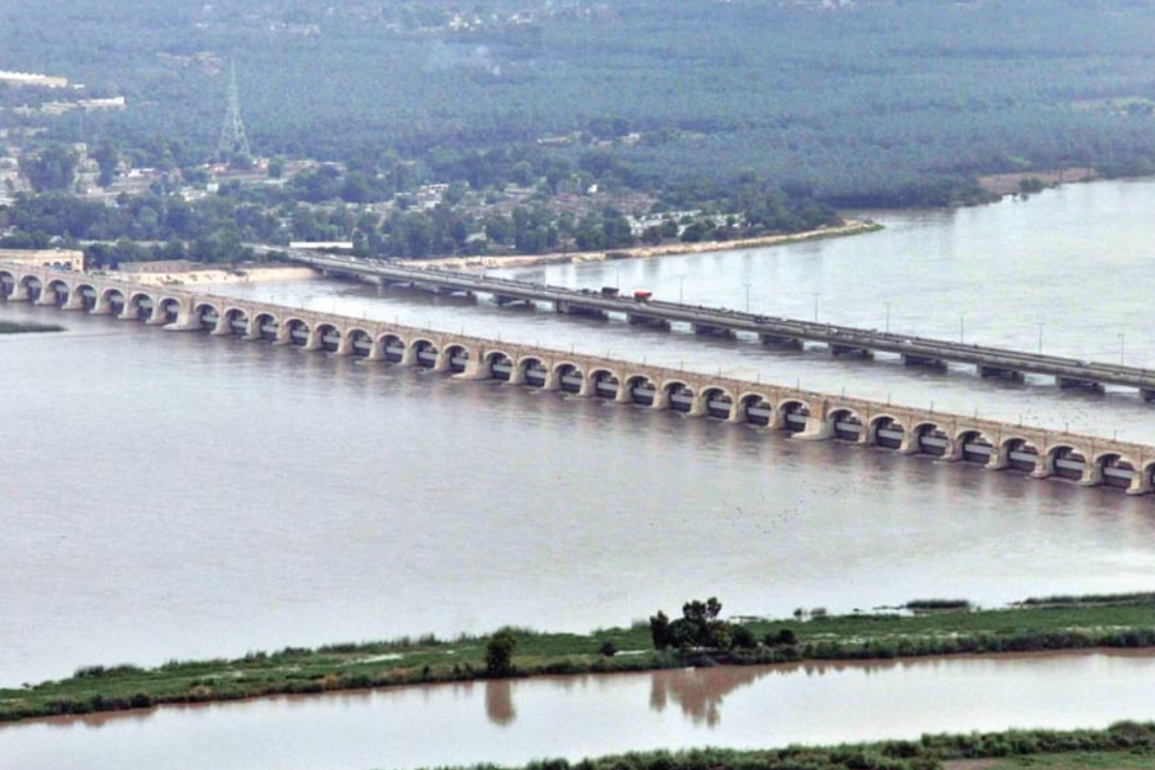
ISLAMABAD/NEW DELHI/LAHORE: Following the U.S.-brokered ceasefire between Pakistan and India after days of deadly clashes, water experts and former officials are calling on Pakistan’s government to raise the issue of the Indus Waters Treaty (IWT) suspension with Washington. Despite the truce, the landmark 1960 agreement governing water-sharing between the two countries remains in limbo.
India unilaterally suspended the treaty on April 24, shortly after a deadly attack targeting Hindu tourists in Indian Illegally Occupied Jammu and Kashmir (IIOJK), which New Delhi claims was backed by Pakistan—a charge Islamabad has strongly denied. The move has sparked concern among Pakistani officials and experts, who say the treaty is vital for agricultural sustainability, supplying water to nearly 80% of Pakistan’s farmland.
“This is the right moment for our government to engage with U.S. authorities,” said Jawaid Latif, former member (Water), Water and Power Development Authority. “India might withdraw its decision quietly during negotiations, but we must ensure this issue is raised and resolved transparently.”
Syed Jamat Ali Shah, Pakistan’s former commissioner on Indus Waters, echoed the sentiment, saying the U.S. role should extend beyond the ceasefire to broader disputes like the IWT and Kashmir. “If progress is made, Pakistan should seek U.S. guarantees to prevent India from unilaterally violating agreements again,” he added.
While the ceasefire has brought temporary relief, Indian and Pakistani government sources told Reuters that the IWT was not included in the truce discussions, and both sides confirmed there has been “no change in stance” regarding the suspension. There has been no official comment from India’s foreign ministry or Pakistan’s water ministry on the matter.
Meanwhile, water flows across Pakistan remain stable. A senior official in the Punjab government confirmed that all rivers, including the Indus, Jhelum, and Chenab, are currently flowing normally. While India typically shares flow data during flood season or in emergencies, the official said current river conditions do not require alarm.
According to the Water and Power Development Authority (WAPDA):
- Chenab River at Marala recorded inflows of 29,700 cusecs and outflows of 10,300 cusecs.
- Indus River at Tarbela saw inflows of 136,300 cusecs and outflows of 70,000 cusecs.
- Jhelum River at Mangla had 52,400 cusecs of inflows and 32,000 cusecs of outflows.
- Kabul River at Nowshera showed equal inflows and outflows of 46,000 cusecs.
Reservoir levels also remain within safe margins:
- Tarbela Dam stands at 1,456.40 feet, with a live storage of 1.289 million acre-feet (MAF).
- Mangla Dam holds 1.377 MAF at a level of 1,141.20 feet.
- Chashma Lake is at 646.40 feet, with 0.189 MAF live storage.
Though current conditions appear stable, experts warn that the long-term implications of the treaty’s suspension could be serious if not addressed diplomatically. Calls are growing louder for the Pakistani government to push for U.S. mediation not just to preserve the ceasefire, but to secure a lasting resolution to critical issues, including water rights and Kashmir.