Finance Minister urges ban on transactions by ineligible individuals to avoid further taxation
ISLAMABAD:
Finance Minister Muhammad Aurangzeb warned on Wednesday that the government could be forced to introduce up to Rs500 billion in additional taxes if Parliament fails to pass legislation banning economic transactions by individuals lacking verified financial means.
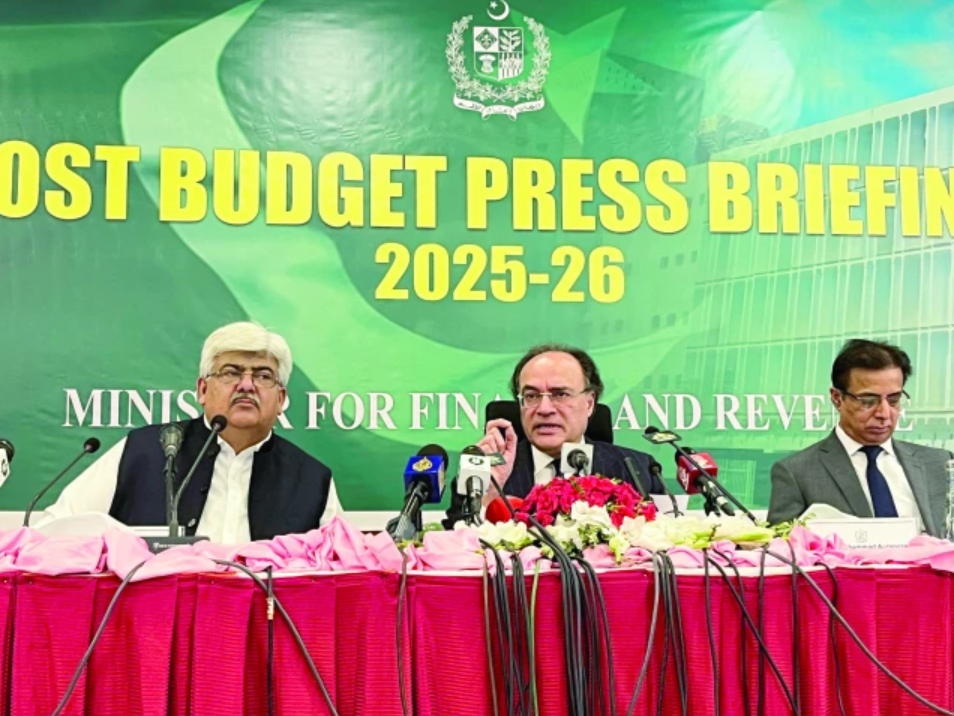
Speaking at a post-budget press conference, the minister stressed the importance of enforcement as an alternative to imposing more taxes. “We have two options: either ensure proper enforcement or introduce further taxation ranging from Rs400 billion to Rs500 billion,” he said. “This is why we are going to Parliament for enabling legislation.”
The minister’s statement came just a day after announcing Rs432 billion in new taxes targeting the digital economy, vehicle resellers, fuel (including that used in agriculture), and even imported solar panels.
Economic Restrictions Proposed
The federal budget includes proposals to bar financially ineligible individuals from engaging in major economic transactions. These include bans on:
- Booking or registering motor vehicles
- Transferring immovable property
- Purchasing securities (including mutual funds and debt instruments)
- Opening or maintaining bank or investment accounts
Eligibility would require holding 130% of the asset’s value in liquid or near-liquid assets, including cash, gold, and marketable securities.
Wage Freeze vs. Parliamentary Pay Hike
Aurangzeb defended the decision to maintain the minimum monthly wage at Rs37,000, asserting that it aligns with current industry capacities. “Go talk to the industries — I believe we’re in a good position,” he said.
However, he also justified a sixfold salary increase for the Senate chairman, deputy chairman, and National Assembly speaker and deputy speaker, whose monthly pay has been raised to Rs1.3 million. He argued the increase was overdue, coming after nine years, and mirrored annual increments provided to government employees.
Media Pushback
The press conference began with journalists walking out in protest over the lack of a technical briefing on the Finance Bill 2025. They returned only after Information Minister Attaullah Tarar and FBR Chairman Rashid Langrial acknowledged the oversight. Aurangzeb later expressed regret for the omission.
Tax Anomaly in Online Shopping
Concerns were raised over a proposed 2% tax on online purchases under Rs20,000, compared to just 0.25% for transactions above that threshold. Critics say the policy may unintentionally incentivize high-value cash-on-delivery transactions.
FBR Member Policy Dr. Najeeb explained that the lower tax rate for large transactions is due to smaller profit margins. For instance, a Rs20,000 purchase would incur Rs400 in tax, while a Rs21,000 transaction would be taxed at just Rs52.
Tariff Reforms and Export Strategy
The finance minister highlighted reductions in import duties on raw materials as part of a broader strategy to transition Pakistan to an export-driven economy. “This is Pakistan’s East Asia moment,” Aurangzeb said, referring to successful export-led growth models. He acknowledged concerns over short-term revenue loss but emphasized long-term trade benefits.
Customs duties have been eliminated from four tariff lines and reduced on 2,700 others related to export-oriented raw materials.
Real Estate and Government Downsizing
Aurangzeb acknowledged the increased tax on the sale of plots but maintained that sellers still benefit from capital gains. On government downsizing, Finance Secretary Imdad Ullah Bosal said fiscal savings are limited to eliminating unfilled positions.
Regarding the National Finance Commission (NFC) award, Aurangzeb reiterated that any adjustments, including the proposal to decouple population growth from the formula, would be made in full consultation with provinces.
Tax Relief and Signalling Reform
Aurangzeb defended the reduction in the income tax surcharge from 10% to 9%, describing it as part of a broader effort to signal long-term tax relief. “This is just the beginning — things that have historically only gone up are now coming down,” he said, particularly addressing the formal sector.
Solar Panel Tax Justified
On the controversial 18% sales tax on imported solar panels, FBR Chairman Langrial argued the measure aims to level the playing field for local assemblers, who were already taxed. He claimed the tax would only extend the payback period for solar systems by two months.
Eurobond Repayments on Track
Aurangzeb confirmed that Pakistan is prepared to meet upcoming Eurobond repayments, with $500 million due in September and another instalment in March. While improving international credit ratings may open the door to global capital markets by 2026, there are no such plans for the current year.