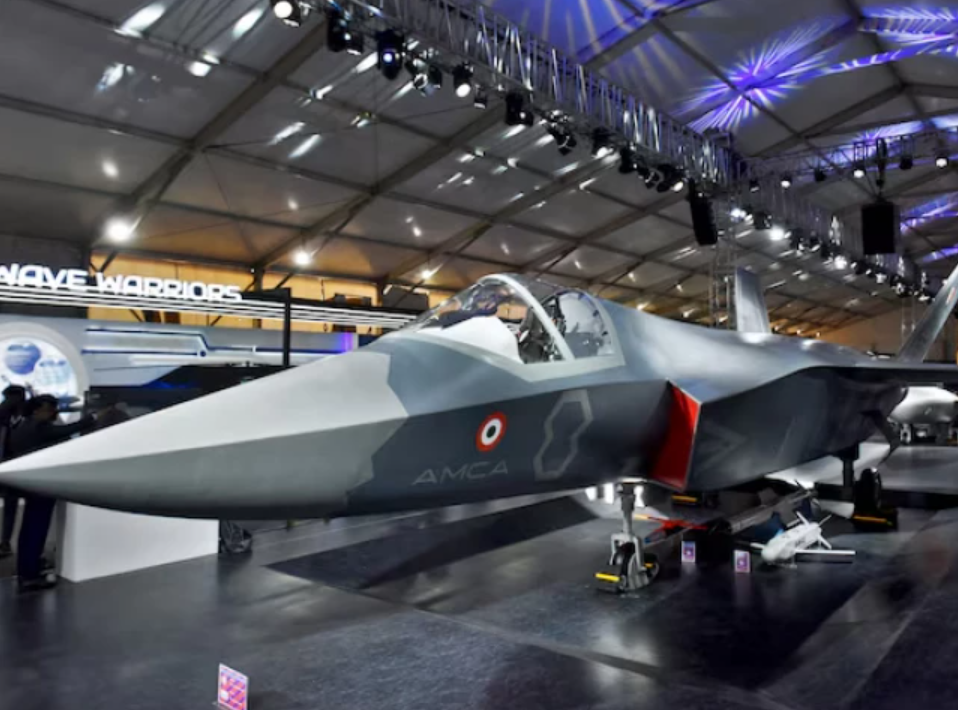

India’s Defence Minister has approved a plan to develop the country’s most advanced stealth fighter jet, the Ministry of Defence announced on Tuesday. This move comes amid a fresh arms race with Pakistan, only weeks after military clashes between the two neighbours.
The programme will be spearheaded by the state-run Aeronautical Development Agency (ADA), which will soon invite initial proposals from defence firms for building a prototype of the new aircraft—a twin-engine fifth-generation stealth fighter, the ministry said.
This project is vital for the Indian Air Force (IAF), whose fleet of mostly Russian and Soviet-era aircraft has dwindled to just 31 squadrons—far below the sanctioned strength of 42—at a time when China is rapidly modernising its air force. Meanwhile, Pakistan has acquired the J-10 fighter jet, one of China’s most advanced aircraft.
The recent escalation between India and Pakistan involved four days of intense fighting, with both sides deploying fighter jets, drones, missiles, and artillery, before a ceasefire was brokered by US President Donald Trump. This conflict marked the first large-scale use of drones by both militaries, sparking a drone arms race in South Asia, as reported by Reuters following interviews with 15 experts, including security officials and industry insiders from both nations.
India plans to partner with a domestic defence firm for this stealth fighter initiative, with bids invited from both private and state-owned companies, either individually or as joint ventures.
A recent defence committee recommendation also supported the inclusion of private sector firms in military aircraft manufacturing, aiming to boost the Indian Air Force’s capabilities and reduce reliance on the state-run Hindustan Aeronautics Ltd (HAL), which currently produces most of India’s military aircraft.
Air Chief Marshal Amar Preet Singh has previously criticised HAL for delays in delivering the light combat Tejas aircraft, a 4.5 generation fighter. HAL has blamed these delays on engine supply issues from General Electric, citing global supply chain problems.