Labels Canal, Dam Projects a ‘War Provocation’ and UN Charter Breach
ISLAMABAD:
Pakistan People’s Party (PPP) Chairman Bilawal Bhutto Zardari, currently leading a high-level parliamentary delegation on an international diplomatic tour, has warned that any attempt by India to build new canals or dams on rivers flowing into Pakistan would be considered an act of war.
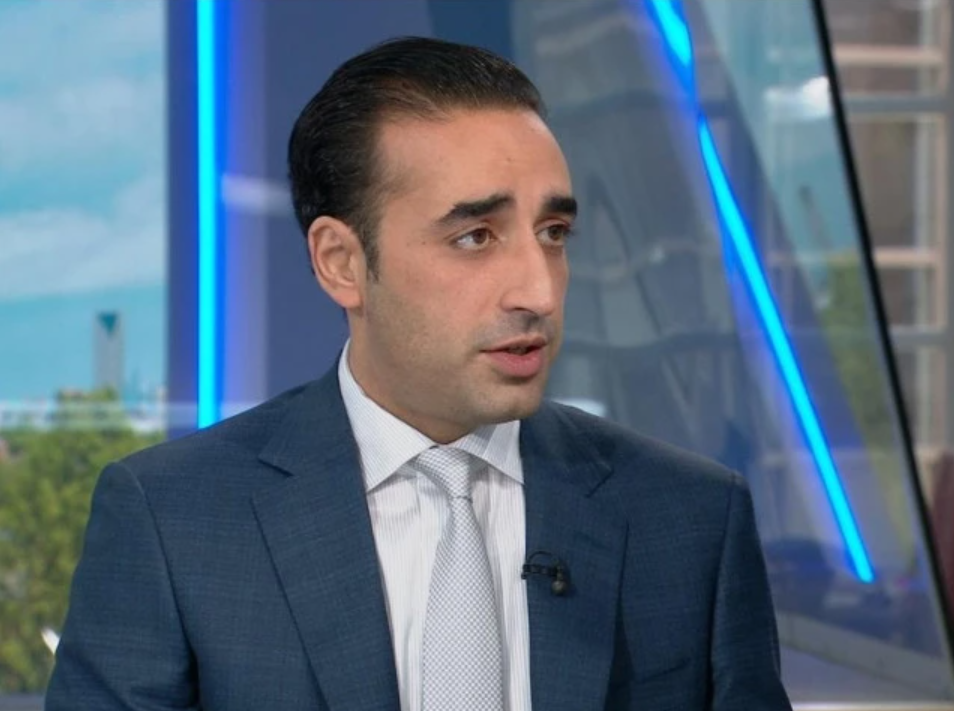
In an interview with Sky News during his UK visit on Monday, Bilawal said, “India’s threat to cut off water to 240 million people in Pakistan is a blatant violation of the UN Charter. If they follow through, Pakistan will treat it as an act of war.”
His comments referred to India’s unilateral suspension of the Indus Waters Treaty (IWT) following the April 22 militant attack in the Pahalgam area of Indian Illegally Occupied Jammu and Kashmir (IIOJK). That incident triggered a four-day conflict between the two nuclear-armed nations, involving missile, drone, and airstrikes, before a ceasefire was brokered by U.S. President Donald Trump.
Condemning what he termed as India’s “weaponisation of water,” Bilawal stressed, “We cannot allow water to become a tool of coercion. If India proceeds with new dam or canal construction on rivers under Pakistan’s domain, we will be forced to respond more aggressively.”
He noted that while Pakistan and India had previously clashed and held dialogue, this kind of escalation had no precedent. “Right now, the threshold for conflict is at its lowest in our history. We’ve achieved a ceasefire, not peace,” he added.
Bilawal reiterated that Pakistan had exercised restraint during the crisis and continued to push for peaceful resolution through dialogue and diplomacy. “There is no military solution to issues like terrorism, Kashmir, or water. Unfortunately, India has refused to engage, so we are appealing to the global community for support in fostering peace,” he said.
Highlighting the legal limitations on India’s suspension of the IWT, he stated the treaty includes international institutions and cannot be unilaterally paused or altered. He clarified that although India had delayed water releases, it lacked the infrastructure to completely halt the flow into Pakistan.
When questioned about counterterrorism efforts, Bilawal pointed to Pakistan’s removal from the Financial Action Task Force (FATF) grey list as evidence of its success in curbing terror financing. He said the April 22 attack was carried out by a domestic group within India, not linked to Pakistan.
He criticized India for disinformation during the crisis, accusing it of misleading its public and allies. “They lied about the attack, about the war, about the aircraft. They couldn’t even name a single terrorist or provide evidence of cross-border involvement,” he said.
Urging the UK to take a proactive stance, Bilawal described Britain’s role as “unique” and called on it to encourage dialogue between the two countries. “India rejected an impartial investigation, turned down mediation by both the US and UK, and continues to refuse direct talks with Pakistan,” he noted. “In such a scenario, any future terrorist attack risks triggering a full-scale war.”
He praised the UK government’s openness to facilitating peace, stating, “Our engagements here have been constructive. The British side is willing to support dialogue—it’s India that remains uncooperative.”
Meanwhile, Bilawal’s delegation held a closed-door session at Chatham House, engaging with leading UK policymakers, academics, and think tank members. Discussions focused on the recent spike in regional tensions and India’s military actions, which Pakistan views as violations of international law, its sovereignty, and the UN Charter.
The delegation emphasized Pakistan’s firm military response to Indian aggression and underscored the unresolved Jammu and Kashmir issue as the central obstacle to lasting peace in South Asia. They urged the international community to facilitate meaningful dialogue and uphold commitments to international norms and human rights.