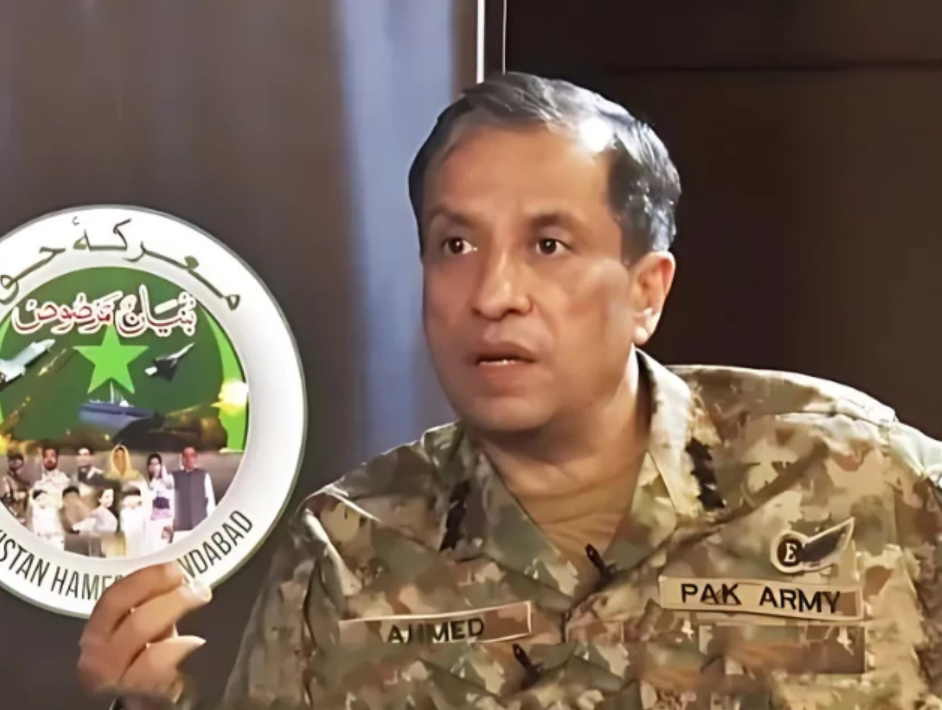
Pakistan’s military has issued a stern warning to India against any attempt to block its water supply from the Indus River system, calling such a move an act of provocation with consequences that could last for generations.
In an interview with Arab News, Director General of Inter-Services Public Relations (DG ISPR) Lt Gen Ahmed Sharif Chaudhry cautioned India against weaponising water, saying, “Only a madman would think they can cut off water to over 240 million people. I hope that time never comes, but should such an action occur, the world will witness its long-lasting consequences. No one should dare to stop Pakistan’s water.”
This warning follows India’s recent unilateral suspension of the Indus Waters Treaty — a decades-old agreement — after a deadly attack on tourists in Indian-occupied Jammu and Kashmir, which India blamed on Pakistan without providing evidence. Islamabad has firmly rejected the allegation.
Tensions quickly escalated into military action, with India launching cross-border strikes on the night of May 6–7, extending its attacks beyond the Line of Control (LoC) into Pakistan’s mainland, claiming to hit militant targets. Pakistan retaliated by striking 26 Indian military sites before halting operations under a US-mediated ceasefire that took effect on May 10.
Despite the ceasefire, Indian Prime Minister Narendra Modi declared plans to halt Pakistan’s water supply from the Indus River system — a move Pakistani officials have labeled a threat to national survival and a declaration of war.
Reports indicate that India’s strikes resulted in at least 40 civilian deaths in Pakistan, including 22 women and children. In response, Pakistan targeted Indian military assets while deliberately avoiding civilian infrastructure.
Lt Gen Chaudhry reiterated that the Pakistan Armed Forces operate professionally and under the directives of the civilian government. “We respect the ceasefire and remain committed to it. Our responses are always proportionate and targeted only at positions violating the ceasefire — never civilians or civil infrastructure,” he said.
He also revealed that during the four-day conflict, India lost six aircraft, including several French Rafale jets and a Russian-made S-400 air defence system — a higher number than previously reported. “I can confirm the sixth aircraft was a Mirage 2000,” he said, adding that Pakistan exercised restraint and could have inflicted more damage if it chose to.
Chaudhry concluded by stressing that the risk of renewed conflict remains unless the core issue of Kashmir is addressed. “India’s current policy on Kashmir is failing. As long as they avoid meaningful dialogue, the potential for conflict will continue,” he said.