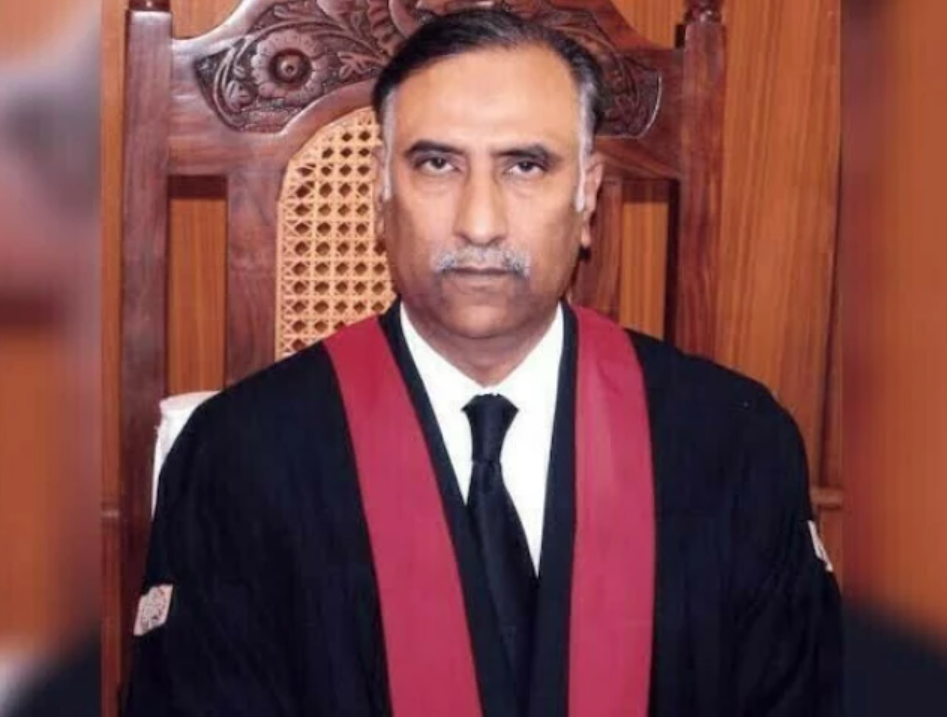
In a significant legal development, the Supreme Court’s Constitutional Bench (CB) has upheld the controversial transfer of three judges from various provincial high courts to the Islamabad High Court (IHC), marking yet another major victory for the government in its ongoing legal battles. The majority verdict—3 to 2—affirmed the legality of the transfers under Article 200 of the Constitution, even as the matter of judicial seniority was remanded to the President for final determination.
The Decision and Its Implications
The five-member CB, led by Justice Muhammad Ali Mazhar and including Justices Shahid Bilal Hassan and Salahuddin Panhwar, ruled that the transfers of Justices Sardar Muhammad Sarfraz Dogar (from Lahore High Court), Khadim Hussain Soomro (Sindh High Court), and Muhammad Asif (Balochistan High Court) did not amount to fresh appointments and were constitutionally sound under Article 200(1). The bench emphasized that the transfer powers of the President are separate and distinct from the appointment process governed by Article 175A.
The judgment also reaffirmed that such inter-court transfers do not increase the sanctioned strength of the high courts and hence cannot be challenged on those grounds. While not upsetting the February 1, 2024, transfer notification, the court directed the President to clarify the nature—temporary or permanent—of the transfers and finalize the judges’ seniority based on their service records.
Until this determination is made, Justice Sarfraz Dogar will continue as acting Chief Justice of the IHC, a position seen by many as strategically crucial for the executive.
Political and Institutional Context
The verdict comes on the heels of the 26th Constitutional Amendment, which created the Constitutional Bench itself—a move widely viewed as aimed at reining in the judiciary. A senior government official has acknowledged that the amendment was a response to a letter by six IHC judges to the Supreme Judicial Council (SJC), raising alarms about interference by intelligence agencies in judicial matters, particularly in cases related to the PTI.
The government’s legal momentum is undeniable. First came the CB’s endorsement of military trials for civilians; now, it has secured validation for the judicial transfers. With the bench yet to hear challenges to the 26th Amendment and a crucial decision pending on the allocation of reserved seats, observers believe the current administration could soon secure a two-thirds majority in parliament.
The government has also been methodical in extending the tenure of judges on the CB through the Judicial Commission of Pakistan (JCP). Even Chief Justice of Pakistan Yahya Afridi, previously a critic of the limited composition of the CB, voted in favor of the extension—signaling a shift in judicial alignment that has further emboldened the executive.
Divided Legal Opinion
The legal fraternity remains deeply divided on the judgment.
Advocate Abdul Moiz Jaferii criticized the majority ruling as constitutionally flawed and procedurally opaque. He argued that the court sidestepped crucial questions about the nature and intent of the transfers, failing to acknowledge the constitutional requirement for temporary assignments and the broader context behind the petitions. He noted that the verdict legitimized the President’s future discretion, undermining the judiciary’s internal checks.
A former law officer echoed these concerns, warning that if the three Chief Justices involved in the transfer process fail to act independently, Article 200 could become an instrument of coercion—effectively silencing dissenting judges.
Conversely, constitutional expert Hafiz Ahsaan Ahmad Khokhar defended the ruling as “well-founded and aligned with constitutional intent.” He emphasized that the conditions under Article 200(1)—consent of the transferee judges, concurrence of the Chief Justices of the relevant high courts, and the President’s approval—were met. He noted that no new oath is required under Article 194 and that determining seniority now lies squarely within the President’s constitutional purview.
Khokhar further highlighted that the court has preserved judges’ service terms under Article 200(3), insulating them from adverse consequences. He contended that the verdict rightly respects Pakistan’s decentralized approach to judicial seniority, aligning it with practices in the UK, US, Canada, and Australia.
The Dissenting Opinion
Dissenting justices Naeem Akhtar Afghan and Shakeel Ahmed issued a sharply critical minority opinion. They declared the transfers unconstitutional, arguing that the Constitution does not permit permanent transfers under Article 200. Their dissent emphasized the lack of genuine consultation among key judicial stakeholders and alleged that intelligence agencies had exerted undue influence—a claim echoing the concerns raised in the six judges’ letter.
The minority also warned that the entire process lacked transparency and failed to protect judicial independence, stating that the President’s exercise of discretion was not only procedurally flawed but substantively in conflict with Article 175A.
Looking Ahead
As the President now undertakes the task of finalizing the nature and seniority of the transferred judges, the implications of this ruling will ripple through Pakistan’s judicial and political landscape. If the transfers are confirmed as permanent, Justice Dogar could be formally elevated as the IHC Chief Justice under Article 175A, completing the government’s strategic judicial reconfiguration.
The case has set a critical precedent, raising fundamental questions about the balance of power between the executive and the judiciary, the role of constitutional provisions in judicial transfers, and the scope of institutional independence in Pakistan’s democracy.
In the short term, the government appears to have tightened its grip on the legal framework underpinning its political stability. But in the long run, the integrity of judicial independence and the credibility of constitutional processes will remain under sharp scrutiny.