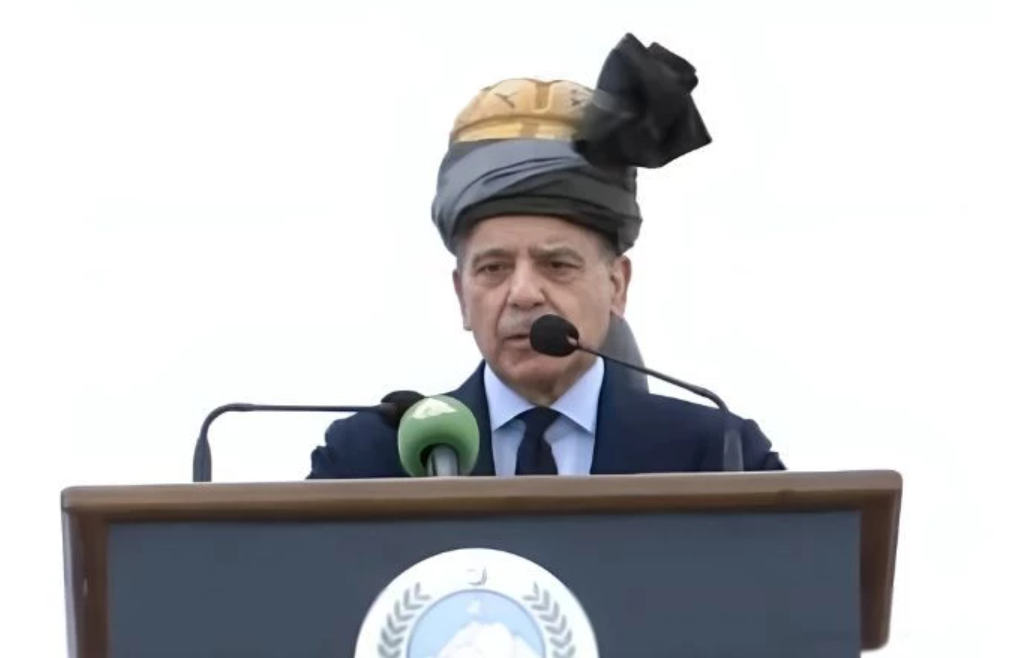
Prime Minister Warns India of Strong Response if It Acts on Indus Waters Treaty Threat
Prime Minister Shehbaz Sharif declared on Tuesday that the Pakistani military has already dealt India a historic lesson it will not forget, adding that New Delhi is still recovering from this defeat. He warned that any further acts of aggression would be met with a firm and uncompromising response.
Addressing a peace jirga on law and order in Peshawar—attended by Field Marshal Asim Munir, Khyber Pakhtunkhwa (K-P) Chief Minister Ali Amin Gandapur, Governor Faisal Karim Kundi, alongside political and military leaders and tribal elders—the prime minister reaffirmed Pakistan’s unwavering commitment to protecting its water rights under the Indus Waters Treaty.
He emphasized Pakistan’s entitlement to every drop of water under the treaty and announced plans to increase water storage through major projects like the Diamer-Bhasha and Dasu dams.
Shehbaz Sharif stated that a decision on water management would be made after consultations with all four provinces to boost reserves and thwart India’s “malicious intentions.”
Recalling the Indian attack on May 6 and 7 that resulted in civilian casualties, the prime minister said, “At 2:30 am, the Field Marshal woke me up to inform that India had struck again. Under his leadership, the Pakistan Army delivered a lesson India will never forget.”
He expressed confidence that Pakistan, honored by its performance in the conflict, would also rise economically, urging national unity and readiness to make difficult decisions for the country’s future.
Criticizing the Modi government, Shehbaz Sharif said, “Modi is licking his wounds after a humiliating defeat and is acting out of anger and desperation. Sometimes they threaten military action, other times they threaten to cut off water supplies. Let me be clear: every drop of water belongs to Pakistan. Should India act again, it will receive the same lesson.”
The recent surge in tensions followed the April 22 attack in Pahalgam, Indian Illegally Occupied Jammu and Kashmir (IIOJK), which killed 26 people. India blamed Pakistan without evidence; Pakistan condemned the attack and demanded an independent investigation.
India escalated the situation by suspending the Indus Waters Treaty and closing the Wagah-Attari border. In response, Pakistan hinted at suspending the 1972 Simla Agreement.
The conflict intensified on May 6–7 when India launched airstrikes on Pakistan, leading to the most severe military clashes between the neighbors in decades. After dozens of casualties, diplomatic efforts led to a US-mediated ceasefire.
PM Promises K-P Its Rightful Share in NFC
Prime Minister Shehbaz Sharif praised Khyber Pakhtunkhwa as a key province that has long stood by Pakistan, acknowledging the sacrifices of its people and tribal leaders.
“You have always put aside differences and stood united whenever Pakistan needed you. I salute you from the bottom of my heart,” he said.
He stressed that the concerns raised by tribal elders must be taken seriously and addressed collectively. Noting Chief Minister Ali Amin Gandapur’s call to review the National Finance Commission (NFC) Award, which has not been updated in 15 years, the prime minister promised to ensure K-P receives its overdue financial rights.
Sharif announced the formation of a committee to reassess the province’s NFC share, with its first meeting expected in August.
He highlighted that one percent of the 2010 NFC divisible pool has already been allocated to K-P for counter-terrorism, amounting to over Rs700 billion, and assured continued funding until peace is fully restored.
The prime minister also pointed out that Balochistan, despite facing similar security challenges, has not received comparable support—a matter that may require reconsideration.
He pledged to work closely with the provincial government, local leaders, and military officials to resolve any issues.
PM Shehbaz paid tribute to the sacrifices of K-P’s people, especially during the 1947 referendum, and acknowledged the province’s ongoing support in national crises, including the 1965 and 1971 wars with India. He noted that the collective prayers of the people during those conflicts contributed significantly to Pakistan’s victories.