

By S.M.A Kazmi
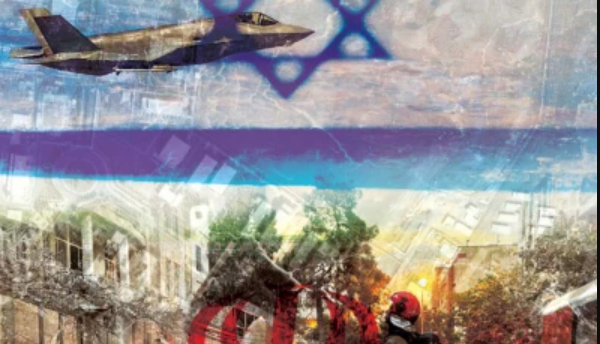
In the early hours of June 13, 2025, the world witnessed the Israel-Iran shadow war explode into open confrontation. The Israeli operation—codenamed Rising Lion—was not just a military strike; it was a geopolitical message, a high-stakes gamble, and perhaps most crucially, a signal that the old rules of engagement in the Middle East are being rewritten.
This wasn’t a skirmish. This was Israel’s largest, most complex operation against Iran yet. Using a potent mix of airpower, cyber warfare, drones, and deep-cover sabotage, Israel hit over a hundred targets, with the underground Natanz nuclear facility topping the list. The operation reflected meticulous planning, likely years in the making, and underscored the intimate coordination between the IDF and Mossad. The preemptive suppression of Iranian air defences through smuggled systems and covert operatives inside Iran itself points to an astonishing level of infiltration.
Israel’s Aims: Tactical Precision, Strategic Ambiguity
Tel Aviv’s declared goal remains unchanged: to prevent Iran from becoming a nuclear-armed state. But the subtext is far more layered. There’s a hope—perhaps a delusion—that such military pressure could also catalyze regime change in Tehran. That, by targeting not just facilities but symbols of Iranian power—military commanders, nuclear scientists, and Revolutionary Guard compounds—Israel might push the Islamic Republic toward internal collapse or at least, strategic retreat.
But Iran is not just a military target. It is a nation with deep civilizational memory, rooted nationalism, and, crucially, a populace long-accustomed to hardship. For Israel to assume that sheer firepower can bring about regime change ignores the historical tenacity of the Iranian state under duress. Paradoxically, the attacks may galvanize internal unity, not rebellion—rallying Iranians, even reluctant ones, around a leadership perceived to be under siege.
Iran’s True Promise: Retaliation With Limits
Iran’s response—Operation Wada-e-Sadiq (The True Promise)—was equally calculated. Swarms of drones followed by over 200 ballistic and cruise missiles aimed at Israeli military targets demonstrated not just retaliatory resolve, but strategic maturity. Iran’s aim wasn’t escalation for its own sake, but deterrence. Unlike proxy battles of the past, this was Tehran saying: we can strike back—directly, precisely, and in volume.
Interestingly, Iran’s use of low-cost drones to overwhelm Israel’s Iron Dome, followed by targeted missile barrages, reflects the new logic of asymmetric warfare. It’s not just about technology—it’s about missile economics. Iran is playing a war of attrition, financially and militarily, knowing well that every intercepted Israeli missile costs far more than every one it launches.
Israel’s Limitations: The Tyranny of Geography
Despite its audacity, Israel’s operation laid bare certain operational limitations. The IDF lacks the long-range heavy bombers needed for sustained strikes on deeply-buried nuclear sites. Its mid-air refuelling capacity is limited, and its flight paths—restricted by unfriendly or neutral neighbours like Jordan, Saudi Arabia, and Iraq—force longer, less efficient sorties. And while Israel does possess the Jericho missile system, its heaviest variants remain untested in live conflict.
This geographical constraint forces Israel into repeated, fighter-based missions—difficult to sustain politically, logistically, and militarily. Moreover, continued reliance on airspace corridors over hostile or unwilling nations can only work for so long without diplomatic repercussions.
The Domestic Fronts: A Tale of Two Capitals
In Tehran, this confrontation may ironically bolster the regime. The targeted killing of senior figures like IRGC commander Maj. Gen. Hossein Salami and nuclear scientists risks pushing an already disenchanted populace into defensive solidarity. With Supreme Leader Khamenei in his twilight years and succession questions looming, the attack could become a rallying cry for stability under clerical leadership—at least temporarily.
Meanwhile in Israel, Prime Minister Netanyahu’s war-centric posture is facing increasing pushback. The refusal of ultra-Orthodox Jews to serve in the military, domestic war fatigue, and rising societal polarisation could undermine the very consensus he seeks to forge through conflict. Mass mobilisation will not be easy, nor politically cost-free.
The U.S. Position: Present Yet Distant
While Secretary Rubio officially distanced the U.S. from the Rising Lion operation, Washington’s fingerprints are hard to miss. From airspace clearances to military intelligence sharing, Israel’s capacity to carry out such a strike is closely entwined with American support. However, the Biden administration—or any future White House occupant—faces a delicate balancing act. While deterring a nuclear Iran remains a bipartisan goal, direct association with aggressive Israeli actions could spark backlash at home and abroad, especially given widespread condemnation of Israel’s ongoing actions in Gaza.
The Bigger Picture: A New Kind of Warfare
The Israel-Iran conflict is reshaping modern warfare. Gone are the days of massed tank columns and prolonged ground occupations. This is a war of attrition by stealth, by drone, by cyberstrike, and by proxy. Both sides are adapting, innovating, and recalibrating in real time.
The strategic lesson is sobering: in a world where distance offers no safety, and proxies can no longer insulate their patrons, the shadow war is becoming the real war. What was once plausible deniability is now open hostility, albeit with carefully drawn limits to avoid full-scale regional war.
Conclusion: No Easy Victors
Israel may have struck first and struck hard, but strategic victory remains elusive. Iran is bloodied but unbowed. Its nuclear ambitions may be slowed, but not erased. Its resolve, far from being broken, seems sharpened.
And so, the Rising Lion meets The True Promise—not as victor and vanquished, but as adversaries locked in a deadly, evolving embrace. The question now is not who wins next, but how long the world can hold its breath before the next blow lands.
Disclaimer: The views expressed here are those of the author and do not necessarily reflect the position of this publication.