ISLAMABAD – Senior military officials from Pakistan and India held their first formal communication on Monday through a hotline, reaffirming their commitment to uphold the ceasefire agreement reached over the weekend after five days of intense hostilities.
The dialogue, facilitated by the United States, was conducted between Pakistan’s Director General of Military Operations (DGMO) Major General Kashif Abdullah and his Indian counterpart Lieutenant General Rajiv Ghai. The two sides discussed measures to avoid further escalation and agreed that neither would initiate hostilities or aggressive actions going forward.
According to the Indian Army, both countries also expressed a willingness to implement immediate steps to reduce troop presence along the Line of Control (LoC) and other border areas. While India publicly acknowledged the conversation, Pakistan confirmed the contact but did not disclose further details. A second round of talks is expected within 48 hours.
The fragile US-brokered ceasefire—announced after extensive behind-the-scenes diplomacy led by US Secretary of State Marco Rubio—has so far held. Rubio noted that future discussions on broader regional issues would take place at a neutral venue.
Indian Prime Minister Narendra Modi, in his first address since the ceasefire, hinted at potential talks but emphasized issues such as terrorism and Azad Jammu and Kashmir (AJK), signaling a continued hardline stance aimed at appeasing his domestic audience. In contrast, Pakistan’s Defence Minister Khawaja Asif stated that Kashmir and the Indus Waters Treaty (IWT) would top Islamabad’s agenda in any future negotiations.
Shortly before Modi’s speech—where he described India’s “Operation Sindoor” as merely suspended rather than ended—Pakistan’s military issued a strong statement through Inter-Services Public Relations (ISPR), warning that any future breach of Pakistan’s territorial integrity would prompt a robust and decisive response.
Background to the Conflict
The latest conflict began on April 22, after a deadly attack in Pahalgam, located in Indian Illegally Occupied Jammu and Kashmir (IIOJK), left 26 people dead, mostly tourists. India immediately blamed Pakistan without presenting evidence.
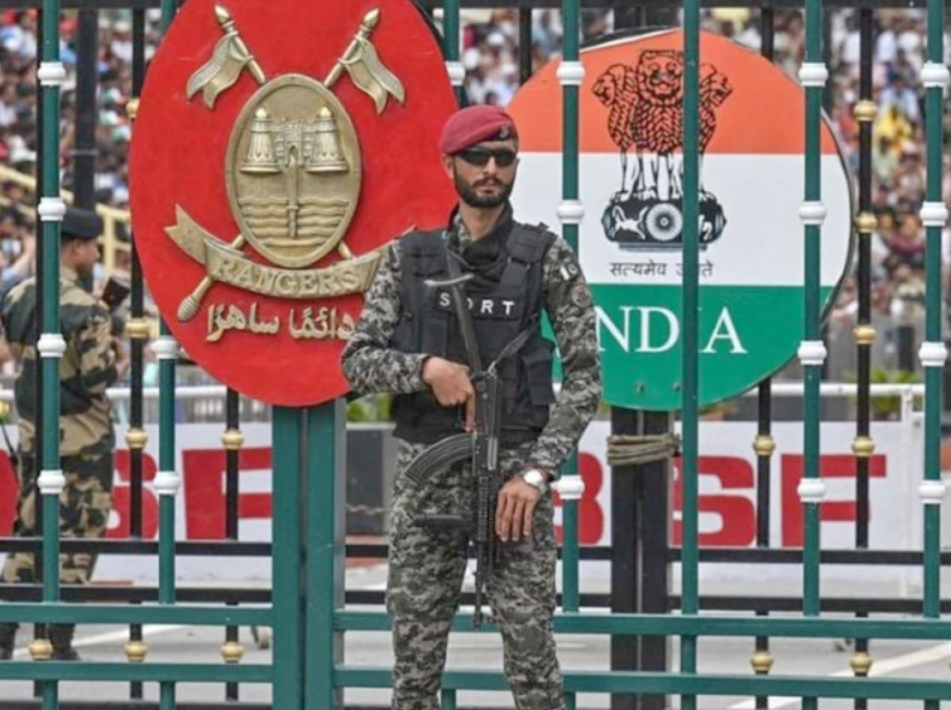
In retaliation, India escalated diplomatically and militarily: suspending the Indus Waters Treaty, cancelling Pakistani visas, shutting down the Wagah-Attari border crossing, expelling diplomats, and closing the Pakistan High Commission in New Delhi.
Pakistan denied any involvement in the attack and responded by halting trade, closing its airspace to Indian aircraft, and enacting other reciprocal measures as approved by its National Security Committee (NSC).
Tensions peaked in the early hours of May 7, when missile strikes hit six cities in Punjab and AJK, destroying mosques and killing dozens of civilians, including women, children, and the elderly. In response, the Pakistan Armed Forces shot down five Indian aircraft, including three Rafales, and neutralized multiple waves of Israeli-made Indian drones.
In a further escalation, India launched missile strikes on Pakistani airbases on Saturday morning. Pakistan retaliated by initiating Operation Bunyanum Marsoos, targeting 26 Indian military installations, including missile depots and airbases.
Later that evening, US President Donald Trump announced that both countries had agreed to a comprehensive ceasefire following overnight diplomacy. The ceasefire was officially confirmed by Pakistan’s Foreign Minister Ishaq Dar and India’s Foreign Secretary soon afterward.
President Trump, speaking the following day, said the US intervention had averted a potential nuclear catastrophe. “We stopped a nuclear conflict,” he told reporters. “It could have been a very bad war. Millions could have died. Trade was a major factor that brought them to the table, and we’re proud of the role we played.”