CJCSC Warns That Targeting Cities Lowers the Conflict Threshold and Poses Risks to Both Nations
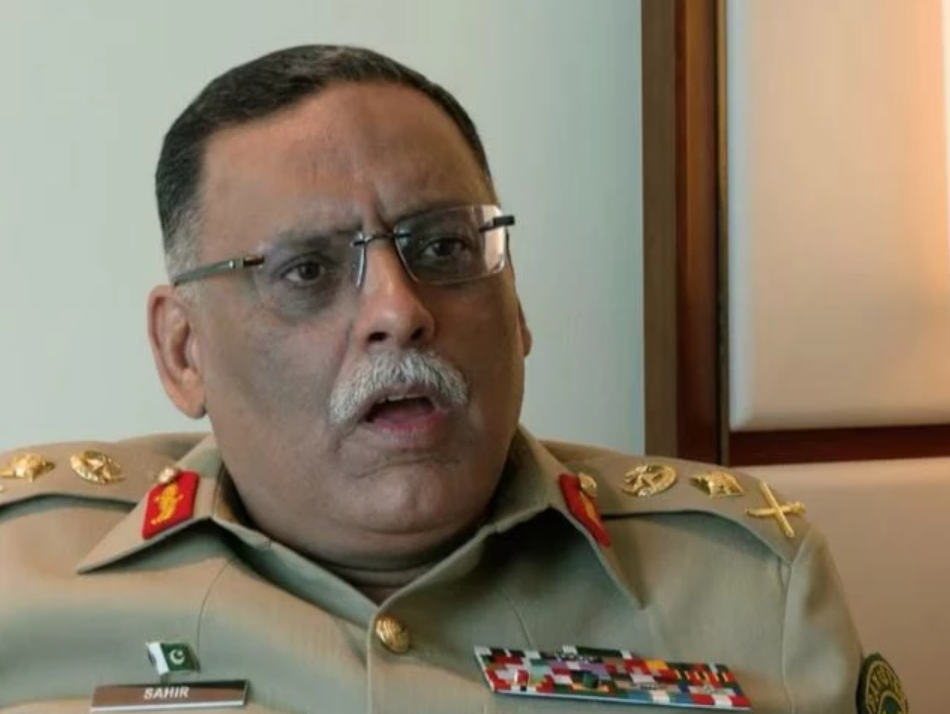
Chairman of the Joint Chiefs of Staff Committee (CJCSC), General Sahir Shamshad Mirza, told the BBC that Pakistan conducted the recent 96-hour military engagement with India solely using its own resources.
His comments contradict Indian media reports suggesting that China provided military support to Pakistan during last month’s clash between the two nuclear-armed neighbors.
General Mirza emphasized that Pakistan deployed equipment on par with India’s capabilities, including some military hardware acquired from other countries.
He noted that earlier skirmishes were mostly confined to disputed border regions and did not cross into international borders.
However, he added, “This time the borders were relatively calm, but the cities became the primary targets.”
He warned that this shift, where urban areas become focal points in conflict, is dangerous for both India and Pakistan in any future confrontations.
Tensions between the two countries escalated following the April 22 attack in Pahalgam, Indian Illegally Occupied Jammu and Kashmir (IIOJK), which killed 26 people. India accused Pakistan-based groups without providing evidence; Pakistan denied the claims and demanded an independent investigation. India responded by closing the Wagah border, suspending visas, and putting the Indus Waters Treaty on hold—actions Pakistan condemned as “acts of war.”
In early May, India launched airstrikes on Pakistani cities, prompting Pakistan to retaliate with Operation Bunyan-un-Marsoos targeting Indian military installations. A ceasefire, brokered by the United States, was later declared after heightened military exchanges.
General Mirza stated, “This situation affects trade, investment, and development for 1.5 billion people.” He stressed the absence of a formalized conflict resolution or management mechanism between the two countries.
He explained that the only current line of communication is the Director-General of Military Operations (DGMO) hotline, which is regularly used to exchange information and manage incidents, but this is limited in scope.
He cautioned that future conflicts might extend beyond localized regions and criticized the lack of an effective and organized system to address Indo-Pak disputes.
“If the only available defense mechanism faces an Indian political environment marked by reckless and extremist attitudes, the window for intervention significantly narrows,” he said.
He concluded, “Without a proper conflict management framework, the risk of escalation remains high.”
Regarding emergency communication channels, General Mirza highlighted reliance solely on the DGMO hotline and expressed concern that extremist mindsets reduce the time available for international mediation.
He also noted that global powers, including the United States, have limited opportunities remaining to intervene effectively.
Earlier on June 2, Pakistan strongly condemned recent statements by Indian officials, describing them as reflecting a hostile and dangerous stance undermining regional peace.
This response followed comments from India’s Ministry of External Affairs spokesperson on May 29, who stated that Kashmir talks would only proceed if Pakistan “hands over Azad Jammu and Kashmir” to India.
Pakistan’s Foreign Office spokesperson, Shafqat Ali Khan, rejected attempts to blame Pakistan for regional instability as disconnected from reality. “The international community is well aware of India’s aggressive behavior, including documented evidence of support for terrorism within Pakistan,” he asserted.