Saudi Arabia has advised Iran to take US President Donald Trump’s proposal for a nuclear deal seriously to avoid escalating tensions with Israel, according to Gulf and Iranian sources.
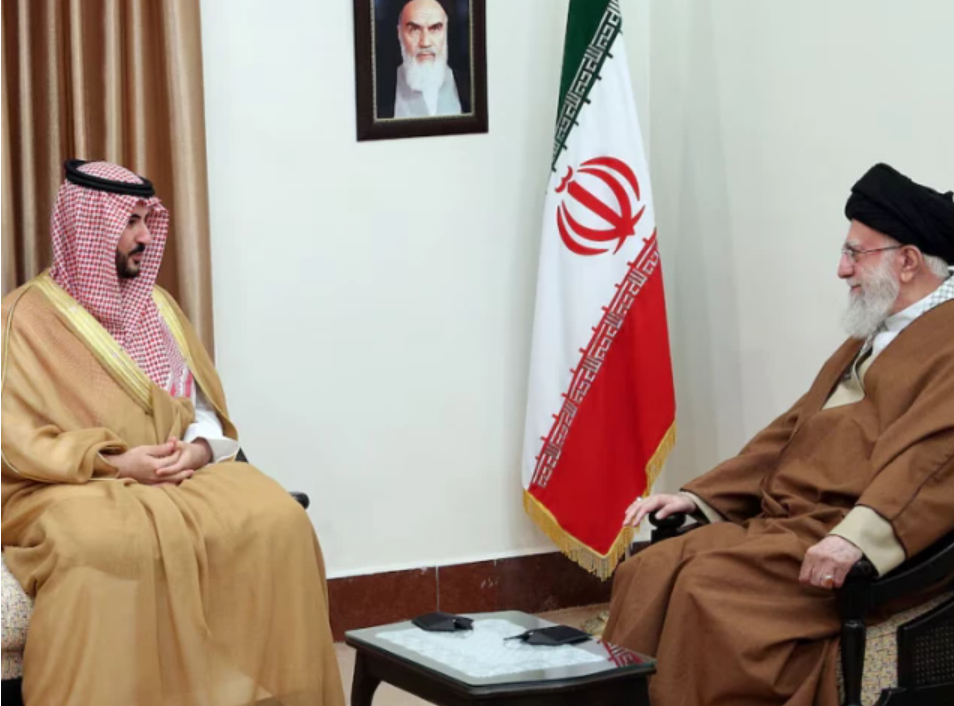
King Salman bin Abdulaziz, worried about further regional instability, sent his son, Prince Khalid bin Salman, to deliver this message directly to Iran’s Supreme Leader Ayatollah Ali Khamenei. The meeting, which took place in Tehran on April 17 in the presidential compound, was also attended by Iranian President Masoud Pezeshkian, Chief of Staff Mohammad Bagheri, and Foreign Minister Abbas Araqchi, the sources said.
While the prince’s visit was publicly reported, the details of his message had not been revealed until now. Prince Khalid, who served as Saudi ambassador to Washington during Trump’s first term, warned that Trump was eager for swift negotiations and had little tolerance for drawn-out talks, according to the sources.
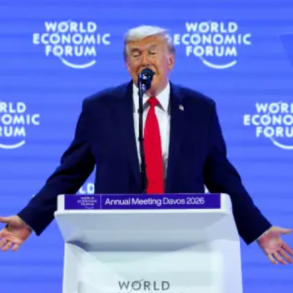
Trump had announced earlier that the US and Iran were engaged in direct discussions aimed at limiting Tehran’s nuclear activities in exchange for sanctions relief. This announcement came during Israeli Prime Minister Benjamin Netanyahu’s visit to Washington, where he had hoped to gain support for strikes against Iranian nuclear sites.
In Tehran, Prince Khalid stressed that Trump’s team was eager to move quickly and that the window for diplomacy was narrow. He suggested that reaching a deal would be preferable to risking an Israeli attack if talks failed, the Gulf sources said. Highlighting the region’s existing tensions following conflicts in Gaza and Lebanon, he argued that further escalation would be disastrous.
Iranian authorities did not respond to requests for comment before the story was published. Afterwards, Iranian Foreign Ministry spokesman Esmaeil Baghaei “categorically denied” the Reuters report, according to Fars news agency. Saudi officials did not comment.
Prince Khalid’s visit was the first by a senior Saudi royal to Iran in over twenty years, marking a notable step since China-brokered talks in 2023 restored diplomatic ties between Riyadh and Tehran, easing years of hostility and proxy conflicts.
Iran’s regional power has waned recently due to Israel’s military campaigns against its allies in Gaza and Lebanon and the fall of Syrian President Bashar al-Assad. Sanctions have also severely impacted Iran’s economy.
Mohanad Hage Ali, an Iran expert at the Carnegie Middle East Center in Beirut, said Saudi Arabia saw this as an opportunity to engage diplomatically, aiming to avoid a war that could undermine its own economic ambitions.
“The Saudis are keen to prevent a conflict with Iran because it would harm their economic vision,” he said.
Iran’s Response
The impact of Prince Khalid’s warning on Tehran remains unclear. During the meeting, President Pezeshkian reportedly signaled Iran’s willingness to strike a deal to ease the economic strain of sanctions. However, the Iranian officials also conveyed concerns about the Trump administration’s shifting demands — from permitting some uranium enrichment to requiring its complete elimination.
One Iranian source said that while Pezeshkian expressed interest in an agreement, Iran would not abandon its enrichment program simply to please Washington.
So far, Washington and Tehran have held five rounds of talks to address the nuclear dispute, but significant hurdles remain, including disagreements over uranium enrichment.
Reuters recently reported that Iran might consider pausing enrichment if the US released its frozen funds and recognized Tehran’s right to enrich uranium for civilian purposes, though the Iranian Foreign Ministry later denied this report.
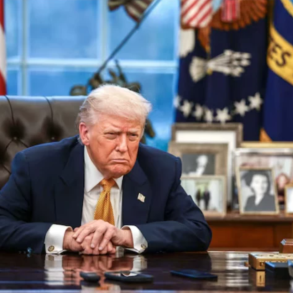
The White House did not directly respond to questions about the Saudi message to Iran. However, press secretary Karoline Leavitt emphasized that “President Trump has made it clear: make a deal or face grave consequences, and the world understands that.”
Trump also said he cautioned Netanyahu against any actions that might derail the nuclear talks and suggested that a deal with Iran was “very close.”
Israeli officials declined to comment.
High Stakes
Trump’s four-day visit to the Gulf this month positioned Saudi Arabia as a leading player in a new Sunni alliance, filling the void left by Iran’s weakened regional influence. During this trip, Saudi Crown Prince Mohammed bin Salman also helped broker a reconciliation between Trump and Syria’s new Sunni leader, Ahmed al-Sharaa.
Iran’s influence in the region has been eroded by the losses suffered by its allies — including Hamas, Hezbollah, the Houthis, and Iraqi militias — and by economic sanctions.
At the meeting, Prince Khalid urged Iranian officials to reconsider their regional policies, which he said would be welcomed by Riyadh. Though he stopped short of blaming Tehran directly, he voiced Saudi concerns about a possible repeat of the 2019 drone attacks on Aramco’s oil facilities, which Riyadh has long attributed to Iran and the Houthis.
Iranian sources maintained that while Tehran supports the Houthis, it does not fully control them.
Decades of rivalry between Shi’ite-majority Iran and Sunni-led Saudi Arabia have fueled regional instability from Yemen to Syria. The 2023 détente, driven in part by Saudi Arabia’s economic goals, has led to closer contacts, but diplomats and regional experts caution that Saudi Arabia and other countries remain wary of Iran’s reliability as a peace partner.
Prince Khalid also warned Iranian officials not to take actions that might provoke Washington, saying Trump’s response would be harsher than that of his predecessors, Biden or Obama. However, he reassured them that Saudi Arabia would not allow its territory or airspace to be used by the US or Israel for any military action against Iran.