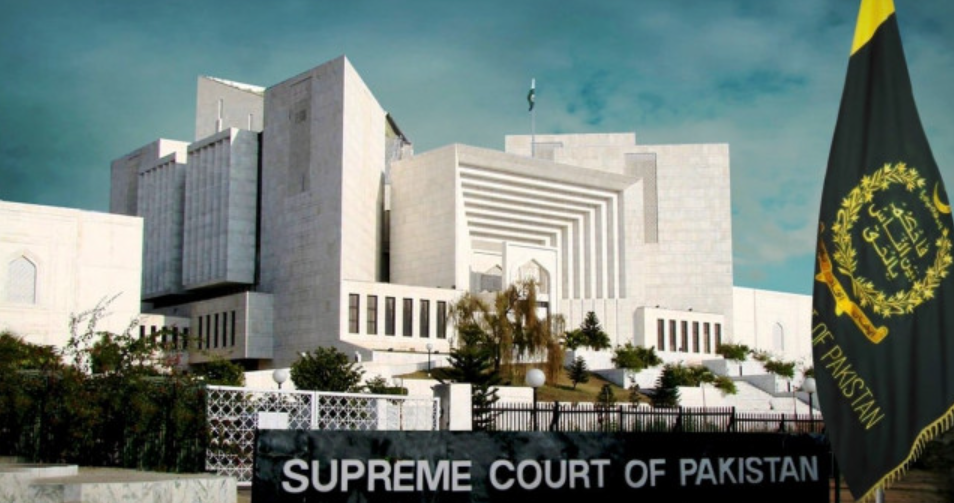
ISLAMABAD – In a major legal development, the Supreme Court of Pakistan on Friday overturned its July 12, 2024, decision regarding reserved seats, resulting in Pakistan Tehreek-e-Insaf (PTI) losing its share of these seats across the National and Provincial Assemblies.
The 10-member constitutional bench, led by Justice Aminuddin Khan, accepted the review petitions filed against the earlier verdict and reinstated the March 12 ruling of the Peshawar High Court (PHC), which upheld the Election Commission of Pakistan’s (ECP) decision to deny reserved seats to the Sunni Ittehad Council (SIC), with whom PTI-affiliated independent candidates had aligned post-election.
With this reversal, 22 National Assembly and 55 Provincial Assembly reserved seats previously claimed by PTI will now be allocated to the ruling coalition.
Majority Decision, Dissent, and Legal Implications
The brief, four-page judgment was passed by a 7-3 majority. Justices Naeem Afghan, Musarrat Hilali, Shahid Bilal Hassan, Amir Farooq, Hashim Kakar, Ali Baqir Najafi, and Aminuddin Khan supported the review. Justices Jamal Mandokhail dissented, while Justices Muhammad Ali Mazhar and Hasan Azhar Rizvi partially agreed, referring the matter of seat allocation back to the ECP for reassessment.
The July 12 verdict had controversially declared 39 PTI-aligned MNAs as part of the party bloc, granting them claim to reserved seats. However, the National Assembly had not implemented that order, and the ECP had filed objections, supported by PML-N and PPP, in review petitions.
Courtroom Dynamics and Bench Composition
Initially intended to be heard by an 11-member bench, the case proceeded with 10 members after Justice Hassan Azhar Rizvi recused himself amid objections raised by PTI counsel Hamid Khan about post-26th Amendment appointments. Justice Rizvi stated that while the objection hurt him personally, he stepped down to preserve the court’s dignity and institutional integrity.
Arguments and Observations
PTI’s counsel Salman Akram Raja cited past elections (2013, 2018, and 2024), highlighting that in Khyber Pakhtunkhwa, PTI won 83% of general seats but received no reserved ones. However, the bench questioned the legal basis of PTI’s claims, especially given that its candidates contested as independents due to the party’s loss of its election symbol following the nullification of intra-party elections.
Justice Musarrat Hilali pointed out that joining the SIC, a party not present in Parliament, complicated PTI’s entitlement to reserved seats. Justice Rizvi questioned whether the PTI had adopted a formal campaign identity like other non-party entities had in the past. Raja responded that candidates used the term “Kaptaan ka Sipahi” (Captain’s Soldier).
Justice Mazhar observed internal inconsistency within PTI’s approach, while Justice Mandokhail noted that some PTI-affiliated candidates who openly declared allegiance seemed to have navigated the situation more strategically.
Background and Political Fallout
The review petitions were filed after the SC’s earlier verdict drew widespread criticism and sparked legal ambiguity over the rightful beneficiaries of reserved seats. PTI had argued it was unfairly denied these seats due to the ECP’s failure to accept its intra-party polls, leading to the loss of its electoral symbol and forcing its candidates to run as independents.
Hamid Khan argued that the PTI had conducted internal elections and was unfairly punished, while other parties like ANP were granted leniency. However, the bench maintained that PTI had been given ample opportunity in the past.
What’s Next?
The latest ruling is a major blow to PTI, which had hoped to consolidate its parliamentary strength through reserved seats. With these now redistributed to government allies, the ruling coalition’s position in both national and provincial legislatures is significantly reinforced.
The SC’s decision signals a strong affirmation of the ECP’s authority in electoral matters and sets a new precedent for how reserved seats are to be allocated, particularly in cases involving independent candidates post-election.
The case will continue to shape Pakistan’s political and constitutional landscape as further legal and parliamentary challenges emerge.