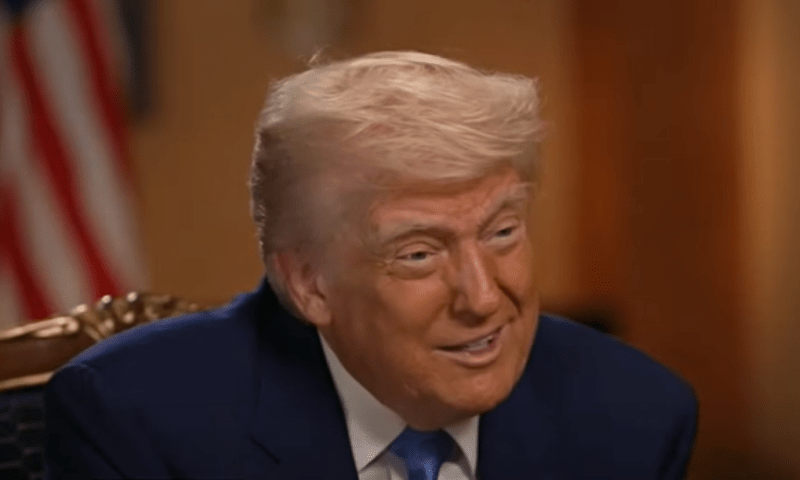
WASHINGTON — Former U.S. President Donald Trump said American diplomatic intervention was key in halting what he described as a looming nuclear conflict between Pakistan and India during their recent military confrontation.
In an interview with Fox News aired Friday, Trump revealed that tensions between the two nuclear-armed neighbors had escalated dangerously after India conducted airstrikes in Punjab and Azad Kashmir on the night of May 6-7, in response to an attack in Pahalgam, Indian-occupied Kashmir, which New Delhi blamed on Islamabad. The strikes caused civilian casualties, prompting Pakistan to retaliate by shooting down five Indian fighter jets.
Both sides then carried out reciprocal airbase strikes and intercepted drones before the situation de-escalated on May 10, following U.S.-brokered talks that led to a ceasefire announcement by Trump.
“The situation had escalated to the point where nuclear war could have broken out,” Trump said. “These are major nuclear powers and they were furious. It was tit-for-tat and getting worse.”
He referred to nuclear war as the “N-word” and called it “the worst thing that can happen,” claiming he had used trade discussions with both nations as leverage to defuse the crisis. “I’m using trade to settle scores and make peace,” he stated.
Trump praised his interactions with Pakistan, calling Pakistanis “brilliant people” who make “amazing products,” and noted that the country was eager to expand trade with the U.S. Despite that, Washington imposed a 29% tariff on Pakistani exports in early April, prompting Islamabad to seek ways to correct the growing trade imbalance.
On India, Trump said the country remains one of the world’s most protectionist economies. “It’s almost impossible to do business with them,” he said, but added that New Delhi had agreed to cut 100% of its tariffs on American goods, hinting at an upcoming trade deal.
Trump has raised the topic of strengthening trade with both countries three times in one week, emphasizing that the U.S. will “substantially increase trade” now that hostilities have calmed.
Meanwhile, British Foreign Minister David Lammy, visiting Islamabad, reiterated the UK’s support for a lasting ceasefire and called for “confidence-building measures” between Pakistan and India. Speaking to Reuters, Lammy emphasized dialogue and stressed the need for both sides to honor international commitments, especially in light of India’s April 23 suspension of the Indus Waters Treaty (IWT).
Lammy added, “We urge all sides to meet their treaty obligations.”
Earlier this month, Pakistan’s Commission on Indus Waters submitted a detailed report to the federal government, accusing India of multiple violations of the IWT. Islamabad plans to initiate international legal proceedings in response to what it sees as a critical breach of the long-standing water-sharing agreement.
Though the U.S.-led ceasefire halted a week of intense clashes, Pakistan’s military reported heavy losses, including 13 security personnel martyred and over 75 wounded. Additionally, 40 civilians — including 15 children and seven women — were killed during the Indian strikes, with more than 120 others injured.
Pakistan has credited the U.S., UK, and other international partners for their roles in preventing further escalation. However, analysts warn that the peace remains fragile and heavily reliant on sustained diplomatic engagement.