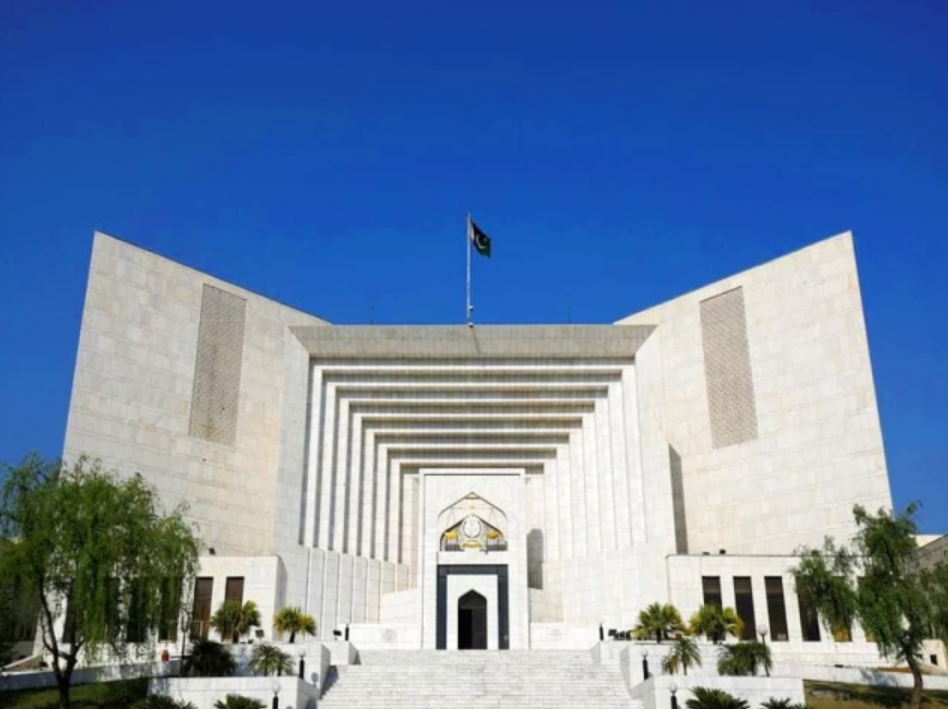
A recent move by the Supreme Court Committee, formed under the Supreme Court (Practice and Procedure) Act, 2023, has sparked a constitutional controversy. The committee, led by Chief Justice Yahya Afridi and comprising Justices Syed Mansoor Ali Shah and Aminuddin Khan, has introduced a procedural framework that, according to several legal experts, effectively curtails the role of an acting Chief Justice of Pakistan (CJP) during the CJP’s absence.
At the heart of the debate is Clause 5 of the newly adopted Supreme Court (Practice and Procedure) Committee Procedure, 2025, which empowers the CJP to pre-constitute a “special committee” to handle urgent matters—including bench reconstitutions—if he is unavailable or travelling abroad. Critics argue that this clause is not only legally dubious but also appears designed to sideline the constitutionally mandated process for appointing an acting CJP.
Under Article 180 of the Constitution, it is the president’s prerogative to appoint the most senior Supreme Court judge as the acting CJP in the absence of the incumbent. That acting CJP is then empowered to perform all functions of the Chief Justice—including, crucially, decisions related to bench formation. Yet, Rule 5 shifts that authority away from the acting CJP to a temporary committee, whose mandate is strictly limited to emergencies and must be documented and reported after the fact.
Former Lahore High Court judge Shahid Jamil has categorically stated that this provision conflicts with Article 180, calling it a veiled attempt to render the acting CJP’s role ineffective. “The acting CJP is supposed to assume full authority in the absence of the chief justice,” he noted. “Yet, this rule creates a parallel mechanism, bypassing the Constitution.”
The concerns are not just theoretical. Sources suggest that this procedural change was carefully crafted to avoid leaving sensitive decisions—such as those involving the 26th Constitutional Amendment—in the hands of Justice Syed Mansoor Ali Shah, who, under the current constitutional order, would serve as acting CJP. The unease among certain quarters about Justice Shah’s possible decisions has reportedly driven this effort to limit his powers during any interim tenure.
What further clouds the situation is the lack of transparency. Since Justice Afridi took office, the committee has reportedly held only one official meeting—on May 29—where the procedure was approved. No subsequent meeting minutes have been made public, and key decisions, such as bench compositions, appear to be executed without open deliberation. Observers note inconsistencies in bench assignments, such as senior judges being placed on smaller benches while juniors occupy positions in three-member panels—raising further questions about internal dynamics and decision-making.
Some legal minds also find it puzzling that Justice Mansoor Ali Shah, despite being directly affected by Clause 5, did not oppose it. His past role as acting CJP and his stature as a senior judge lend weight to the argument that the new rule diminishes the constitutional order and introduces ambiguity where none should exist.
The Supreme Court, as the guardian of the Constitution, must not allow its internal processes to drift away from constitutional mandates. Procedural innovation is necessary at times—but not at the cost of undermining foundational principles. Bypassing the acting CJP by instituting an ad hoc committee not only contradicts Article 180 but also sets a dangerous precedent that future benches may come to regret.
Transparency, regular committee deliberations, and strict adherence to the Constitution must guide the Supreme Court’s internal governance. Anything less risks politicising the Court’s operations and weakening public trust in the country’s highest judicial institution. If this procedural rule is left unchallenged, it could become a tool for centralising authority and avoiding constitutional safeguards—a development that the judiciary, above all, should be wary of.