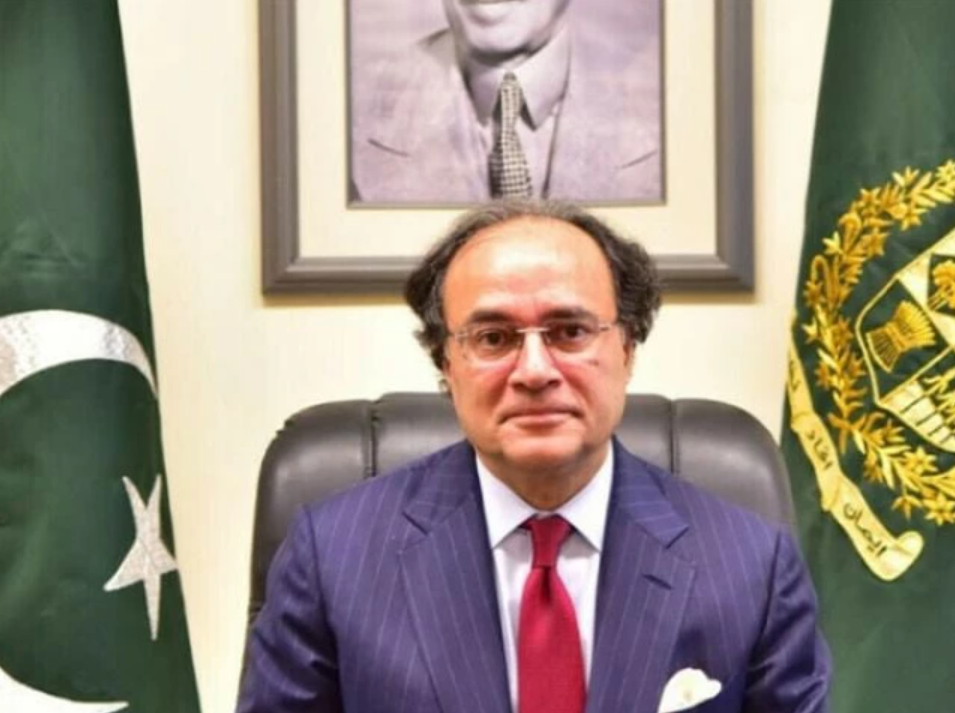
Finance Minister Muhammad Aurangzeb announced on Monday that Pakistan’s upcoming federal budget for fiscal year 2025-26 will include bold steps and set a new strategic direction for the economy.
Speaking at an event organized by Karandaaz Pakistan and the Pakistan Banks Association (PBA) in Islamabad, Aurangzeb said the budget would go beyond revenue and expenditure, laying out a comprehensive economic plan for the future.
“We plan to introduce some bold measures in the budget for FY2025-26,” he said, adding that the budget must be more than just balancing numbers – it should be strategic.
The federal budget is scheduled to be presented on June 10, 2025, with the Pakistan Economic Survey 2024-25 to be released the day before.
Aurangzeb underscored the importance of export-led growth and said he was pleased that Pakistan’s economy has crossed the $400 billion mark, a sign of positive momentum.
He noted that the international community now acknowledges Pakistan’s economic recovery and the country’s macroeconomic stability. However, he warned that past mistakes, such as relying too heavily on consumption-driven growth, had previously caused balance of payments and foreign exchange issues.
“To break the boom-and-bust cycle, we need to stay the course on structural reforms,” he stressed.
The finance minister reiterated the government’s focus on reforms in taxation, energy, and state-owned enterprises (SOEs), along with measures to streamline the federal government’s structure.
He acknowledged that progress on SOE reforms had slowed in the past year but assured that the government was accelerating efforts, including moving ahead with the Pakistan International Airlines (PIA) privatisation, which he said was promising.
Aurangzeb also shared plans to simplify the tax filing process for salaried taxpayers, aiming to reduce the current 140-150 steps down to just nine by September’s end.
On debt management, he highlighted that the government had managed to lower debt servicing costs by Rs1 trillion this fiscal year and outlined plans to modernise the debt management office.
Looking to the long term, Aurangzeb said Pakistan aspires to become a $3 trillion economy by 2047 but acknowledged that challenges like population growth and climate change must be addressed to achieve this goal.
He referenced the 10-year Country Partnership Framework with the World Bank, noting that four out of six focus areas address climate and population challenges.
Aurangzeb also spoke about regional tensions, commending Pakistan’s armed forces and political leadership for their unity against aggression and stating that the same solidarity was needed for economic stability.
He disclosed that efforts had been made to undermine Pakistan’s talks with the International Monetary Fund (IMF), including attempts to block financial support meetings. Nevertheless, Aurangzeb said the IMF’s decision was ultimately based on merit.
The IMF concluded its recent 10-day talks on Pakistan’s FY2026 budget without reaching a formal agreement but announced that discussions would continue in the coming days.
Nathan Porter, the outgoing IMF Mission Chief for Pakistan, said the discussions had focused on increasing revenue through better tax compliance and broadening the tax base, along with prioritising spending.
Initially scheduled for May 13-23 in Pakistan, the talks began remotely from Turkiye due to India-Pakistan tensions and later shifted to face-to-face meetings in Islamabad on May 19.
The budget presentation date was pushed back by over a week, from June 2 to June 10, as Prime Minister Shehbaz Sharif embarked on a diplomatic tour to thank friendly nations for their support during the recent tensions with India.