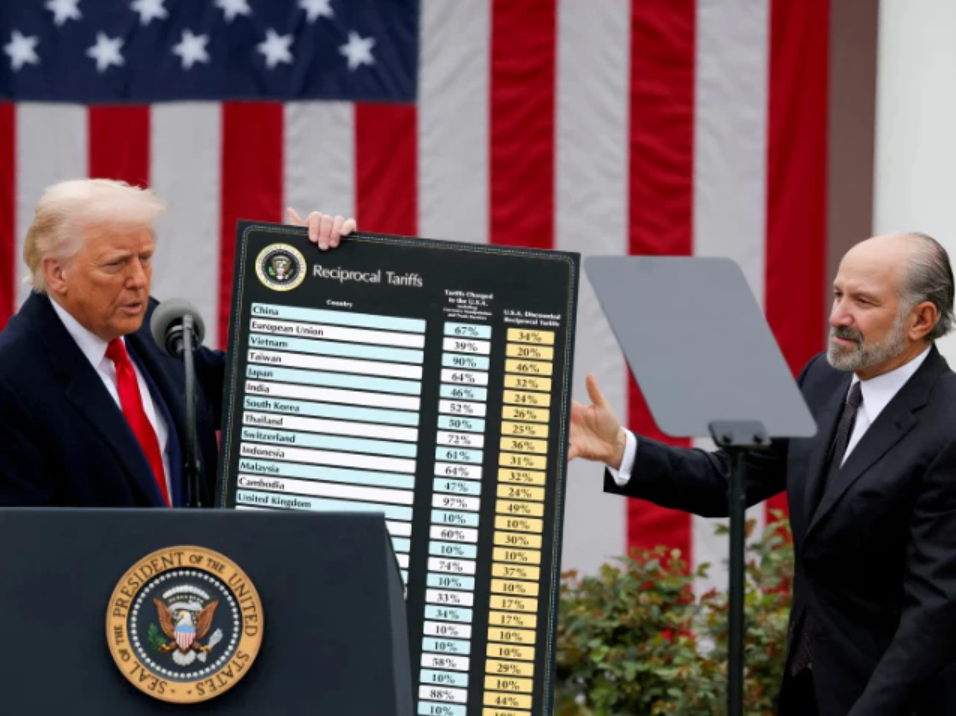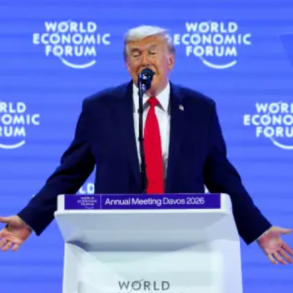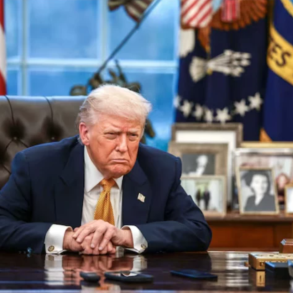
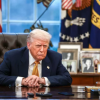
A US federal court has determined that former President Donald Trump lacked the authority to unilaterally impose global tariffs without approval from Congress.
In a significant legal setback for the Trump administration, a three-judge panel at the US Court of International Trade ruled that the global tariffs introduced in April under emergency powers were “contrary to law” and lacked a legal foundation.
The court’s ruling invalidates the tariffs applied to more than 50 countries, highlighting that the International Emergency Economic Powers Act (IEEPA) did not provide the legal grounds for such sweeping measures.
This marks the first judicial interpretation of the IEEPA’s limits regarding presidential tariff authority.
“The President’s assertion of tariff-making authority in this case, unlimited in scope and duration, goes beyond what the IEEPA permits,” the judges wrote. “The Worldwide and Retaliatory tariffs are therefore ultra vires and contrary to law.”
The decision underscored that while the IEEPA allows the executive to act against “unusual and extraordinary threats,” it does not override Congress’s constitutional power over tariffs and taxation.
“Because the Constitution explicitly assigns tariff powers to Congress, we do not interpret the IEEPA as giving the President an unchecked ability to set tariffs,” the ruling said.
The decision arose from two lawsuits: one by a coalition of small businesses and another by 12 Democratic state attorneys general.
The Trump administration has already filed a notice of appeal and plans to ask the US Court of Appeals for the Federal Circuit to stay the decision.
White House spokesperson Kush Desai responded to the ruling by saying that “unelected judges” should not dictate how a president responds to a national emergency.
“The administration remains committed to using every available tool of executive power to address this crisis,” Desai said.
Legal challenges to the tariffs have grown since Trump invoked the IEEPA, arguing that the country’s trade deficit constituted a national emergency.
However, the plaintiffs argued that the justification was neither legally sound nor economically valid. “His supposed emergency is just a fabrication,” one lawsuit stated.
Earlier this month, the panel—including judges appointed by Presidents Obama, Trump, and Reagan—grilled government lawyers on whether there were legal precedents for such sweeping presidential actions under the IEEPA.
Notably, earlier cases under the Trading with the Enemy Act of 1917 did not directly address the modern scope of the IEEPA.
Jeffrey Schwab, representing the plaintiffs from the Liberty Justice Center, told the court the administration’s approach was without precedent. “I’m saying it’s a wild pitch… so we don’t need to debate that,” he argued.
The ruling contrasts with a separate May opinion from a federal judge in Florida—appointed by Trump—who indicated the president might have such tariff authority, though he ultimately transferred that case to the Court of International Trade.
The ongoing legal fight over the limits of presidential power on tariffs is expected to proceed to the appellate courts, potentially reaching the Supreme Court and further clarifying the separation of powers between Congress and the executive branch.