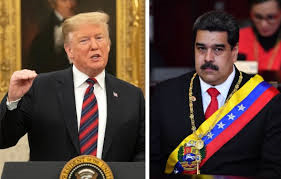

When the Trump administration began openly courting oil executives in the wake of Washington’s aggression against Venezuela, the sequence was revealing. Political force first. Legal assurances next. Profits last.
The promise of “total safety” for American firms willing to pour tens of billions into Venezuela’s oil sector made one thing unmistakably clear: this was never about lowering fuel prices for American consumers or restoring Venezuelan sovereignty. It was about securing access to oil—on terms favourable to private capital.
The extraordinary act of capturing Venezuela’s president was not a rogue improvisation. It followed a familiar imperial script in which state power is deployed to make sovereign resources safe for corporate accumulation. Venezuela’s vast oil reserves were not the backdrop to the conflict; they were its central prize.
With more than 300 billion barrels of proven crude, Venezuela holds one of the largest oil endowments on the planet. But reserves alone do not create value. For energy capital, value emerges only when political risk is neutralised. That, historically, is what US power has specialised in doing.
Oil, Not Democracy
The confrontation between Washington and Caracas did not begin with Donald Trump, nor was it driven by sudden concern for human rights. Like earlier US interventions in Iran, Guatemala, Chile, and Iraq, the struggle has always centred on control over natural resources—specifically oil—and on who gets to profit from them.
During Trump’s first term, Washington’s preferred alternative leadership in Venezuela made its intentions explicit. Juan Guaidó, swiftly recognised by the US and its allies, openly signalled that a future government under his leadership would dismantle Venezuela’s state-dominated oil framework and expand the role of private US companies.
That proposal directly challenged the existing model, under which Petróleos de Venezuela (PDVSA) retained majority control in all joint ventures. Sovereign ownership, higher taxes, and restrictions on private extraction were precisely what global oil majors sought to undo.
Carlos Vecchio, Guaidó’s representative in Washington, left little room for ambiguity. Speaking to Bloomberg, he stated that the bulk of expanded oil production would come through the private sector. This was regime change with a business plan.
Why Venezuela Matters
Venezuelan-born sociologist María Páez Victor has explained why Venezuela occupies such a central place in US strategic thinking. Geography matters. Oil shipped from Venezuela reaches US refineries in four days. From the Middle East, it takes more than forty.
That logistical advantage alone makes Venezuelan crude uniquely attractive. Had Venezuela been exporting fruit instead of oil, its political system would likely have drawn little attention in Washington. What triggered confrontation was the state’s decision to reclaim control over PDVSA, raise taxes that had remained token for decades, and redirect oil revenues toward public services rather than foreign shareholders.
It was this redistribution—not ideological rhetoric—that made Venezuela intolerable to entrenched oil interests.
Corporate Interests in Plain Sight
Even before overt regime-change efforts escalated, US officials were candid about their objectives. Trump’s national security adviser John Bolton acknowledged discussions with “major American companies” about taking over Venezuelan oil production.
At the same time, Guaidó appointed a new board to Citgo, Venezuela’s US-based subsidiary—every member based in the United States, several of them US citizens. Western governments moved swiftly to seize Venezuelan overseas assets. The Bank of England froze $1.2 billion in gold reserves. The US confiscated roughly $7 billion in Venezuelan funds and handed control to Guaidó.
The beneficiaries waiting in the wings were no mystery.
ExxonMobil—long locked in legal battles with Venezuela—reappeared at the centre of the drama. Trump’s first secretary of state, Rex Tillerson, was a former Exxon chief executive, underscoring the company’s extraordinary influence over US foreign policy. Alongside Exxon stood the Koch conglomerate, major financiers of Trump-era politics and owners of refineries dependent on Venezuela’s heavy crude.
Investigative journalist Greg Palast summarised the logic bluntly: Venezuelan oil was uniquely suited to Koch refineries, and Chávez’s government had begun charging a premium. The solution, from the corporate perspective, was not to change business practices—but to change the government.
A Familiar Pattern
History offers little reason for optimism about the outcomes of such interventions. The CIA-backed overthrow of Guatemala’s Jacobo Árbenz restored favourable conditions for United Fruit. Chile’s 1973 coup paved the way for mass privatisation and social collapse. Iraq’s invasion delivered billions in no-bid contracts to firms like Halliburton while oil production stagnated and corruption soared.
Each case followed the same pattern: public justification, private gain.
There is no credible reason to believe Venezuela would be different.
Oil Is About Control, Not Abundance
One enduring myth of energy politics is that oil companies simply want to pump more oil. In reality, the industry’s greatest fear has often been surplus, not scarcity. Control over reserves—when and how they are brought to market—matters more than immediate extraction.
That insight is crucial. The US strategy toward Venezuela is not designed to flood markets or help consumers. It is about securing long-term control over a massive reserve, transforming it into a strategic lever to be activated or restrained in line with corporate interests.
Economist Raymond Vernon described this dynamic decades ago as the “obsolescing bargain.” Once extraction becomes profitable, host states seek a larger share. Venezuela did exactly that under Hugo Chávez—prompting lawsuits, sanctions, and eventually intervention.
The current gamble aims to reset that bargain permanently, locking in investor protections while weakening the capacity of future governments to reclaim sovereignty.
The Real Question
The question, then, is not whether Venezuela’s oil sector needs reform. It is who gets to decide, and who benefits.
The historical record is clear. When state power is mobilised to serve private energy interests, the public—whether American or Venezuelan—rarely comes out ahead.
Trump’s Venezuela gamble may yet fail. But its purpose is already clear. It is not about democracy, stability, or prosperity. It is about oil—and who controls it.