

By Hira A. Malik
June 12, 2025
Air travel is often dubbed the safest mode of transportation. Yet, when tragedies strike, they do so with a force that shocks the global conscience and ignites deep questions about accountability, technology, and the fragility of human error.
The recent Air India disaster, which claimed the lives of at least 200 people near Ahmedabad, is a devastating reminder that despite our technological advancements, the skies remain perilous under certain conditions. One survivor, hundreds dead, and another chapter added to the long, grim ledger of aviation catastrophes.
The last decade has been marred by some of the most fatal air crashes in recent memory — each one unique in cause but unified in consequence: immeasurable human loss.
In 2025, the U.S. experienced a horrifying collision when an American Airlines regional jet struck a US Army Black Hawk helicopter near Washington, plunging into the icy Potomac River. Over 60 lives were lost, adding to a growing list of tragedies on American soil.
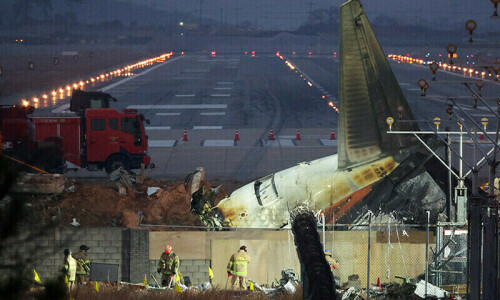
South Korea suffered its worst-ever aviation disaster in December 2024 when Jeju Air’s international flight 7C2216 crashed at Muan International Airport, killing 179 people. That same month, Kazakhstan became the unintended landing site of Azerbaijan Airlines flight J2-8243 — allegedly downed by errant gunfire from across the Russian border.
Japan’s runway disaster in early 2024, involving a commercial plane and a Coast Guard aircraft, could have turned far worse had all 379 passengers not escaped the burning airliner. Still, five lives were lost — a stark reminder of the split-second decisions that determine life and death in aviation.
Even as recent as 2022, China experienced its deadliest crash in decades when a China Eastern Airlines jet slammed into a mountain, killing all 132 aboard.
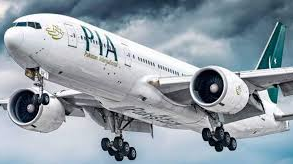
For many Pakistanis, the PIA crash of May 2020 remains a fresh wound. The plane, bound for Karachi from Lahore, attempted landing multiple times before plummeting into a residential area. Ninety-seven lives were lost, and despite two miraculous survivors, the incident exposed deeply rooted issues in Pakistan’s aviation oversight and crisis response.
Some tragedies, like the downing of Ukraine International Airlines Flight PS752 in Iran, were chillingly avoidable — the result of military error rather than mechanical failure or pilot misjudgment. In that 2020 incident, 176 lives were extinguished due to a misaligned radar and poor communication.
And who can forget the infamous crashes that grounded Boeing’s 737 MAX fleet — Ethiopia in 2019, Indonesia in 2018 — or the still-unsolved mystery of Malaysia Airlines Flight MH370, whose disappearance in 2014 continues to baffle investigators and torment families.
The sheer scale and diversity of these disasters — from mechanical failure and human error to geopolitical violence — are sobering. These aren’t just statistics; they are lives ended in a moment, families devastated, and communities left reeling.
So, the question arises: Why do these crashes keep happening?
Despite massive improvements in aircraft design, stricter regulations, and AI-assisted navigation, the truth remains that air safety is still at the mercy of flawed human systems, geopolitics, aging fleets, and reactive — rather than proactive — oversight.
Yes, progress has been made. But as long as aircraft are used in war zones, airlines cut corners, or authorities ignore early warnings, these tragedies will recur.
The aviation industry owes it to the victims of these disasters — and the millions who fly every day — to move from reaction to prevention, from complacency to accountability.
Because in the end, it’s not just about air safety. It’s about valuing human life above all else.