Agreement Could Strengthen Bilateral Ties, Ease Pressure on Tech and Manufacturing Sectors
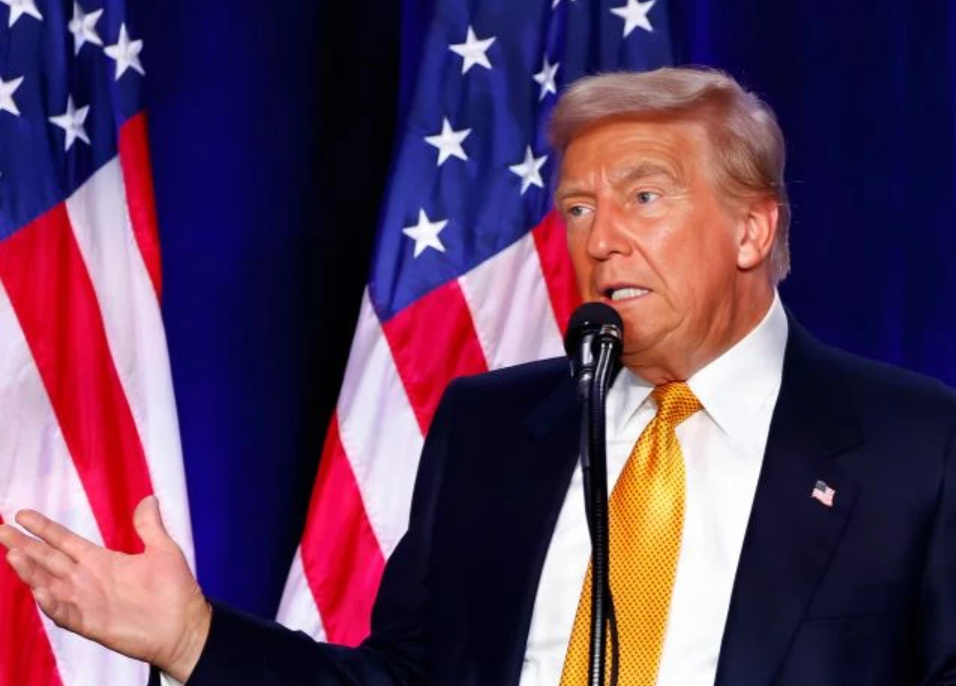
US President Donald Trump has hinted at unveiling a major trade agreement with the United Kingdom, a move that could mark a significant step toward easing global trade tensions stirred by his administration’s tariff-heavy policies.
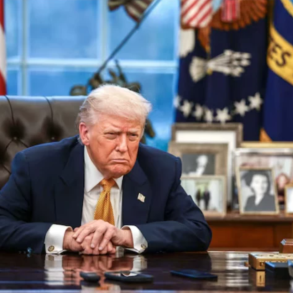
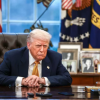
Posting late Wednesday on Truth Social, Trump announced: “Big News Conference tomorrow morning at 10:00 A.M., The Oval Office, concerning a MAJOR TRADE DEAL WITH REPRESENTATIVES OF A BIG, AND HIGHLY RESPECTED, COUNTRY.” While he did not name the country, sources familiar with the matter confirmed it refers to the UK.
If finalized, this would be a rare breakthrough after months of global market uncertainty. According to the Financial Times, the deal may exempt UK firms from certain US non-tariff barriers, such as the 2% digital services tax targeting American tech companies. In return, the US may reduce or lift 25% tariffs currently imposed on British steel, aluminium, and automobiles.
Peter Navarro, Trump’s chief trade adviser, identified the UK as one of the top contenders for an initial deal, alongside India, South Korea, and Japan. “We’ve got a little twist in the India story,” Navarro hinted, pointing to delays, but added, “there will be deals.”
Despite the excitement, trade experts remain cautious. Jacob Jensen of the American Action Forum warned that any Thursday announcement is likely to be a memorandum of understanding, not a formal treaty. “Deals with real economic impact usually take months or years to hammer out,” he noted.
Provisional terms could offer short-term tariff relief but are unlikely to constitute a full-scale trade pact. While the Trump administration claims to be negotiating with over a dozen countries, no binding agreements have yet been signed.
Trump has also signalled he is ready to reimpose tariffs if talks stall. “There won’t be another extension,” he warned last month, referring to the 90-day pause on new tariffs introduced in April.
On the broader diplomatic front, signs of thawing have appeared. US Treasury Secretary Scott Bessent and Trade Representative Jamieson Greer are expected to meet Chinese officials in Geneva this week. Though major breakthroughs are unlikely, these talks could help lower tensions.
Currently, the US levies tariffs of at least 145% on most Chinese imports, while China imposes 125% duties on American goods. Trump has so far refused to lift any tariffs as a precondition for negotiations, which has hampered progress.
The economic consequences have been severe. The US economy contracted in the first quarter of 2025 — the first decline in three years — as businesses stockpiled in anticipation of Trump’s “Liberation Day” tariffs. International institutions such as the IMF, OECD, and World Bank have all warned that prolonged trade wars could drag down global growth and spark renewed inflation.
Although Trump secured the USMCA trade deal during his previous term, he later reversed course by reimposing tariffs on Mexican and Canadian products. Analysts caution that similar reversals could follow any new agreement, adding to global market uncertainty.
Nevertheless, any step toward reducing trade restrictions is likely to offer some relief to businesses and consumers grappling with rising costs. As talks continue, Thursday’s announcement is expected to draw close attention from markets, industries, and international partners alike.