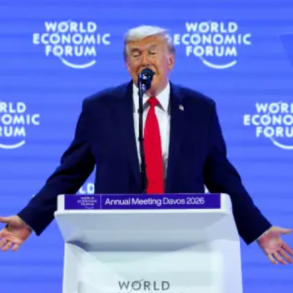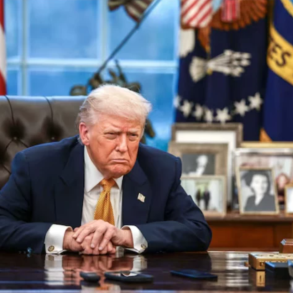
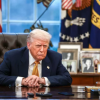
RIYADH, May 13, 2025 — U.S. President Donald Trump has kicked off a four-day visit to the Gulf region with a clear emphasis on deepening economic cooperation, as he arrived in Saudi Arabia Tuesday accompanied by a delegation of top American business leaders, including Tesla CEO Elon Musk.
The trip marks Trump’s second foreign visit since returning to office and will take him to Qatar on Wednesday and the United Arab Emirates on Thursday. Unlike past regional tours, this itinerary notably omits a stop in Israel and downplays ongoing regional crises such as the Gaza conflict and escalating tensions over Iran’s nuclear ambitions.
Trump’s first stop in Riyadh coincided with the launch of the Saudi-U.S. Investment Forum, where Saudi Investment Minister Khalid Al-Falih praised the growing scope of economic collaboration between the two countries.
“While energy remains a cornerstone of our relationship, the scope of investments has expanded exponentially,” said Al-Falih, noting the evolving nature of U.S.-Saudi economic ties. “When Saudis and Americans work together, the results are not just good — they are often extraordinary.”
A promotional video featuring soaring eagles and falcons underscored the long-standing alliance between the two nations. The forum drew prominent figures such as BlackRock CEO Larry Fink, Blackstone CEO Stephen Schwarzman, U.S. Treasury Secretary Scott Bessent, and Saudi Finance Minister Mohammed Al-Jadaan.
Speaking at a panel, Fink shared his two-decade engagement with the Kingdom, stating that Saudi Arabia has shifted from a follower to a proactive economic leader diversifying beyond oil.
Trump arrived in the kingdom under the escort of Saudi F-15 fighter jets, a symbolic gesture of the nations’ enduring security alliance, rooted in a decades-old oil-for-security framework.
Sources indicate Trump plans to offer Saudi Arabia an arms deal exceeding $100 billion, which could include advanced U.S. military hardware like C-130 transport aircraft. The two countries are also expected to announce trillion-dollar-level investment commitments, with Saudi Arabia having already pledged $600 billion in U.S. investments over the next four years.
Despite ongoing tensions in the region, issues like normalization between Saudi Arabia and Israel are reportedly off the table during this visit. While expanding the Abraham Accords remains one of Trump’s key Middle East ambitions, analysts suggest Israeli Prime Minister Benjamin Netanyahu’s opposition to a permanent ceasefire in Gaza or a two-state solution has stalled any movement toward a similar agreement with Riyadh.
Although security challenges loom — including a war in Gaza, nuclear talks with Iran, and a potential Trump-brokered summit between Russian President Vladimir Putin and Ukrainian President Volodymyr Zelenskiy in Turkey — the current Gulf tour prioritizes business ties over diplomacy.
A meeting between U.S. and Iranian officials in Oman over the weekend attempted to restart dialogue on curbing Tehran’s nuclear program. Trump has maintained that military options remain on the table if diplomacy fails.
Accompanying Trump on this trip are Secretary of State and National Security Adviser Marco Rubio and Secretary of Defense Pete Hegseth.
In Qatar, Trump is expected to receive a custom Boeing 747-8 jet from the royal family, to be later donated to his presidential library post-term — a gift that has already attracted ethical scrutiny.
The UAE leg of the visit is also expected to center on economic discussions, solidifying Trump’s intent to make trade and investment the defining feature of this Middle East tour.