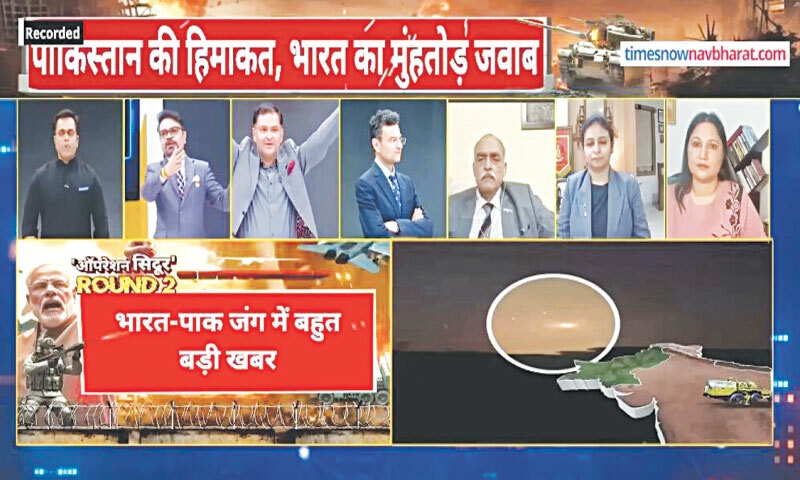

India’s mainstream media, once hailed as a vibrant pillar of its democracy, is now a shadow of its former self — reduced to a theatrical extension of state propaganda. The Madness of Modi’s Media is a blistering indictment of this transformation, painting a sobering picture of how the country’s press has morphed from watchdog to lapdog under the Modi regime.
The review documents the surreal media spectacle that unfolded following the May 2025 military flare-up between India and Pakistan. Indian television channels, instead of reporting with caution and credibility, spun elaborate fantasies of military conquests — from the destruction of Karachi Port to the fall of Islamabad. The reality on the ground, verified through digital maps and corroborated even by Indian government statements, stood in stark contrast to these fabricated triumphs.
The piece underscores how such coverage does more than misinform; it deliberately erodes public reason and inflames dangerous nationalist fervor. The term “Godi Media” — a pun meaning “lapdog media” — aptly encapsulates the servility of major Indian networks, many of which have traded editorial independence for political patronage and protection.
What makes this descent particularly alarming is the broad public acceptance of these delusions. As the article argues, the psychological toll of living in an information bubble, constantly fed by misinformation and hate-filled rhetoric, is immeasurable. Even those within India who attempt to offer sober, fact-based analysis — such as defence analyst Pravin Sawhney or former RAW official Rana Banerji — are silenced, banned, or ignored.
The narrative also draws a critical parallel with Pakistani media, which faces its own constraints but is, ironically, seen to foster more skepticism and resistance among its public. Indian media’s wholesale embrace of state narratives, coupled with online mobs policing dissent, signals a dangerous turn for a democracy once proud of its press freedom.
This exposé is not just about a media industry gone rogue; it’s a cautionary tale about the collapse of truth under populist pressure, and the geopolitical consequences that can follow when nations begin to believe their own propaganda. It ends on a chilling note — invoking Goebbels and Hitler, whose propaganda machine, like today’s Modi Media, thrived on repetition, lies, and the vilification of dissent.
In an era of rising authoritarianism and regional instability, The Madness of Modi’s Media stands as a grim reminder: when journalism becomes indistinguishable from war cry, both democracy and diplomacy suffer.