

By: S.M.A Kazmi
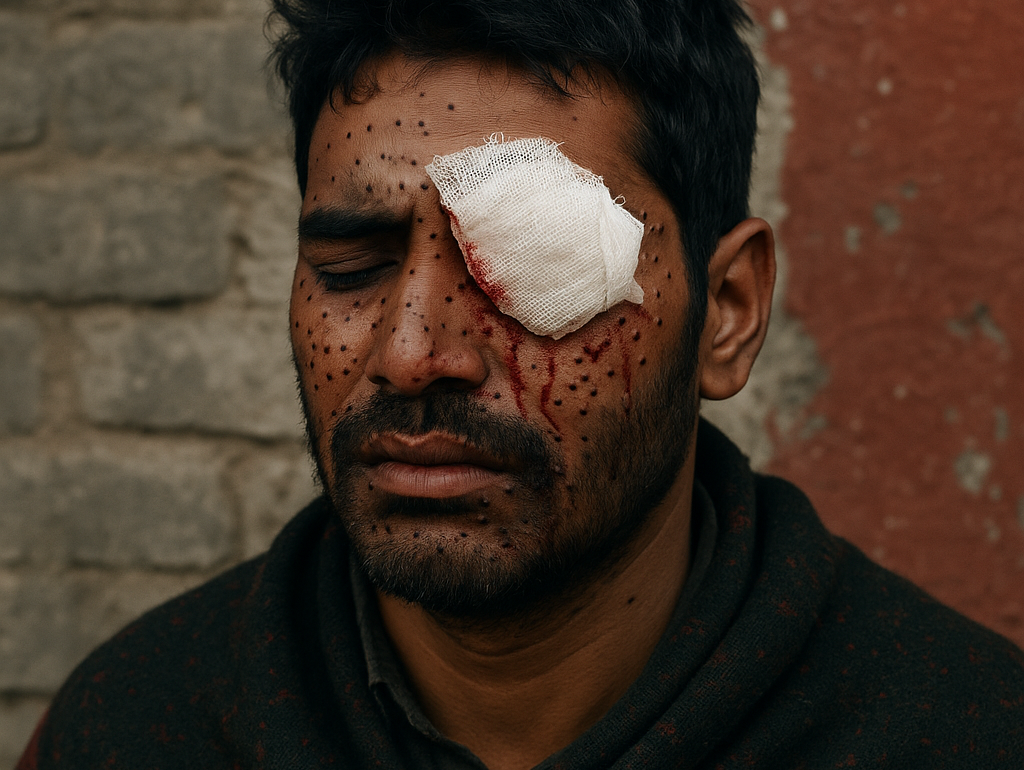
For nearly eight decades, Kashmir has been mired in a bitter and unresolved conflict between India and Pakistan, with the people of the region bearing the brunt of political strife and violence. Amid this ongoing turmoil, one of the most heartbreaking and overlooked aspects is the widespread use of pellet guns by Indian security forces — weapons that have permanently blinded and maimed thousands of innocent Kashmiris, especially young protestors demanding their rights.
Originally designed for hunting, pellet guns have no legitimate place in controlling civilian crowds. Yet, in Indian Illegally Occupied Jammu and Kashmir (IIOJK), these weapons have become tools of oppression, used extensively and exclusively to suppress public dissent. While other restive regions in India have seen protests, none have faced the brutal, systematic deployment of pellet shotguns like Kashmir has. This stark reality reveals the severity of the state’s approach to quelling resistance, with devastating human consequences.
The stories of victims are profoundly tragic: teenagers like Insha Mushtaq, shot in the face at 14 and blinded for life; children like 19-month-old Hiba Jan, who suffered irreversible eye damage; countless others maimed while peacefully protesting or simply going about daily life. These incidents are not isolated but part of a broader pattern of violence aimed at incapacitating an entire generation of Kashmiris.
Adding to this tragedy is the legal framework that shields Indian forces from accountability. Even medical facilities, meant to be safe havens, have been targeted, and doctors have protested in solidarity by covering one eye to symbolize the hundreds blinded by pellets. The psychological toll is equally severe, with studies showing alarming rates of depression, anxiety, and PTSD among the population.
International human rights organizations, including the United Nations and Amnesty International, have condemned the use of pellet guns as disproportionate and called for their ban. Despite these calls, India continues to defend their use as necessary, ignoring mounting evidence of their devastating effects.
This issue transcends security concerns. It is a humanitarian crisis and a failure of political will. Until India addresses the deep-rooted political grievances in Kashmir through dialogue and peaceful negotiation, the cycle of violence will persist, and more innocent lives will be shattered.
The global community must act decisively — urging India to halt the use of pellet guns, repeal laws that grant impunity to security forces, and engage constructively in resolving the Kashmir conflict. Only then can there be hope for peace and justice in a region scarred by decades of strife.
If democracy is to mean anything, it must protect the rights and dignity of all citizens, including those in Kashmir. Until the pellet guns are silenced, the world must keep its eyes open to the ongoing suffering and demand change.