
General Chauhan acknowledges losses but withholds exact figures
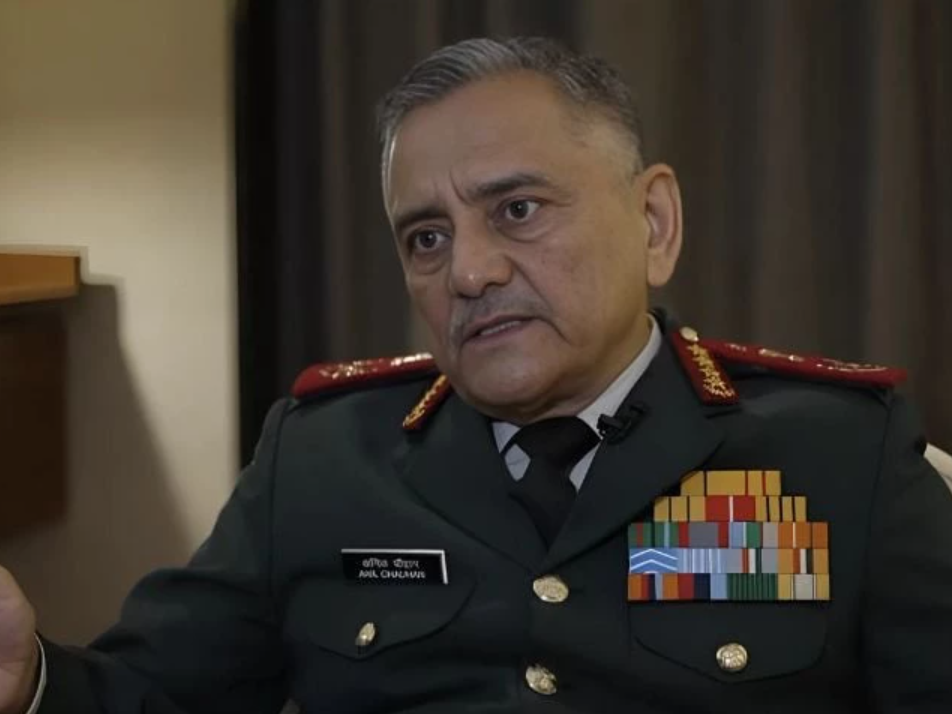
India’s Chief of Defence Staff, General Anil Chauhan, has officially confirmed the loss of Indian fighter jets during the May conflict with Pakistan, marking the first formal admission of such air losses in the ongoing standoff.
In an interview with Bloomberg Television on the sidelines of the Shangri-La Dialogue in Singapore on Saturday, General Chauhan made the acknowledgment but refused to provide the exact number of aircraft lost, dismissing Pakistan’s claims of six jets being downed.
“What’s important is not how many jets were lost, but why they were lost,” Chauhan said. “Numbers aren’t the priority.”
His comments came after Pakistan’s Prime Minister Shehbaz Sharif publicly confirmed that the Pakistan Air Force had shot down a sixth Indian aircraft—a Mirage 2000—near Srinagar during the night of May 6-7.
General Chauhan also spoke about tactical missteps during the conflict, noting that the Indian military had quickly resumed operations and carried out long-range precision strikes two days later.
“The positive takeaway is that we’re able to identify tactical errors, fix them, and re-implement strategies,” he said.
Although Chauhan did not detail the extent of the losses, Bharatiya Janata Party (BJP) leader Subramanian Swamy previously acknowledged on a podcast that Pakistan had shot down at least five Indian jets during the confrontation, including advanced Rafale aircraft.
Swamy further stated, “Pakistan downed five of our aircraft using Chinese fighter jets,” and added that the Chinese jets had “outperformed the French Rafales.”
Reports from Pakistan have claimed that India lost three Rafale jets in these clashes, a serious setback for the Indian Air Force given their strategic value.
The hostilities also included claims by Pakistan of downing Israeli-made drones used by India.
Addressing concerns of potential nuclear escalation, General Chauhan downplayed them as “far-fetched,” stressing that there was a significant gap between conventional military operations and the nuclear threshold.
He also mentioned that communication channels between India and Pakistan remained open throughout the fighting, which helped keep the situation under control.
“There are several lower-level mechanisms we can use to address these disputes,” he said.
The latest round of India-Pakistan tensions began on April 22 with an attack in Pahalgam, Indian-Occupied Jammu and Kashmir (IIOJK), which killed 26 people. India blamed Pakistan without providing any evidence, while Islamabad denied the accusations and called for an independent investigation.
The situation escalated further when India suspended the longstanding Indus Waters Treaty, revoked visas, and closed border crossings, prompting reciprocal actions from Pakistan.
The military exchanges peaked with missile strikes on May 7 targeting areas in Punjab and Azad Jammu and Kashmir, with Pakistan responding by shooting down Indian aircraft and launching counter-strikes that damaged Indian missile storage sites and other key facilities.
A ceasefire was eventually brokered by US-led diplomatic efforts on May 10, but the two countries remain locked in a bitter narrative battle.