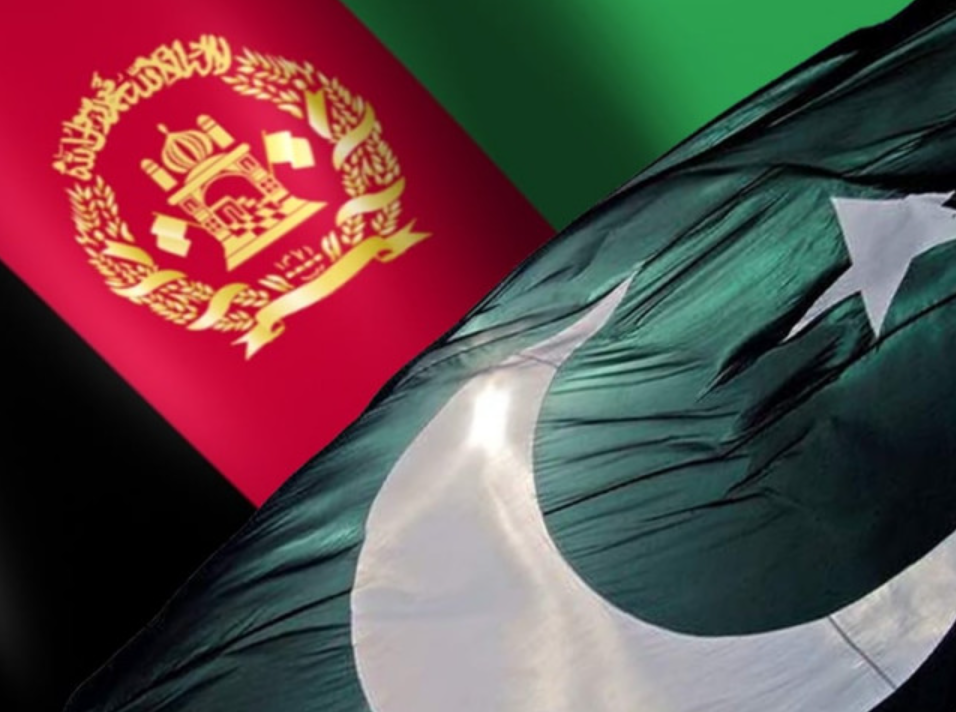
Move first announced by Chinese Foreign Minister Wang Yi last week
ISLAMABAD:
Pakistan on Friday formally confirmed its decision to upgrade diplomatic relations with Afghanistan by exchanging ambassadors with Kabul, marking a significant policy shift toward the neighboring country.
The initial announcement came last week from Chinese Foreign Minister Wang Yi during a meeting in Beijing with the foreign ministers of Pakistan and Afghanistan.
On Friday, Pakistan’s Foreign Minister Ishaq Dar, meeting with Wang Yi for the second time in ten days in Hong Kong, issued a statement announcing the upgrade in ties with Kabul.
“Pakistan-Afghanistan relations are on a positive trajectory following my productive visit to Kabul with the Pakistan delegation on April 19, 2025,” Dar said.
“To sustain this momentum, I am pleased to announce the Government of Pakistan’s decision to elevate its diplomatic mission in Kabul from Chargé d’Affaires to Ambassador level,” he added.
Dar expressed confidence that this step will deepen Pak-Afghan cooperation across economic, security, counterterrorism, and trade sectors, while fostering closer exchanges between the two fraternal nations.
Until now, both countries maintained diplomatic missions headed by chargés d’affaires rather than full-time ambassadors. The exchange of ambassadors brings Pakistan closer to formally recognizing the Taliban government. China was the first country to appoint a full-time ambassador to Kabul and accept the Taliban envoy in March this year.
A senior Pakistani official defended the decision, noting that other regional powers, including Turkey and Russia, are also considering sending full-time ambassadors to Kabul.
Reports suggest that China has been encouraging both sides behind the scenes to resolve their differences through dialogue.
Sources indicate that for the first time, the Taliban government has demonstrated willingness and taken steps to control groups operating from Afghan territory.
Recently, the Taliban launched crackdowns on elements supporting groups hostile to Pakistan, particularly targeting Afghan nationals who had joined the banned Tehreek-e-Taliban Pakistan (TTP).
Another sign of a shift in the Taliban’s stance came from Senior Afghan Taliban commander Saeedullah Saeed, who warned militant factions against unauthorized jihad, especially in Pakistan. Speaking at a police passing-out ceremony, Saeed emphasized that fighting abroad without explicit authorization from the Amir of the Islamic Emirate is not permissible under Shariah.
He stated, “Joining various groups to wage jihad abroad does not make one a true mujahid. Only the Amir has the authority to declare jihad.”
Saeed further clarified that attacks carried out independently or by moving between regions are not legitimate under Islamic law. “Jihad driven by personal ego or group loyalty is fasad (corruption), not legitimate resistance,” he added.
Counterterrorism was a key topic during the trilateral talks in Beijing. The Chinese official reiterated Wang Yi’s call for united efforts to combat terrorism in all forms, warning against external interference.
Amid heightened tensions escalating into military conflict between India and Pakistan, New Delhi reached out to the Taliban government—an unusual move breaking decades of policy—when Indian External Affairs Minister S. J. Shankar spoke with Afghanistan’s interim Foreign Minister.
This step appears to be part of India’s strategic shift to pressure Pakistan, but the Beijing meeting may have anticipated and pre-empted this outreach.
The Chinese foreign ministry’s statement highlighted strong incentives for the Taliban government to collaborate closely with Beijing and Islamabad.