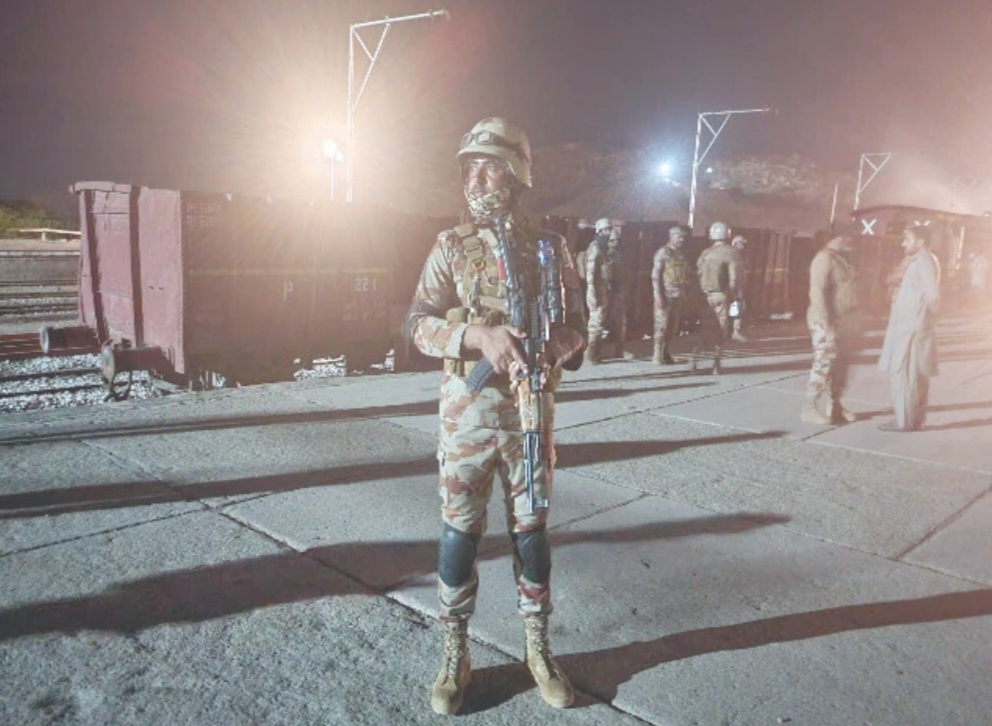

Despite intensifying military tensions with India in May, insurgent violence within Pakistan saw only a slight increase, according to a fresh security review by the Pakistan Institute for Conflict and Security Studies (PICSS). The report, a monthly assessment from the Islamabad-based think tank, highlights how domestic security challenges in Balochistan and Khyber Pakhtunkhwa (K-P) continue to shape Pakistan’s stability outlook.The data paints a picture of persistent, though relatively stable, violence across the country. In May, Pakistan experienced 85 terrorist attacks—a modest five per cent rise from April’s 81 incidents. These attacks claimed 113 lives, with security forces accounting for nearly half the fatalities (52), followed by 46 civilian deaths, 11 militant casualties, and four peace committee members. The tally of injured rose to 182, a significant increase driven by a dramatic 145 per cent surge in civilian injuries—from 53 in April to 130 in May. In contrast, injuries among security personnel dropped by 20 per cent.The month also saw counterterrorism efforts yield mixed results. Security operations led to the deaths of 59 militants and the arrest of 52 suspects. These operations, however, also claimed the lives of five security personnel and injured seven others. The drop in militant deaths (down from 203 in April) suggests a shift in operational dynamics, with a more targeted approach by security forces and militants adapting their tactics.Epicentres of Violence: Balochistan and K-PBalochistan and Khyber Pakhtunkhwa (including the merged tribal districts) continued to absorb the lion’s share of violence, accounting for 82 of the 85 attacks nationwide. Balochistan remained the most volatile hotspot, recording 35 attacks and 51 deaths. Particularly harrowing was an attack in Khuzdar, where a blast targeting an Army Public School bus claimed the lives of eight children (mostly girls) and two staff members, leaving 35 others wounded.K-P’s tribal districts recorded 22 attacks with 45 fatalities, a figure that includes 23 security personnel. Injuries in the region stood at 58. In mainland K-P, 25 insurgent attacks resulted in 14 deaths and 24 injuries, underscoring the persistent threat facing the province.Sindh remained relatively calm by comparison, with three attacks resulting in three fatalities—two civilians and one security official. Punjab, Azad Jammu & Kashmir (AJK), and Gilgit-Baltistan reported no terrorist incidents, though Punjab saw proactive security activity, with 39 suspected militants arrested during intelligence-based operations. In AJK, a security operation in Rawalakot led to the deaths of four suspected Tehreek-e-Taliban Pakistan (TTP) insurgents.Broader Implications: A Complex Security PuzzleWhile the marginal rise in attacks during May suggests a degree of containment, the spike in civilian injuries and continued targeting of security forces highlight the persistent challenges in countering militancy. The concentration of violence in Balochistan and K-P points to a complex, evolving security puzzle for Islamabad—where regional insurgencies, local grievances, and broader geopolitical tensions intersect.The report underscores the need for sustained, comprehensive approaches to counterterrorism that balance kinetic responses with efforts to address underlying grievances and vulnerabilities. With no attacks reported in key regions like Punjab and GB, there are some grounds for cautious optimism. However, as these numbers show, the road to stability remains an arduous one, requiring both vigilance and nuanced policymaking.